
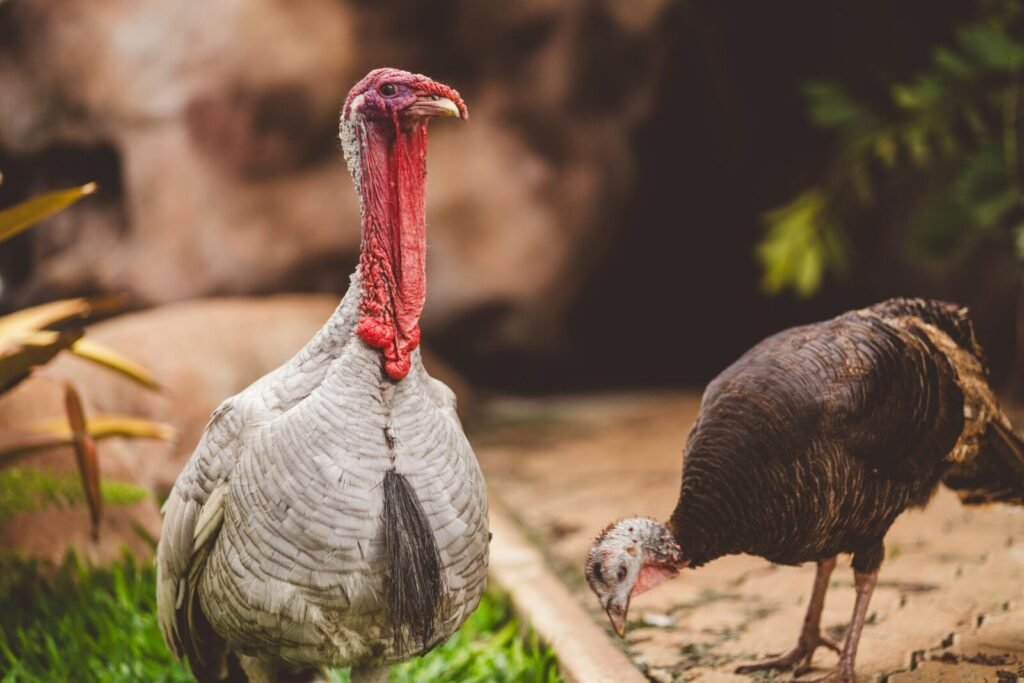

When most people hear the word “turkey,” they think of a holiday centerpiece, not a pet. But over the past several years, more and more people, especially those with a bit of land, a backyard flock, or a soft spot for unusual animals, have discovered that turkeys make surprisingly wonderful companions. They’re curious, expressive, and honestly a lot more affectionate than most folks expect. If you’ve ever seen a turkey trot over to greet its owner, fan out its tail feathers in excitement, or follow someone around the yard like a dog, you start to understand the appeal.
This guide is for anyone considering a pet turkey, whether you’re a homesteader thinking about adding one to your existing flock, a parent looking into 4-H projects, or someone who just fell in love with a turkey at a rescue and wants to know what comes next. We’ll walk through everything: choosing a turkey, housing, feeding, health care, behaviour, and the realities of what day-to-day life with a pet turkey actually looks like.
Why People Keep Turkeys as Pets
Turkeys have a reputation problem. Thanks to their association with Thanksgiving dinner and a general cultural assumption that they’re not especially smart, most people never consider them as companion animals. But anyone who’s spent real time around turkeys tends to come away with a very different impression.
Turkeys are social, food-motivated, endlessly curious, and often bond strongly with the humans who raise them. They recognize individual people, respond to their names, and develop distinct personalities, some bold and outgoing, others shy and cautious, some downright goofy. Many owners describe their pet turkey as behaving more like a dog than a typical backyard bird, following them around the property, waiting by the door, and seeking out physical closeness like head scratches or being near their favorite person while they do yard work.
They’re also just entertaining to watch. Turkeys communicate through a wide range of sounds, the classic gobble, but also clucks, purrs, yelps, and a kind of rhythmic “putt” sound, and they have visual displays too, like strutting and fanning their tail feathers, that make them endlessly interesting to observe.
Types of Turkeys People Keep as Pets
Not all pet turkeys are the same breed, and the breed you choose affects size, temperament, and lifespan.
Heritage Breeds
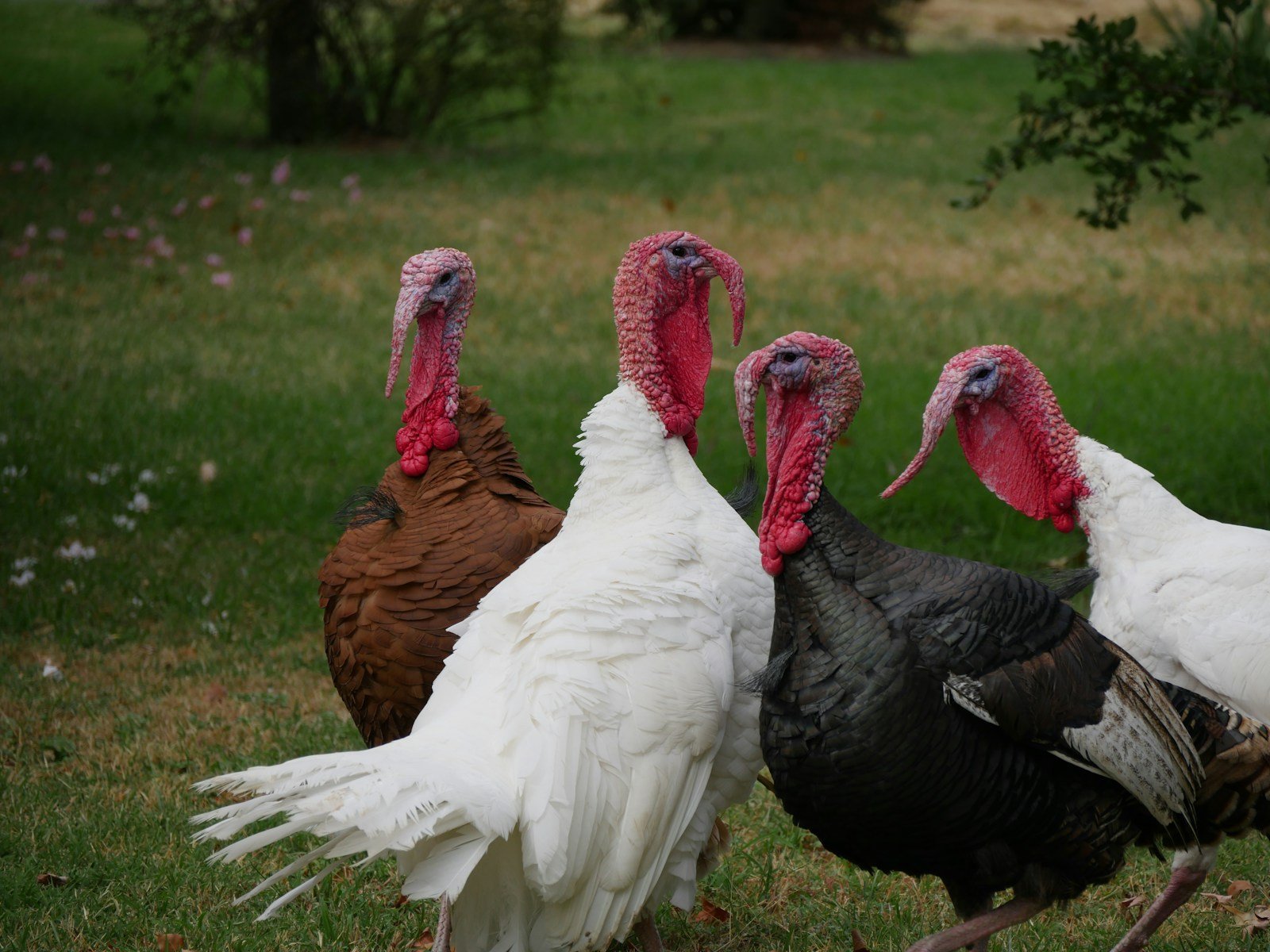
Heritage turkey breeds, such as the Bourbon Red, Narragansett, Royal Palm, Black Spanish, and Standard Bronze, are closer to the traditional turkey body type: leaner, more athletic, capable of flight (at least short distances), and generally longer-lived and healthier than commercial breeds. These are popular choices for people specifically seeking a pet rather than a meat bird, since heritage breeds tend to have fewer of the structural health problems associated with commercial turkeys.
Broad Breasted Whites and Broad Breasted Bronze
These are the breeds most commonly raised for meat production, bred specifically for rapid growth and a large breast, which unfortunately comes with serious downsides if you intend to keep one long-term as a pet. Broad breasted turkeys grow so quickly and so heavy that their legs and joints often can’t keep up, leading to lameness, joint pain, and heart problems, and their lifespan even with excellent care is usually shorter than a heritage breed’s. Some people do end up with a broad breasted turkey as a pet, often a rescue from a farm or a “leftover” from a hatchery order, and with the right care and weight management, these turkeys can live several happy years, but it does require a more careful approach to diet and mobility support than a heritage breed would.
Wild Turkeys
Wild turkeys are a different matter entirely. They’re a protected species in many regions, and keeping one as a pet is often illegal without specific permits, since wild turkey populations are managed as game animals. If you find an injured or orphaned wild turkey, the right move is almost always to contact a licensed wildlife rehabilitator rather than attempting to raise it yourself.
Getting Your First Pet Turkey
Where to Get One
Most pet turkeys come from one of a few sources: hatcheries (which sell turkey poults, or baby turkeys, often with a minimum order quantity since they’re social birds that don’t do well shipped or raised alone), local breeders, farm supply stores during the spring “chick season,” or rescues and sanctuaries that occasionally take in turkeys that were surrendered or rescued from unwanted situations.
If your goal is specifically a companion animal rather than a meat bird, reaching out to a rescue or a heritage breed breeder who understands you want a pet is often a better path than a generic hatchery order, since you can ask more directly about temperament and get guidance suited to long-term keeping.
Should You Get More Than One?
Turkeys are highly social birds, and while an individual turkey can bond very closely with a human family, most turkeys do better long-term with at least one turkey companion, or living alongside other poultry like chickens or ducks. A completely solitary turkey, with no other bird companionship, can become overly dependent on human interaction or develop stress-related behaviors. If your setup allows it, keeping at least two turkeys together, or integrating one into an existing flock, tends to lead to a calmer, more well-adjusted bird overall.
Legal Considerations
Before bringing home a turkey, it’s worth checking your local zoning laws and any homeowners’ association rules. Many urban and suburban areas restrict or outright prohibit keeping poultry, including turkeys, and rules vary a lot by city and county. Rural properties usually have far fewer restrictions, but it’s still worth a quick check, especially around noise ordinances, since a gobbling tom turkey can be quite loud, particularly during breeding season.
Housing Your Pet Turkey
Space Requirements
Turkeys need considerably more space than the average backyard chicken. As a rough guideline, adult turkeys benefit from at least 8 to 10 square feet of coop space per bird indoors, and considerably more outdoor run or free-range space, ideally several hundred square feet or more per bird if possible. Turkeys are large, active birds, and cramped housing contributes to stress, feather picking, and aggression.
Coop Setup
A turkey coop should be well-ventilated but draft-free, secure against predators (turkeys are vulnerable to foxes, coyotes, raccoons, and birds of prey, especially at night), and tall enough for the birds to move around comfortably, since adult turkeys are considerably taller than chickens. Roosting bars should be sturdy and set at a height the turkey can comfortably reach, keeping in mind that heavier breeds may have difficulty flying up to very high roosts.
Bedding options like straw, pine shavings, or hemp bedding work well, and the coop should be cleaned out regularly to prevent ammonia buildup from droppings, which can cause respiratory irritation over time.
Outdoor Access
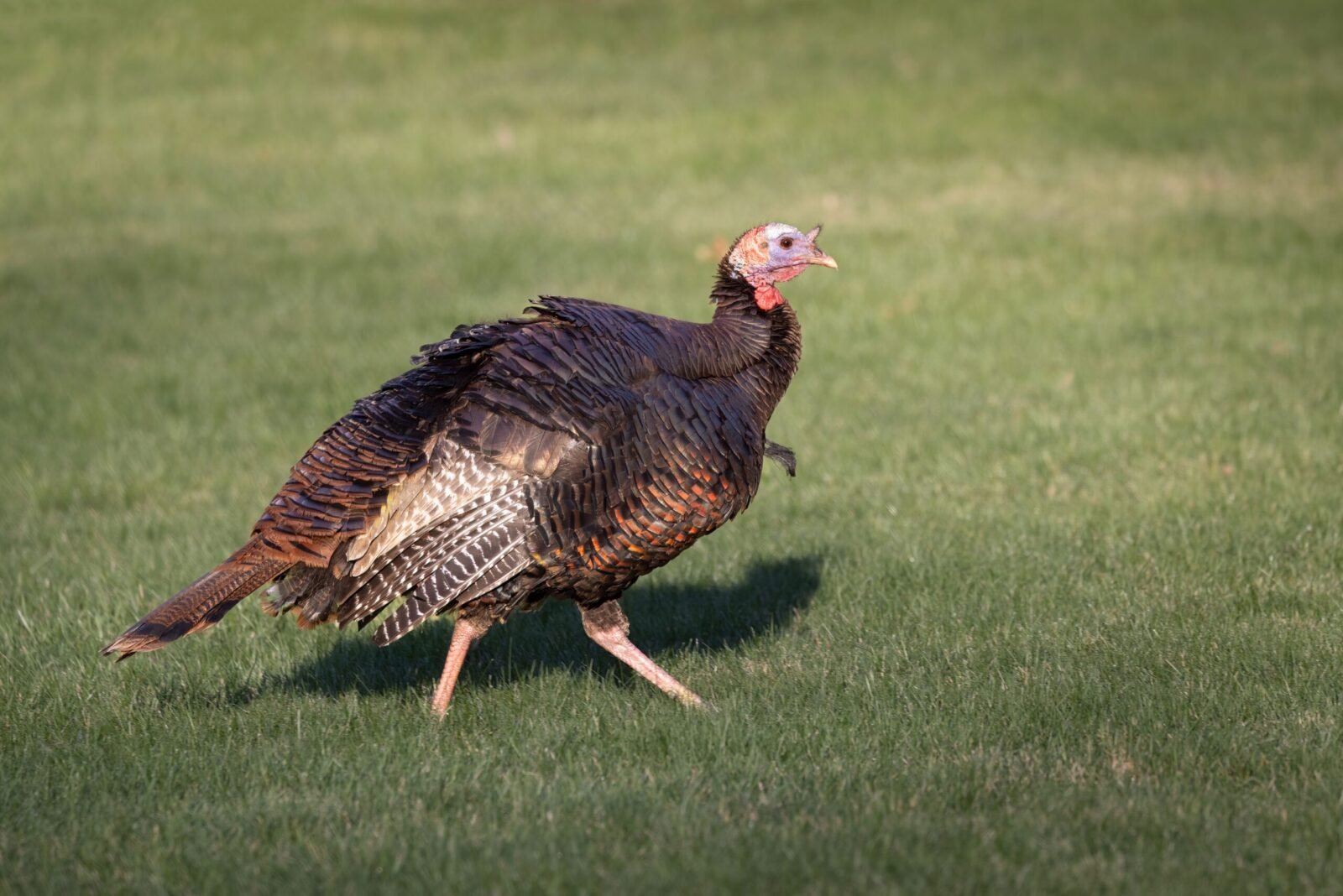
Turkeys genuinely thrive with access to outdoor space where they can forage, dust bathe, and explore. Free-ranging turkeys spend a good portion of their day picking through grass and soil for insects, seeds, and greenery, which is both good for their physical health and their mental stimulation. If free-ranging isn’t safe due to predators or busy roads nearby, a large, securely fenced run with some natural ground cover is the next best option.
Weather Protection
Turkeys are fairly hardy birds and tolerate a range of temperatures, but extreme heat and extreme cold both require some accommodation. In hot weather, shade, ventilation, and access to cool water are essential, since turkeys can suffer heat stress, especially heavier breeds. In cold climates, a draft-free, insulated coop with dry bedding helps them stay warm, and while turkeys can handle cold better than heat in general, wet, damp cold combined with wind is the most dangerous combination for them.
Feeding a Pet Turkey
Turkey nutrition is one of those areas where getting it right really matters, particularly because turkeys have different protein requirements than chickens at different life stages, and feeding a turkey the wrong feed for too long can cause real problems.
Poult Starter Feed (0–8 Weeks)
Baby turkeys, called poults, need a high-protein starter feed, typically around 28% protein, which is notably higher than chick starter feed for baby chickens. This higher protein content supports their rapid early growth. It’s worth noting that turkey poults should not be fed medicated chick starter formulated for chickens, since some medications used in chicken feed (particularly certain coccidiostats) can be toxic to turkeys. Always check that a feed is labeled safe for turkeys specifically, or use a feed formulated for “game birds” or “turkey starter,” which tends to be safe for poults.
Grower Feed (8–16 Weeks)
As turkeys grow, they transition to a grower feed with slightly reduced protein, generally somewhere around 20 to 24%, which supports continued healthy development without encouraging excessively rapid weight gain, particularly important for heritage breeds where you want steady, sustainable growth rather than the rapid growth pattern seen in commercial meat birds.
Adult Maintenance Feed (16+ Weeks)
Adult turkeys do well on a maintenance feed with around 16 to 18% protein, sometimes labeled as “turkey grower/finisher” or a general poultry maintenance feed appropriate for turkeys. If you’re keeping a mixed flock of chickens and turkeys together, it’s worth knowing that standard chicken layer feed is not ideal for turkeys long-term, since layer feed is formulated with a calcium level suited to egg-laying hens, and too much calcium over time can cause kidney damage in turkeys. If you do keep a mixed flock, a lower-calcium “flock raiser” or all-flock feed, supplemented with separate oyster shell offered free-choice for the laying hens, tends to work better for everyone’s health.
Foraging and Treats
Turkeys love to forage, and letting them access pasture, bugs, and greenery is great for both their nutrition and their overall wellbeing. Safe treats in moderation include mealworms, leafy greens, berries, and cooked vegetables. As with most poultry, avoid feeding turkeys anything from the onion or avocado family, chocolate, caffeine, or heavily processed, salty, or sugary human food, all of which can be harmful.
Grit
Since turkeys don’t have teeth, they rely on grit, small stones or a commercial granite grit product, stored in their gizzard to help physically grind up food. If your turkey doesn’t have natural access to small stones or gravel while foraging, offering a small dish of poultry grit ensures proper digestion.
Water
Fresh, clean water should always be available, and turkeys drink a fair amount, particularly in hot weather. A larger poultry waterer designed for bigger birds works better than a small chicken waterer, since turkeys can struggle to drink comfortably from equipment sized for smaller birds.
Turkey Behavior and Personality
Bonding With Humans
Turkeys raised from poults with regular, gentle human interaction often become remarkably affectionate. It’s common for a well-socialized pet turkey to seek out physical contact, sit near its favorite person, or even attempt to sit in a lap (which, for a fully grown turkey, can be quite the surprise the first time it happens). Toms (male turkeys) in particular are known for forming strong attachments and sometimes displaying almost dog-like devotion to a specific person.
Strutting and Displaying
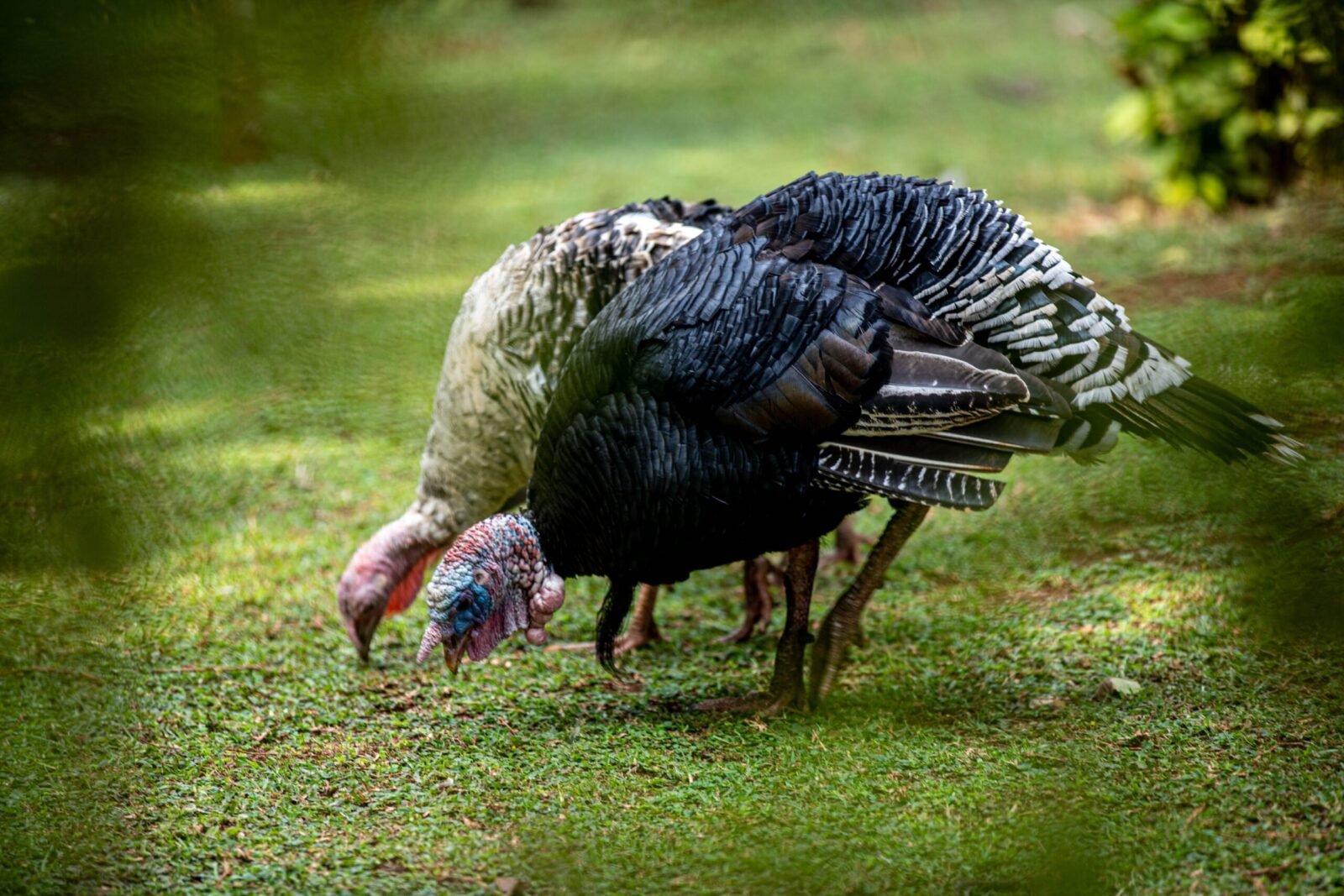
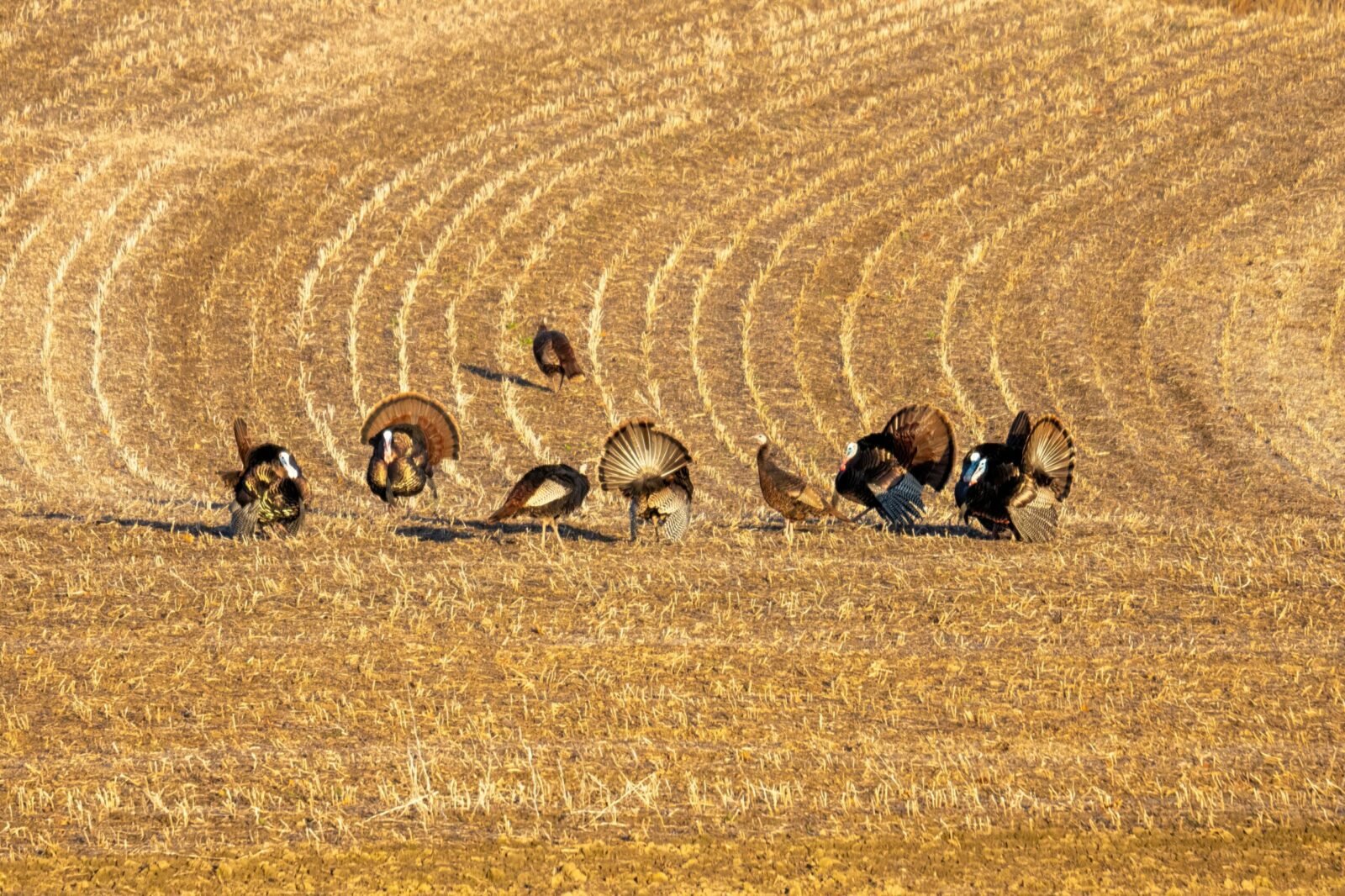
One of the most iconic turkey behaviors is strutting, when a tom fans out his tail feathers, puffs up his body, drags his wings, and struts around, often accompanied by gobbling. This is a natural display behavior related to establishing dominance and attracting mates, and pet toms will often strut for their favorite humans as a form of showing off or greeting, not necessarily aggression.
Vocalizations
Turkeys have a wide vocabulary. The classic gobble is mostly heard from toms, especially during breeding season and in the morning, and it can be genuinely loud, something to seriously consider if you have close neighbors. Beyond gobbling, turkeys make soft clucking and purring sounds when content, sharp yelps or alarm calls when startled or warning of danger, and a range of other vocalizations used for general flock communication.
Aggression and Dominance
Toms, in particular, can become aggressive, especially during breeding season or if they perceive a person as a rival rather than a flock leader. This is more common in toms that were hand-raised without other turkey company and imprinted heavily on humans, since they may attempt to establish dominance over their owners the way they would over another turkey. Establishing calm, confident handling early, avoiding behaviors that could be interpreted as a challenge (like allowing a young tom to chase or peck without correction), and being cautious around adult toms during breeding season all help minimize aggression issues. Hens are generally much less prone to aggressive behavior.
Handling and Socialization
Turkeys handled gently and consistently from a young age tend to be far more comfortable with human touch and handling as adults. Picking up a poult carefully and often (while supporting its body properly), talking to it, and offering treats by hand all help build trust. Adult turkeys that weren’t socialized as poults can still warm up to people with patient, consistent, low-pressure interaction, but it takes more time and gentleness.
Turkey Health: What to Watch For
Common Health Issues
Blackhead disease (histomoniasis): This is one of the most well-known turkey health concerns, a parasitic disease that primarily affects the liver and intestines, often transmitted via a parasite carried by chickens (specifically through cecal worm eggs that harbor the histomoniasis organism). This is actually one of the main reasons some poultry keepers avoid housing turkeys and chickens together, since chickens can carry and spread the organism without showing symptoms themselves, while it can be quite serious or even fatal in turkeys. If you do keep a mixed flock, watching for signs like lethargy, yellowish droppings, and reduced appetite, and consulting an avian vet promptly if you suspect it, is important.
Respiratory infections: Turkeys can develop respiratory infections from poor ventilation, ammonia buildup in dirty coops, or exposure to other sick birds. Symptoms include coughing, sneezing, nasal discharge, and labored breathing, all of which warrant a vet visit.
Leg and joint problems: Especially relevant for broad breasted breeds, whose rapid growth and heavy body weight put significant strain on their legs and joints. Signs include limping, reluctance to stand or walk, and swelling around the joints. Weight management, supportive bedding, and in some cases joint supplements recommended by a vet can help.
Bumblefoot: A bacterial infection of the footpad, often caused by cuts, abrasions, or standing on hard or unclean surfaces for extended periods, leading to swelling and a hard, dark scab on the bottom of the foot. It requires veterinary treatment, sometimes involving cleaning and draining the infected area and a course of antibiotics.
Parasites: Both internal parasites (worms) and external parasites (mites and lice) can affect turkeys. Regular observation, occasional fecal testing through a vet, and appropriate treatment when needed help keep parasite loads under control.
Heat stress: As mentioned earlier, turkeys, especially heavier breeds, are vulnerable to overheating in hot weather. Signs include panting, holding wings away from the body, lethargy, and in severe cases collapse, all of which require immediate cooling measures and veterinary attention.
Preventive Care
Routine health checks, keeping housing clean and dry, providing appropriate nutrition for their life stage, ensuring proper ventilation, and controlling parasite exposure all go a long way toward preventing many of the issues above. Finding an avian or poultry-experienced veterinarian in your area before you need one (rather than scrambling during an emergency) is one of the smartest things a new turkey owner can do, since not every vet clinic treats poultry.
Signs of a Healthy Turkey
A healthy turkey is alert, active, has clear eyes and nostrils, smooth feathers without excessive picking or bald patches, a steady appetite, and normal droppings. Any sudden change in behavior, appetite, mobility, or droppings is worth paying attention to and, if it persists, worth a vet consultation.
Turkey Lifespan
With good care, heritage breed turkeys often live somewhere between 8 and 12 years, and some have been known to live even longer with excellent care and a bit of luck. Broad breasted breeds, due to the health complications associated with their rapid growth and heavy body weight, generally have a shorter lifespan, often in the range of a few years, even with attentive care, though weight management and joint support can help extend their comfortable years.
Turkeys and Other Animals
Turkeys often do well in mixed flocks with chickens and ducks, provided there’s enough space for everyone and the blackhead disease risk mentioned earlier is taken seriously. Turkeys are generally larger and can sometimes dominate smaller chickens at feeding time, so it’s worth watching flock dynamics, particularly when first introducing turkeys to an established flock, to make sure everyone has fair access to food and space.
As for household pets like dogs and cats, many turkeys coexist peacefully with well-behaved, poultry-savvy dogs, though supervision is important, especially with breeds that have strong prey drives. A calm introduction process, rather than throwing a new dog and turkey together unsupervised, makes a big difference in how well they get along long-term.
Is a Pet Turkey Right for You?
Turkeys make wonderful companions for people with enough space, an interest in poultry keeping, and a willingness to accommodate their specific needs, but they’re not a great fit for everyone. If you’re in a small urban space with strict noise or zoning restrictions, a turkey (particularly a gobbling tom) is likely to cause problems with neighbors or local ordinances. If you’re looking for a low-maintenance pet, turkeys, with their space requirements, social needs, and health considerations, ask for more than a low-key companion animal typically would.
But if you’ve got room to give them, an appreciation for a genuinely characterful animal, and the patience to learn their particular care needs, a pet turkey can become one of the more surprising, rewarding companions you’ll ever keep. They greet you at the gate, they follow you around the yard, they strut and preen and puff up with what looks an awful lot like pride, and they form the kind of bond that tends to catch first-time turkey owners completely off guard, in the best possible way.
Final Thoughts
Turkeys deserve a lot more credit than they usually get. Beyond the holiday stereotype is a genuinely intelligent, social, and affectionate bird capable of forming real bonds with the people who care for them. Like any animal, they come with specific needs, space, proper nutrition, companionship, and attentive health care, but for the right home, those needs are entirely manageable, and the payoff is a companion animal unlike almost anything else you could bring into your life.
Whether you’re drawn to the idea of a heritage breed turkey strutting proudly across your backyard, or you’ve found yourself unexpectedly caring for a rescued bird who needed a home, understanding what pet turkeys truly need is the first step toward giving them a long, healthy, and genuinely happy life.