 By Admin
There’s a dog out there that looks like it was stretched on purpose, and somehow, that design flaw (or feature, depending on who you ask) has made it one of the most beloved breeds on the planet. The Dachshund — often mispronounced, frequently misspelled, and lovingly nicknamed “wiener dog,” “sausage dog,” or “doxie” — is a breed that manages to be equal parts comedy and dignity. Long body, short legs, oversized personality. If you’ve ever seen one trot across a room like it owns the deed to the house, you already know exactly what I mean.
But there’s a lot more to this breed than its silhouette. Dachshunds were bred for a job, and that job shaped everything about who they are today — their stubbornness, their bark, their digging habit, even their surprising physical strength. This guide walks through everything a current or future Dachshund owner should actually know, not just the cute stuff, but the real stuff: health risks tied to that famous long spine, feeding needs, temperament quirks, housing considerations, and what ownership really costs over a lifetime.
Where the Dachshund Came From
The Dachshund’s story starts in Germany, and the name itself gives it away — “Dachshund” translates roughly to “badger dog.” That wasn’t a cute marketing choice. These dogs were purpose-built, sometime in the 16th and 17th centuries, to hunt badgers. Not chase them off a lawn — actually go underground, into burrows, and fight them.
Think about that for a second. A badger is a stocky, aggressive animal with sharp claws built for digging and a bite that can do real damage. The Dachshund’s body shape — short legs, long torso, powerful chest, and a tail that could be grabbed to pull the dog back out of a tunnel — was engineered specifically to let it chase prey into narrow underground burrows and hold its ground once it got there. The loose, somewhat wrinkled skin on some Dachshunds also served a purpose: it gave them room to maneuver and reduced the damage from bites in tight quarters.
Over time, breeders developed different sizes and coat types for different jobs. The Standard Dachshund handled badgers and even wild boar. The Miniature Dachshund, smaller and more agile, was better suited to hunting rabbits and other small game. Three coat varieties emerged as well — smooth, wirehaired, and longhaired — each with slightly different origins and slightly different temperaments, though all three share the same core Dachshund spirit.
By the 19th century, the breed had made its way into European high society, partly through royal endorsement (Queen Victoria was famously fond of them), and the working dog slowly transitioned into a companion animal. That transition, though, didn’t erase the hunting instincts. Modern Dachshunds still dig, still bark at anything that moves, and still approach the world with the confidence of an animal that used to fight badgers for a living.
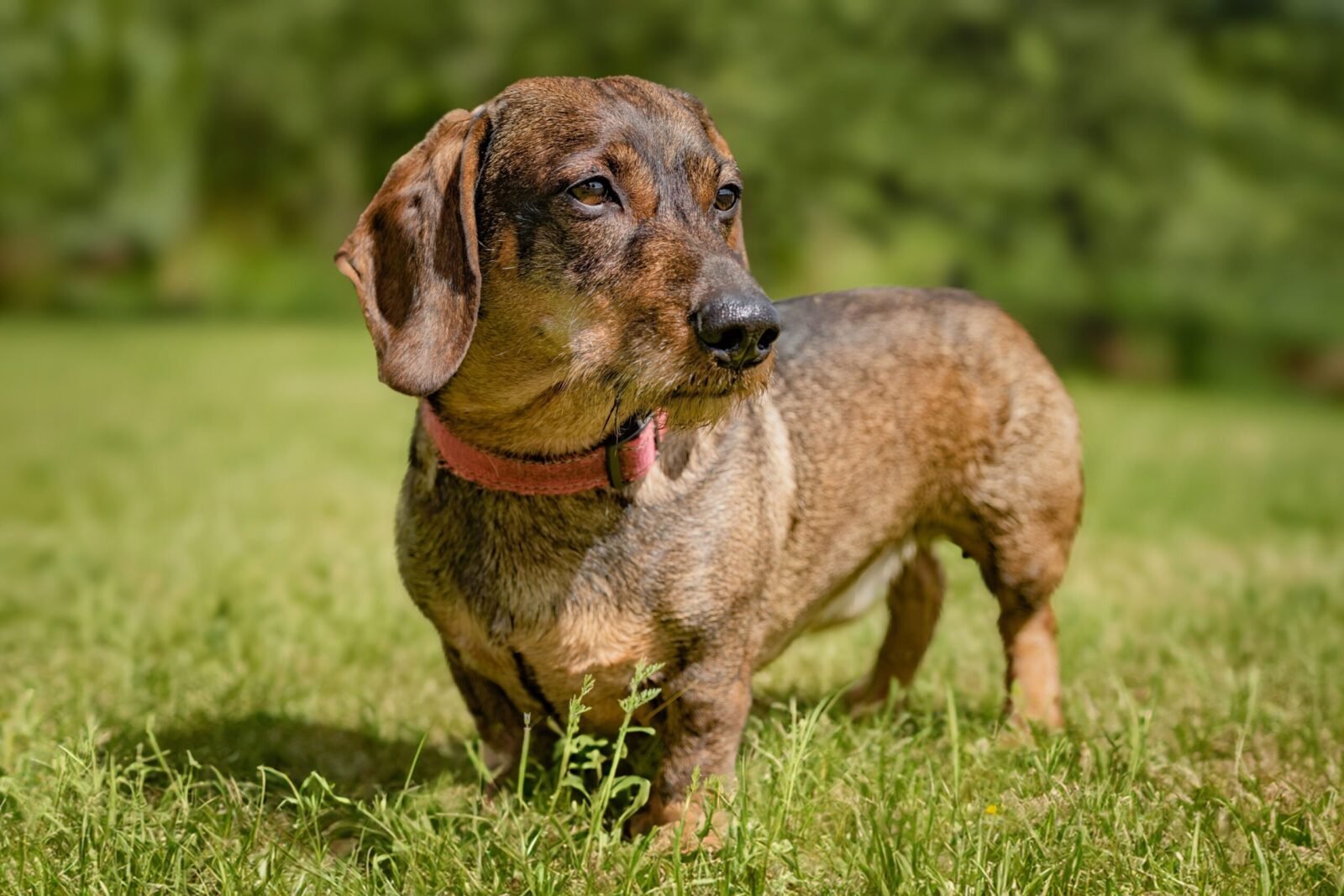
What a Dachshund Actually Looks Like Up Close
Everyone knows the silhouette, but the details matter for anyone considering ownership.
Size: Dachshunds come in two official size categories. Standard Dachshunds typically weigh between 16 and 32 pounds, while Miniature Dachshunds usually stay under 11 pounds. There’s also an unofficial “Tweenie” category for dogs that fall in between, though this isn’t recognized by most kennel clubs.
Coat types: Smooth-coated Dachshunds have short, shiny fur that requires minimal grooming. Wirehaired Dachshunds have a dense, bristly coat with facial furnishings — bushy eyebrows and a beard that give them a scruffy, terrier-like appearance. Longhaired Dachshunds have soft, wavy fur, often with feathering on the ears, chest, and legs, giving them a more elegant look.
Color: The breed comes in an enormous range of colors and patterns — red, black and tan, chocolate, cream, wheaten, blue, and combinations like dapple (a mottled, marbled pattern), brindle, sable, and piebald. Some of these color combinations, particularly double dapple, carry health risks tied to genetics, which is worth researching before choosing a puppy based on coat pattern alone.
Build: The elongated spine and short legs aren’t just aesthetic quirks — they’re the defining structural feature of the breed and the source of its most serious health vulnerability, which we’ll get into shortly.
Temperament: Big Dog Energy in a Small Dog Body
If there’s one word that sums up the Dachshund personality, it’s “bold.” These dogs do not seem to have received the memo about their own size. They will confront dogs five times their weight, bark at delivery trucks like the house is under siege, and dig through a couch cushion with the same determination their ancestors once used to dig through soil.
Independent and stubborn: Dachshunds were bred to work alone underground, out of sight and out of earshot of their handler, making split-second decisions without waiting for instruction. That independence didn’t disappear just because the dog now lives on a couch. Training a Dachshund requires patience, consistency, and a sense of humor. They’re smart, but they’re not naturally eager to please the way a Labrador is — they’re more likely to weigh whether your request is actually worth their time.
Loyal and affectionate: Underneath the stubbornness is a dog that bonds deeply, often to one primary person, though they can be affectionate with the whole household. Many Dachshunds are notorious lap dogs and burrowers — they love climbing under blankets, pillows, or clothing, an instinct that traces directly back to their den-hunting background.
Vocal: Dachshunds bark. A lot. They were bred to alert hunters to what was happening underground, and that instinct has translated into a dog that announces every doorbell, passing car, and suspicious leaf blowing across the yard. Apartment dwellers should factor this in seriously before bringing one home.
Good with families, cautious with strangers: Well-socialized Dachshunds tend to do well with children, though their long spines make them vulnerable to injury from rough handling, so supervision with young kids matters. They can be wary of strangers and other animals, particularly if not exposed to varied social situations early in life.
Prey drive: That hunting heritage means many Dachshunds have a strong instinct to chase small animals, including cats, rabbits, and rodents. This isn’t universal, but it’s common enough that introductions to other pets should be handled carefully.
The Health Conversation Every Owner Needs to Have
This is the part of Dachshund ownership that gets talked about the least in cute internet videos and the most in veterinary offices, so it deserves real attention.
Intervertebral Disc Disease (IVDD): This is the defining health risk of the breed. The Dachshund’s elongated spine and shortened legs are the result of a genetic condition called chondrodysplasia, which affects cartilage growth. That same genetic trait that gives the breed its shape also makes the discs between their vertebrae more prone to premature degeneration and herniation. Somewhere between one in four and one in five Dachshunds will experience some form of IVDD in their lifetime — a rate dramatically higher than most other breeds.
IVDD can range from mild back pain to partial or complete paralysis, and in severe cases, it requires emergency surgery. Because of this risk, Dachshund owners are generally advised to:
- Avoid letting the dog jump on and off furniture, using ramps or steps instead
- Limit stair use, especially in puppies and seniors
- Avoid activities that involve twisting the spine, like standing on hind legs for extended periods
- Keep the dog at a lean, healthy weight, since excess weight puts additional strain on the spine
- Use a harness instead of a collar for walks, reducing pressure near the neck and upper spine
- Watch for early signs of back trouble — reluctance to move, yelping when touched, hunched posture, or dragging of the back legs — and treat any of these as a reason for an immediate vet visit
Obesity: Because Dachshunds have low exercise needs relative to their appetite, and because extra weight is particularly dangerous for their spine, weight management deserves more attention in this breed than almost any other. A Dachshund carrying even a small amount of excess weight is at meaningfully higher risk for IVDD and joint problems.
Dental disease: Small breeds in general are prone to dental issues due to crowded teeth, and Dachshunds are no exception. Regular brushing and professional cleanings matter more than owners often expect.
Patellar luxation: A dislocating kneecap condition that shows up in many small breeds, causing intermittent limping or a skipping gait.
Progressive Retinal Atrophy (PRA): An inherited eye condition that leads to gradual vision loss and eventual blindness. Responsible breeders test for this.
Eye conditions in dapple-colored dogs: Double dapple Dachshunds — those bred from two dapple-patterned parents — carry an elevated risk of eye defects and deafness due to the genetics behind the dapple pattern. This is one of the more important things to research before choosing a puppy based on coat color.
Cushing’s disease and diabetes: Both show up with some regularity in the breed, particularly in older dogs.
With a combination of responsible breeding, weight management, and precautions around jumping and stairs, many Dachshunds live long, healthy lives — the average lifespan runs from about 12 to 16 years, which is on the longer end for dogs generally. But the spine risk is real, and it’s not something to gloss over when deciding whether this breed fits your household and your ability to manage it.
Feeding a Dachshund the Right Way
Feeding a Dachshund isn’t complicated, but it does require discipline, mostly because these dogs are notoriously food-motivated and will happily eat well past the point of being full.
Portion control matters more than diet type: Because Standard Dachshunds only need somewhere around 700 to 900 calories a day (less for Miniatures), and because table scraps and treats add up fast in a small body, measuring food rather than eyeballing it is important. Free-feeding — leaving food out all day — is generally a bad idea for this breed.
Life stage matters: Puppies need a formula designed for growth, with appropriate calcium and phosphorus ratios to support healthy bone and joint development. Adult Dachshunds do well on a high-quality maintenance formula, and senior dogs often benefit from joint-supporting nutrients like glucosamine and chondroitin, given their elevated risk of spinal and joint issues.
Protein quality: Like most dogs, Dachshunds thrive on food where a named animal protein (chicken, beef, salmon) is the first ingredient, rather than vague meat byproducts or heavy filler grains.
Treats in moderation: Because weight gain directly increases IVDD risk, treats should be genuinely occasional, and low-calorie options (small pieces of carrot, green beans, or commercial low-calorie treats) are worth incorporating instead of high-fat, high-calorie snacks.
Watch for food sensitivities: Some Dachshunds develop skin or digestive sensitivities to certain proteins or grains. If a dog is showing chronic itchiness, ear infections, or soft stool, a conversation with a vet about an elimination diet can help identify the culprit.

Exercise and Mental Stimulation
Despite their tiny legs, Dachshunds are not couch ornaments. They need regular activity, both physical and mental, though the type of activity matters given their spine vulnerability.
Daily walks: Two shorter walks a day tend to work better than one long one, both for energy management and for reducing strain. A total of 30 to 60 minutes of activity daily is a reasonable target for most adult Dachshunds.
Avoid high-impact activity: Activities involving jumping, sharp twisting, or repeated stair climbing should be minimized. This rules out things like agility courses involving jumps unless specifically adapted, and it means being thoughtful about rough play with other dogs.
Mental enrichment: Because of their hunting background, Dachshunds love using their nose. Scent games, puzzle feeders, and snuffle mats tap into that instinct and tire them out mentally in a way that’s easier on the body than physical exertion.
Digging outlets: Given half a chance, most Dachshunds will dig — in the yard, in couch cushions, in laundry baskets. Providing a designated digging box filled with sand or soil, where digging is allowed and even encouraged, can save a garden and a great deal of household frustration.
Grooming Needs by Coat Type
Grooming requirements vary noticeably depending on which of the three coat types a particular Dachshund has.
Smooth coat: The lowest-maintenance option. A weekly wipe-down with a grooming mitt or soft brush keeps shedding under control and the coat glossy.
Wirehaired coat: Requires more attention, including regular brushing to prevent matting and periodic hand-stripping or trimming (often done by a professional groomer) to maintain the coat’s texture and appearance.
Longhaired coat: Needs the most regular brushing, typically several times a week, to prevent tangles, especially around the ears, legs, and belly where feathering is heaviest.
All three coat types benefit from regular nail trims, ear checks (especially important since Dachshund ears can trap moisture and debris), and dental care.
Housing and Living Situations
One of the genuinely appealing things about Dachshunds is how adaptable they are to different living situations, provided a few key factors are addressed.
Apartment living: Dachshunds do reasonably well in apartments given their small size and moderate exercise needs. The main challenge is the barking — thin walls and close neighbors don’t mix well with a breed known for vocal alerts, so early training around excessive barking is worth prioritizing in this setting.
Stairs: Homes with multiple flights of stairs require extra thought. Given the IVDD risk, many owners install ramps or restrict stair access, particularly for puppies still developing and seniors with weakening backs.
Yards: A securely fenced yard is valuable, partly for exercise and partly because Dachshunds have a genuine talent for escape-digging under fences if bored or motivated by something on the other side.
Climate considerations: Smooth-coated Dachshunds, in particular, have limited natural insulation and can get cold quickly in low temperatures. A dog coat or sweater for winter walks isn’t just for show with this breed — it’s genuinely useful.
Other pets: Given their prey drive and territorial streak, introductions to cats, small pets, and other dogs should be gradual and supervised, particularly with rodents, rabbits, or birds in the household.
The Real Cost of Owning a Dachshund
Anyone considering a Dachshund should go in with clear eyes about the financial commitment, which extends well beyond the initial purchase or adoption fee.
Initial cost: Purchasing from a reputable breeder typically runs anywhere from $500 to $2,000 or more, depending on lineage, coat type, and region, while adoption fees through rescues are usually far lower, often in the $100 to $400 range.
Ongoing costs: Food, routine vet visits, grooming (for wire and longhaired coats), flea and tick prevention, and basic supplies add up to a few hundred to over a thousand dollars annually, depending on quality of care chosen.
The IVDD factor: This is where Dachshund ownership costs can spike dramatically and unpredictably. Emergency spinal surgery for a herniated disc can run anywhere from $3,000 to $10,000 or more, depending on severity and location. Recovery often involves crate rest, physical therapy, and sometimes long-term medication. Pet insurance that covers orthopedic and spinal conditions, purchased early before any symptoms appear, is something many veterinarians specifically recommend for this breed given how common the condition is.
Dental care: Given the breed’s susceptibility to dental disease, budgeting for professional cleanings every year or two is worth factoring in.
Taken together, prospective owners should budget not just for the visible costs of daily care, but for the real possibility of a significant, unplanned veterinary expense tied directly to the breed’s spinal structure.
An Honest Ownership Assessment
Dachshunds are wonderful dogs for the right household, but they’re not the right fit for everyone, and it’s worth being honest about that rather than only listing the charming parts.
A Dachshund might be a good fit if you:
- Live in a smaller space, including apartments, and want a dog that doesn’t need acres of running room
- Are willing to commit to weight management and activity restrictions to protect their spine
- Can tolerate, train around, or live with a genuinely vocal dog
- Want a companion with real personality rather than a passive lap dog
- Are prepared for the possibility of significant vet bills tied to spinal health, ideally cushioned by pet insurance
- Have patience for a dog that is smart but not naturally obedient
A Dachshund might not be the right fit if you:
- Live somewhere that strictly limits noise, like a thin-walled apartment complex with noise complaints already an issue
- Have young children who can’t be trusted to handle a small, spine-vulnerable dog gently
- Want a dog that will pick up obedience training quickly and eagerly
- Have small pets like rabbits, hamsters, or birds in the home and aren’t prepared to manage prey drive carefully
- Aren’t financially or emotionally prepared for the real possibility of a spinal health crisis
For the people who do take one on with open eyes, though, Dachshunds tend to become exactly the kind of dog people describe with a laugh and a shrug — impossible, occasionally infuriating, and completely irreplaceable once you’ve lived with one for a while. Underneath the stubbornness is a genuinely devoted animal that will follow you from room to room, dig a hole in your favorite blanket, bark at nothing, and curl up against you like it’s the safest place in the world. Which, if the last few centuries of Dachshund history are any indication, it probably is.