 By Admin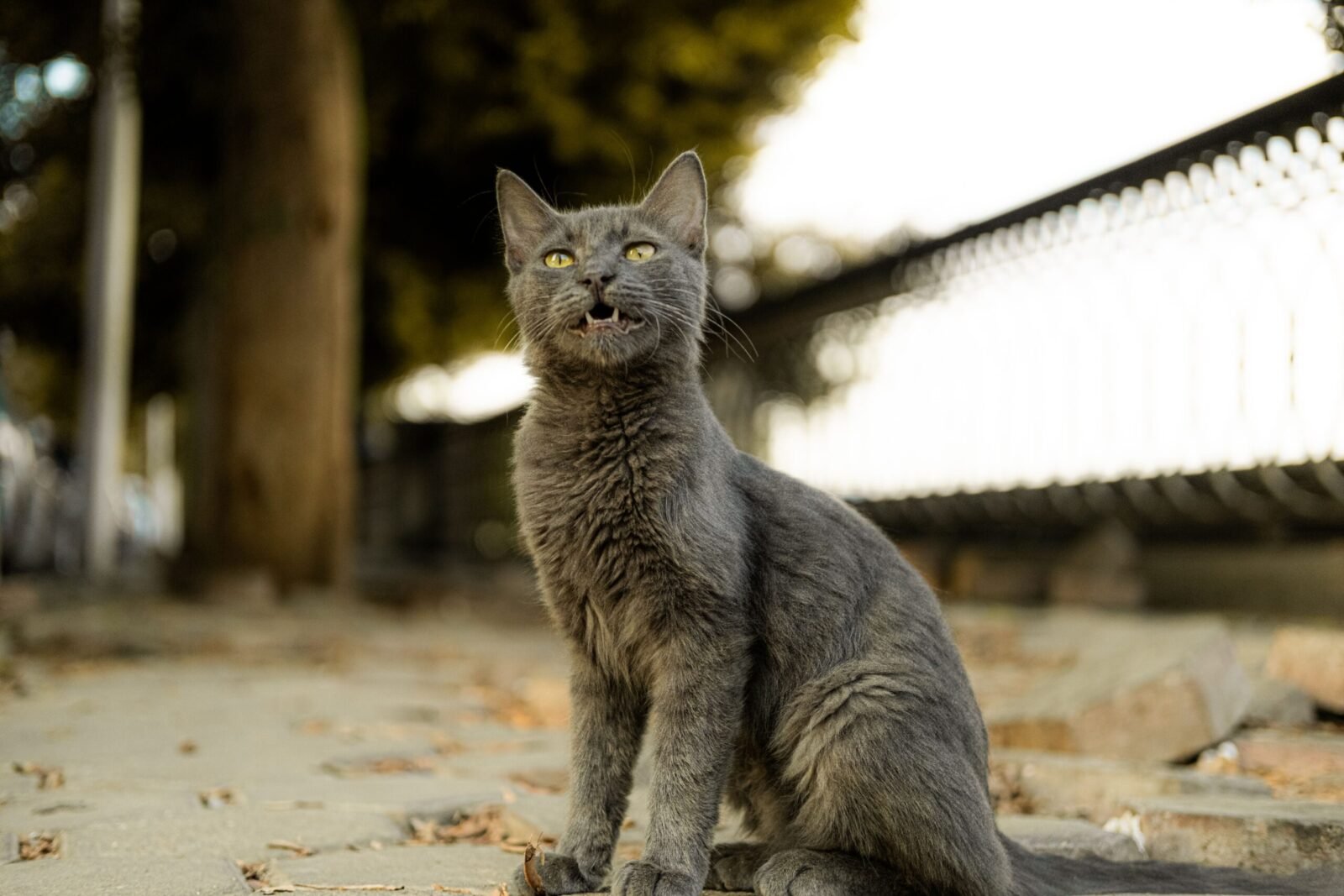
If you’ve never heard of a Nebelung before, you’re not alone — this is one of the rarer, quieter names in the cat fancy world, often overshadowed by its more famous cousin, the Russian Blue. But for the people who know the breed, the Nebelung tends to inspire real devotion. There’s something almost ethereal about them: the name itself comes from the German word “Nebel,” meaning mist or fog, a nod to their shimmering silver-blue coat that seems to shift and glow depending on the light. Add in bright green eyes, an elegant long-bodied frame, and a quietly affectionate personality, and it’s easy to see why owners who find this breed rarely go looking elsewhere.
Because Nebelungs aren’t as widely bred or marketed as more mainstream breeds, a lot of the information floating around about them is thin, recycled, or simply wrong. This guide is meant to give you a genuinely thorough, honest look at the breed — background, temperament, feeding, health, housing, and a candid assessment of who actually thrives with a cat like this.
Breed Background
The Nebelung’s history is relatively short and well documented compared to many cat breeds, which is a nice change from breeds whose origins are murky or based on folklore. The breed began in the United States in the early 1980s, when a longhaired kitten named Siegfried was born to a domestic shorthair mother in Denver, Colorado. His breeder, Cora Cobb, noticed his striking resemblance to a Russian Blue but with a longer coat, and when a related litter later produced another longhaired blue kitten, Brunhilde, the pairing of the two became the foundation of a new breed.
Genetically, the Nebelung is essentially a longhaired variant closely related to the Russian Blue, carrying the same recessive gene for coat length that occasionally shows up in shorthaired blue cat lines. Early breeders worked to establish the Nebelung as a distinct breed rather than simply a longhaired Russian Blue variant, and it was recognized by The International Cat Association (TICA) in 1987 and later by the Cat Fanciers’ Association (CFA) for championship status, though it remains one of the rarer registered breeds even today, with relatively few dedicated breeders compared to more commercially popular cats.
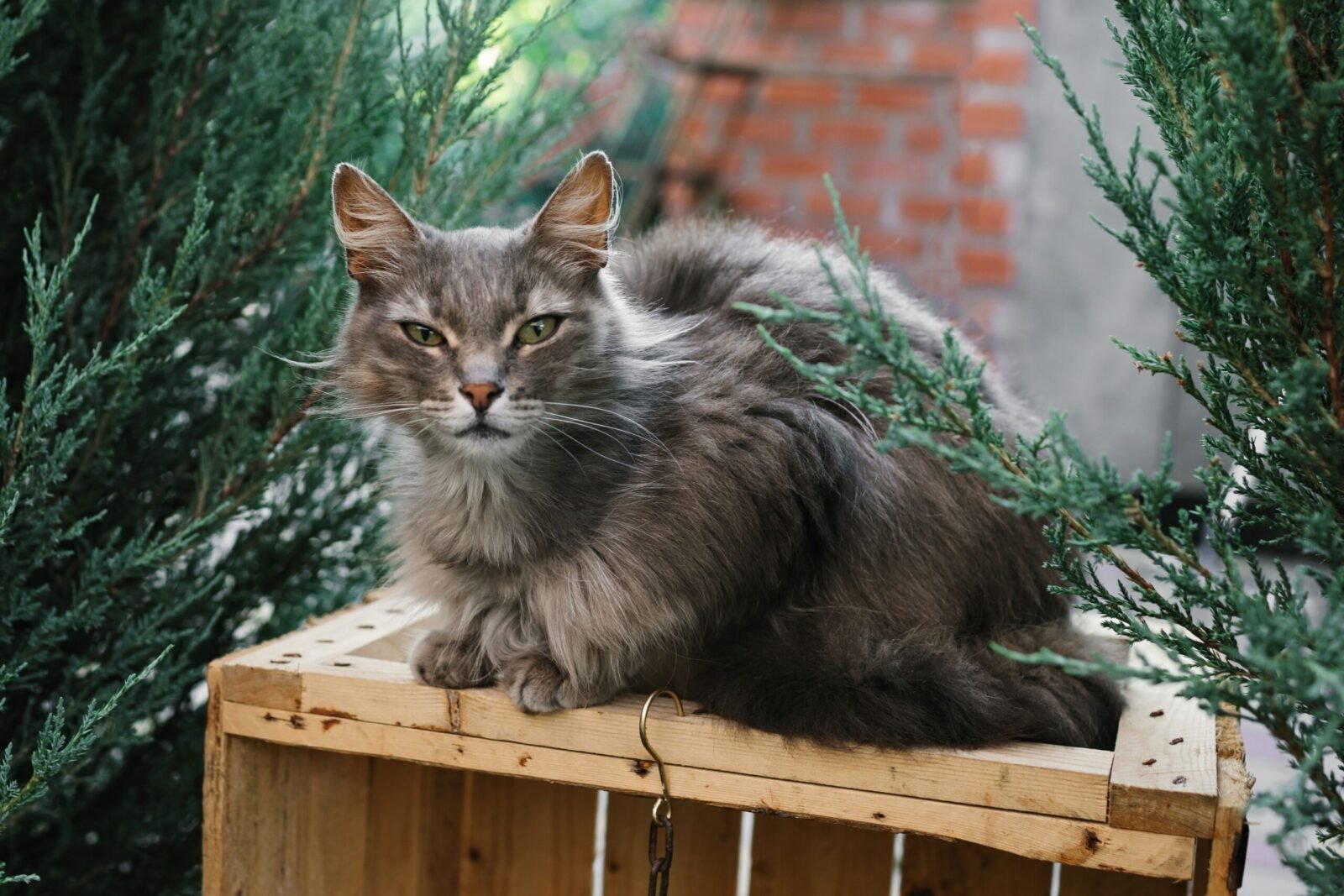
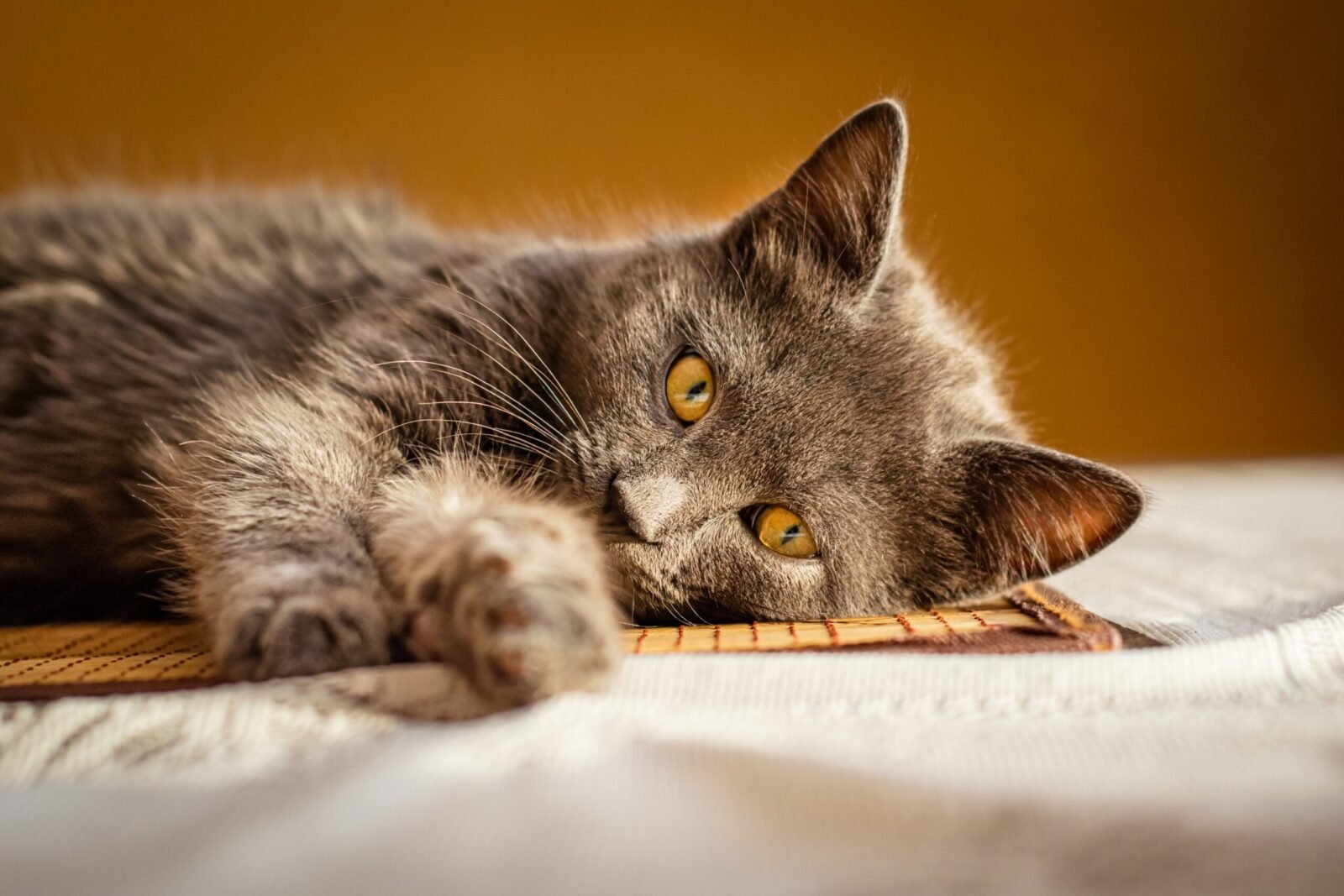
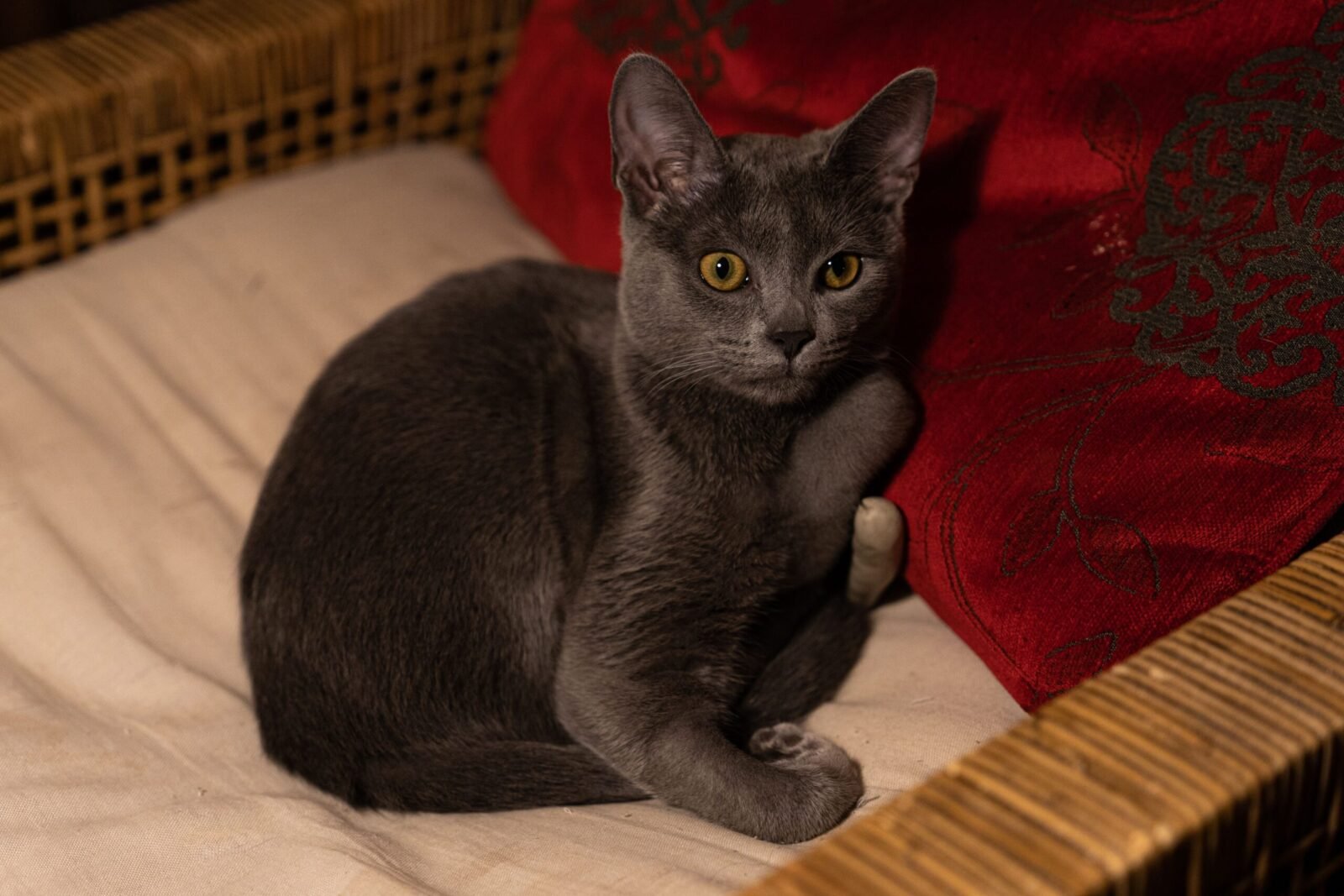
Physically, Nebelungs are medium-sized, elegant cats with a long, lean, muscular body, longer than it looks at first glance due to their fine bone structure. Their signature coat is a solid blue-grey, medium-long, and silky, with a distinctive “tipping” — individual hairs are lighter at the tip, which is what gives the coat its shimmering, almost silvery appearance in the right light. Their eyes are a vivid green, though kittens are often born with yellow or amber eyes that deepen to green as they mature, sometimes not settling into their full adult color until they’re around two years old. Ears are large and slightly pointed, and their overall expression is often described as somewhat serious or thoughtful — a look that suits their generally composed, watchful temperament.
Because the breed is still relatively small in numbers, finding a Nebelung specifically (rather than a general blue longhair or Russian Blue mix) usually means going through a dedicated breeder rather than stumbling across one in a shelter, though blue-coated longhaired cats with Nebelung-like features do occasionally show up in shelters and rescues without full breed documentation.
Temperament
Nebelungs have a reputation, much like their close relative the Russian Blue, for being reserved with strangers but deeply devoted to their own household — and that reputation is well earned.
They bond closely, but selectively. A Nebelung typically forms a strong attachment to their family and often develops a particularly close bond with one person in the household, following them from room to room and seeking out their company consistently. With people outside the immediate family, though, they tend to be shy or outright avoidant, frequently disappearing to a quiet spot when guests arrive rather than greeting them the way a more extroverted breed might.
They’re gentle and quiet by nature. Nebelungs are not a loud or demanding breed. Their voice, when they do use it, tends to be soft and infrequent compared to more vocal breeds like Siamese, and their overall energy is calm and measured rather than boisterous. This makes them a comfortable fit for quieter households, though it also means they’re not the type of cat who will loudly announce their needs — owners need to pay a bit more attention to subtler cues.
They value routine and predictability. Like many reserved breeds, Nebelungs tend to do best in stable, calm environments and can take longer than average to adjust to change — a new home, new furniture arrangement, or new household member (human or animal) often triggers a period of cautious withdrawal before they settle back into their normal confident behavior. This isn’t a fragile or anxious temperament so much as a naturally careful, observant one.
They’re intelligent and can be quite playful once comfortable. Once a Nebelung trusts their environment and the people in it, a more playful, curious side tends to emerge. Many owners describe a noticeable difference between a newly settled Nebelung and one that’s been in the home for six months to a year — the initial reserve gradually gives way to genuine warmth and even mischief, particularly with interactive toys and puzzle feeders that engage their intelligence.
They generally do well with other pets, given time. Nebelungs aren’t typically an aggressive or territorial breed, and with a gradual, properly managed introduction, they often coexist comfortably with other calm cats and dogs. Because of their cautious nature, though, a slow introduction matters more here than it might with a bolder breed — rushing the process is more likely to create lasting wariness.
They’re sensitive to their environment and to conflict. Loud households, frequent visitors, or a chaotic daily rhythm tend to stress Nebelungs more than they would a more resilient, outgoing breed. This is worth being honest with yourself about before bringing one home — a Nebelung will generally thrive in a calm, consistent household and may seem perpetually anxious or withdrawn in a loud, high-traffic one.
Feeding
Nebelungs don’t have unusual dietary requirements as a breed, but their lean, athletic build and moderate activity level are worth keeping in mind when planning meals.
A high-quality commercial cat food, appropriate to life stage, is the right foundation. Look for a formula listing a named animal protein (chicken, turkey, fish) as the first ingredient, and choose specifically formulated kitten, adult, or senior food, since nutritional needs — particularly protein and calorie density — shift meaningfully across a cat’s life.
Wet food offers real hydration benefits. Cats generally have a low thirst drive and get a meaningful portion of their hydration from food in the wild, so incorporating wet food into a Nebelung’s diet, either as the primary food or mixed with dry kibble, supports urinary and kidney health over the long term better than a dry-food-only diet.
Portion control matters for a breed prone to a lean build. Nebelungs tend to have a naturally slim, muscular frame, and while this means they’re less prone to obesity than some heavier-boned breeds, it’s still entirely possible to overfeed them, particularly with free-feeding dry food left out all day. Measured, scheduled meals (typically two per day for an adult) give owners much better visibility into appetite changes, which is often one of the earliest signs something’s off health-wise.
Fresh water should always be available, ideally from multiple locations around the home and refreshed daily — some cats, Nebelungs included, show a preference for moving water, so a cat fountain can encourage better hydration for cats who don’t drink much from a standard bowl.
Treats should stay a small percentage of daily calories. Nebelungs, given their intelligence and trainability once bonded with their owner, often respond very well to treat-based interactive play and simple training (many owners successfully teach basic cues or clicker-train play behaviors), but it’s worth factoring treats into the day’s total calorie count rather than treating them as extra.
Grain-free isn’t inherently necessary or beneficial for most healthy cats, including Nebelungs, despite marketing trends suggesting otherwise — unless there’s a diagnosed sensitivity or allergy, a well-formulated diet with grains is perfectly appropriate, and there’s been ongoing veterinary discussion about certain grain-free formulations and heart health in some pets, which is worth discussing with a vet rather than assuming grain-free is automatically the healthier choice.
Health
Nebelungs are generally considered a hardy, healthy breed without the extreme physical traits that create structural health problems in some other cat breeds (like the flattened faces seen in Persians, for instance). That said, there are a handful of things worth watching for.
Hypertrophic cardiomyopathy (HCM), a thickening of the heart muscle, is a concern in many cat breeds, including those related to the Russian Blue lineage, and it’s worth discussing screening with your vet, particularly if you’re acquiring a Nebelung from a breeder — reputable breeders often screen breeding cats for HCM given its heritable component in various breeds, even though Nebelung-specific data is more limited due to the breed’s small population size.
Dental disease is a common issue across nearly all cat breeds, and Nebelungs are no exception — regular dental checkups, and brushing if the cat will tolerate it, go a long way toward preventing the periodontal disease that affects the majority of adult cats to some degree by middle age.
Coat and skin care needs are moderate. Their semi-long, silky coat is actually relatively low-shedding and low-maintenance compared to many longhaired breeds, lacking the dense undercoat that causes heavy matting in breeds like Persians or Maine Coons, but regular brushing (once or twice a week is usually sufficient) still helps prevent occasional tangles, particularly around the britches and tail, and reduces loose hair around the home.
Obesity, while less common given their lean build, is still possible and carries the same risks it would in any breed — joint stress, diabetes risk, and reduced lifespan — so it’s worth monitoring body condition rather than assuming a naturally slim breed is immune to weight gain.
Stress-related health issues can show up in a breed this sensitive to environment. Because Nebelungs are naturally cautious and can be prone to stress in chaotic or high-change environments, it’s worth being aware that chronic stress in cats is linked to issues like feline idiopathic cystitis (a painful bladder condition often triggered or worsened by stress) — keeping a calm, predictable home environment isn’t just about the cat’s comfort, it can have real physical health implications too.
Routine veterinary care — annual checkups, core vaccinations, parasite prevention, and regular bloodwork as the cat ages — follows standard feline care protocols, and Nebelungs are well served by any general practice vet without the need for specialized exotic care.
With good care, Nebelungs typically live 15 to 18 years, sometimes longer, putting them on the longer end of feline lifespans — a genuinely long-term companion commitment.
Housing
Nebelungs adapt well to a range of living situations, from apartments to houses, largely because their calm, moderate energy level doesn’t demand the kind of space or outdoor access that some more active breeds might benefit from.
Vertical space is appreciated, if not strictly essential. Like most cats, Nebelungs enjoy having elevated perches, cat trees, or shelving to survey their territory from — this matters a bit more for a naturally cautious breed, since having a safe, elevated vantage point can genuinely help a nervous or newly settling Nebelung feel more secure in a new environment.
Quiet retreat spaces are important, arguably more so than with a bolder breed. Given their reserved, easily-stressed-by-chaos temperament, having a few low-traffic spots — a covered bed, a quiet room, a covered cat cave — where the cat can retreat when the household gets loud or busy (guests, parties, young kids) helps a Nebelung self-regulate and prevents them from becoming chronically stressed in an otherwise lively home.
Indoor living is strongly recommended. As with most pedigreed cat breeds, keeping a Nebelung as an indoor-only cat protects them from the significant risks of outdoor life — traffic, predators, disease exposure, and theft, since striking, uncommon-looking cats can unfortunately be a target. Indoor cats also live measurably longer on average than outdoor or indoor-outdoor cats. A secure “catio” or enclosed outdoor space is a good middle-ground option if you want to give your Nebelung supervised outdoor access without the risks of a fully unsupervised environment.
Consistency in the home layout matters more than usual for this breed. Frequent rearranging of furniture, a constant rotation of foster pets or guests, or an unpredictable daily schedule tend to unsettle Nebelungs more than they would a more adaptable breed. This doesn’t mean your home needs to be perfectly static, but being mindful of introducing change gradually — new furniture, new pets, even new food — tends to go over much better than abrupt shifts.
Enrichment matters for their intelligence, even in a calm household. Puzzle feeders, rotating toys, window perches with a view of birds or outdoor activity, and regular interactive play sessions help keep a Nebelung mentally engaged, particularly important for a breed that becomes noticeably more playful and confident once they feel secure in their environment.
Grooming
One of the more pleasant surprises for new Nebelung owners is how manageable their coat actually is, despite its semi-long length and plush appearance.
Brushing once or twice a week is typically sufficient for most Nebelungs, using a stainless steel comb or a soft slicker brush to work through the coat gently, paying particular attention to areas prone to occasional tangles like behind the ears, under the arms, and around the britches.
Shedding is moderate, with seasonal increases. Like most cats, Nebelungs tend to shed more heavily during seasonal coat changes (typically spring and fall), and slightly more frequent brushing during these periods helps manage loose hair and reduces the amount your cat ingests through self-grooming, which in turn reduces hairball frequency.
Nail trims, ear checks, and dental care round out routine grooming, the same as with any cat breed — regular nail trims (roughly every 2-3 weeks) prevent overgrown or snagging claws, periodic ear checks catch wax buildup or early signs of infection, and dental care (brushing or dental treats/diets, alongside professional cleanings as needed) supports long-term oral health.
Bathing is rarely necessary for Nebelungs given their relatively low-maintenance coat and typically fastidious self-grooming habits, though introducing the occasional bath calmly during kittenhood can make it far less stressful on the rare occasions it’s actually needed later in life.
Cost of Ownership
Nebelungs are a rarer breed, and that scarcity is reflected in price — kittens from a reputable, dedicated Nebelung breeder typically range from $600 to $1,500 or more, depending on lineage, region, and breeder reputation, and given how few dedicated breeders exist, there may also be a waitlist involved rather than immediate availability. Ongoing annual costs — food, routine vet care, litter, grooming supplies, and toys — generally fall in the range typical for any medium-sized indoor cat, roughly $500 to $1,000 per year, though this can climb with age-related veterinary needs or unexpected health issues. Pet insurance is worth considering given the breed’s rarity and the potential cost of specialized cardiac screening or treatment if HCM risk becomes relevant.
Choosing a Nebelung
Because the breed is genuinely rare, sourcing a Nebelung takes a bit more legwork than picking one of the more commonly bred cat breeds, and it’s worth understanding the landscape before you start looking.
Finding a reputable breeder. Given how few dedicated Nebelung breeders exist, expect to search nationally rather than assuming you’ll find one locally, and expect to potentially join a waitlist. A reputable breeder should be a member of a recognized cat fancier association (TICA or CFA), willing to show you health testing records for the parent cats (particularly relevant given HCM screening), and transparent about the kitten’s history, socialization, and any known health considerations in their line. Be cautious of anyone selling “Nebelungs” without registration paperwork or breed verification, since the name occasionally gets applied loosely to any blue longhaired cat.
Kittens versus adults. Most people acquiring a Nebelung go the kitten route through a breeder, but it’s worth checking with breed-specific rescue groups or general cat rescues for blue longhaired cats that may be Nebelungs or close mixes without full papers — while less common, it does happen, and an adult cat comes with an already-formed personality, which can actually simplify the “will this temperament suit my household” question compared to a kitten whose adult character is still developing.
What to look for in a healthy kitten. Bright, clear eyes (even if still yellow/amber and not yet their adult green), a clean coat without matting or flaking, alert and curious behavior appropriate to age, and confident interaction with littermates and the breeder are all good signs. A kitten that seems unusually withdrawn or fearful even in a familiar environment with people they know may indicate either a health issue or simply a very reserved individual temperament — worth discussing directly with the breeder.
Ask about early socialization. Given how much a Nebelung’s adult temperament is shaped by early experiences, ask the breeder specifically what kind of handling, environmental exposure, and socialization the kittens have had in their first weeks. A kitten raised in an active household with varied gentle handling from an early age will generally have an easier time adjusting to a new home than one raised with minimal human interaction.
Frequently Asked Questions
Is a Nebelung the same as a Russian Blue? No, though they’re closely related. Nebelungs carry a recessive longhair gene that occasionally appears in Russian Blue lines, and the breed was developed specifically from cats displaying this longhaired trait. They share a similar blue coat color, green eyes, and general temperament profile, but the Nebelung is recognized as its own distinct breed with its own standard, separate from the Russian Blue.
Are Nebelungs hypoallergenic? No cat breed is truly hypoallergenic, including the Nebelung. Some owners with mild allergies report fewer issues with Nebelungs compared to heavier-shedding breeds, possibly related to their lower-shedding coat, but this isn’t guaranteed or breed-verified, and anyone with cat allergies should spend time around the specific breed (ideally the specific cat) before committing, rather than relying on breed reputation alone.
How long does it take a Nebelung to warm up in a new home? This varies by individual cat, but it’s common for a Nebelung to take anywhere from a few weeks to several months to fully settle and show their more relaxed, playful side in a new environment. Rushing this process — forcing interaction, introducing too many changes at once — tends to slow it down rather than speed it up. Patience and a calm, consistent routine are the best things an owner can offer during this period.
Do Nebelungs get along with dogs? Generally, yes, particularly with calm, cat-friendly dogs and a slow, properly managed introduction. Because Nebelungs are cautious by nature, a rushed or chaotic introduction is more likely to create lasting wariness than an actual incompatibility between the species, so taking the introduction process slowly matters more here than the dog breed itself in most cases.
Why are Nebelungs so much less common than similar-looking breeds? Largely due to the breed’s relatively recent development (1980s) and a comparatively small founding gene pool, combined with fewer breeders choosing to specialize in them compared to more commercially popular breeds like Maine Coons or Ragdolls. This rarity is part of what makes the breed appealing to some owners, but it also means more research and patience are required to find one.
Honest Ownership Assessment
Nebelungs are a genuinely lovely breed for the right household, but their specific temperament profile means they’re a much better match for some living situations and owner personalities than others. Here’s a realistic look at who actually thrives with this breed.
A Nebelung might be right for you if:
- You want a deeply bonded, one-on-one companion cat rather than an extroverted, everyone’s-best-friend type
- You live in a relatively calm, predictable household without constant loud activity or a rotating cast of visitors
- You’re patient with a cat that needs time — sometimes months — to fully settle into a new home
- You appreciate a lower-shedding, relatively low-maintenance coat without wanting to commit to the heavy grooming routine of breeds like Persians
- You’re prepared for a long-term commitment, given their typically long 15-18 year lifespan
- You’re comfortable with a reserved-with-strangers, warm-with-family personality rather than expecting a lap cat for every guest who visits
- You can provide a consistent daily routine and gradual, thoughtful introductions to any changes in the household
A Nebelung is probably not right for you if:
- You want a highly social, outgoing cat who greets every visitor enthusiastically
- Your household is loud, chaotic, or has frequent guests, parties, or young children with unpredictable energy
- You’re hoping for a vocal, demonstrative cat who “talks” to you frequently
- You’re not willing to be patient during a potentially lengthy adjustment period after adoption
- You want an easily available breed — sourcing a Nebelung specifically may require a wait and some searching for a dedicated breeder
- You’re looking for a very low-cost cat, given the breed’s relative rarity and associated breeder pricing
Nebelungs reward patience and consistency with a depth of quiet affection that a lot of owners find deeply satisfying — this is a cat that chooses you, in a sense, once trust is established, rather than offering instant, indiscriminate warmth. If that slow-building, selective bond appeals to you more than an immediately outgoing personality, and your household can offer the calm, stable environment this breed does best in, a Nebelung can be an extraordinarily rewarding companion for well over a decade. Spend time with an adult Nebelung if you can before committing, talk to breeders honestly about the temperament of their lines specifically, and go in with realistic expectations about the settling-in period — the payoff, for the right owner, tends to be well worth it.