 By Admin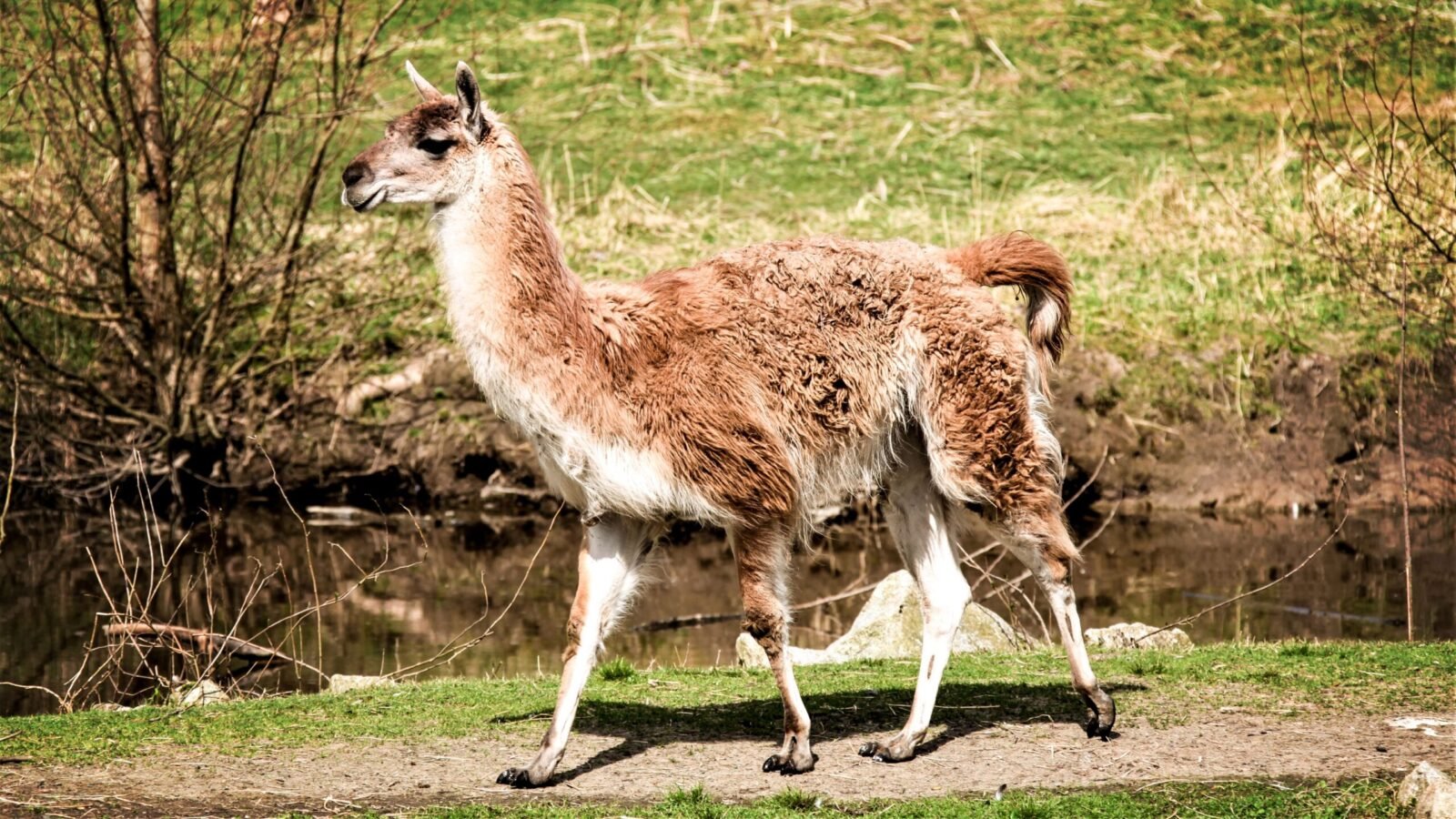
Llamas have quietly moved from working farm animals into the world of backyard homesteads, hobby farms, and even suburban acreages where owners want something a little different from the usual goats or chickens. With their long necks, expressive faces, and surprisingly gentle temperament, llamas have earned a devoted following among people who want a low-maintenance yet high-personality animal companion. But owning a llama is a serious commitment that goes far beyond the novelty of having an unusual pet in the backyard. This guide covers everything a prospective owner needs to know, from species background to feeding, housing, health, temperament, and a realistic assessment of what daily llama ownership actually looks like.
Species Background
Llamas (Lama glama) are domesticated South American camelids, descended from wild guanacos and domesticated by Andean peoples in Peru, Bolivia, and Chile thousands of years ago. They belong to the same family as alpacas, vicuñas, and guanacos, and share many physical and behavioral traits with their camel cousins, including the padded feet, split upper lip, and habit of spitting when annoyed or asserting dominance.
Historically, llamas were bred primarily as pack animals capable of carrying loads across steep Andean terrain, and secondarily for their wool, meat, and hides. Their calm disposition and sure-footedness made them ideal for mountain trekking, and their wool, while coarser than alpaca fiber, was still valuable for weaving. When llamas were introduced to North America and Europe in the twentieth century, they were initially raised for breeding and show purposes, with individual animals fetching enormous prices during the “llama boom” of the 1980s. Once that market cooled, llamas settled into their current niche: working farm guardians, pack animals for hikers, fiber animals, and beloved pets.
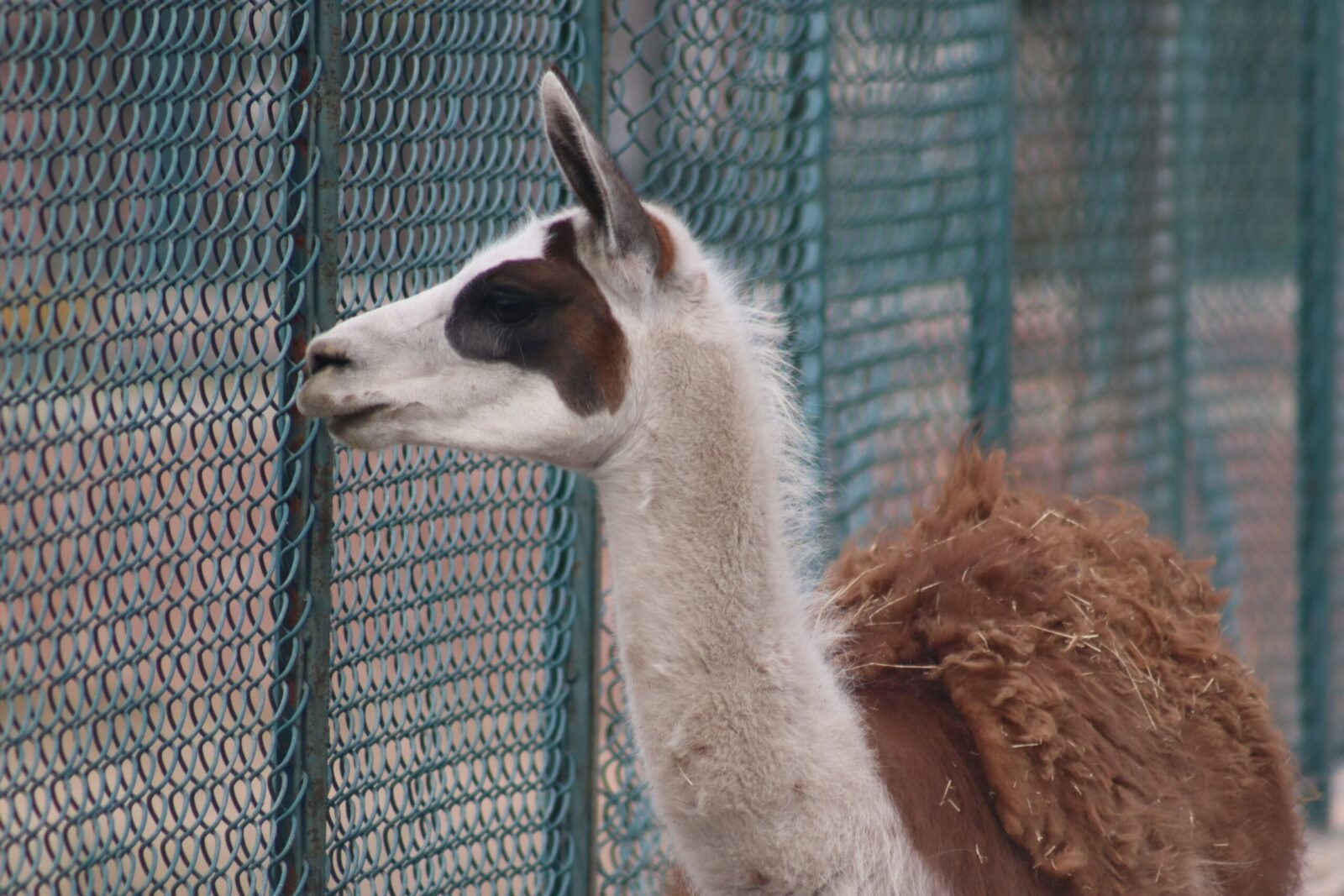
A full-grown llama typically stands between 5.5 and 6 feet tall at the head, with a body length of about 5.5 feet, and weighs between 280 and 450 pounds depending on sex and breed line. Their lifespan is impressively long for a livestock-type animal, often reaching 15 to 25 years with proper care, meaning a llama is a multi-decade commitment rather than a short-term pet.
Llamas come in an enormous variety of coat colors and patterns, from solid white, black, and brown to intricate spotted and multicolored combinations. Their fiber falls into two main types: the classic “double coated” llama with a coarse guard hair over a soft undercoat, and the rarer “single coated” or suri-type llama, which has a silkier, longer fiber more similar to alpaca wool. This variety is part of what makes individual llamas so visually distinct and part of their charm as pets.
Feeding
Llamas are ruminant-like foregut fermenters, though technically classified as pseudo-ruminants because they have a three-chambered stomach rather than the four chambers found in cattle and sheep. This digestive system is remarkably efficient, allowing llamas to thrive on forage that would be inadequate for many other livestock species, which is one of the key reasons they are considered relatively low-maintenance animals.
The foundation of a llama’s diet should always be good quality grass hay or pasture. A healthy adult llama typically eats between 1.5 and 2 percent of its body weight in dry matter per day, which for an average 350-pound llama translates to roughly 5 to 7 pounds of hay daily if pasture access is limited. Llamas do very well on grass hays such as timothy, orchard grass, or brome, and generally do not need the richer alfalfa hay that is often fed to horses, since alfalfa’s higher protein and calcium content can lead to obesity or urinary issues in llamas if overfed.
Fresh pasture is ideal when available, and llamas are efficient grazers that can maintain good body condition on grass that might not support cattle at the same stocking density. That said, pasture quality needs to be monitored carefully because llamas are prone to obesity, and lush, rapidly growing spring pasture rich in sugars can contribute to metabolic problems.
Supplemental feed is usually unnecessary for a llama at maintenance, but may be appropriate for pregnant or nursing females, growing juveniles, geriatric animals, or those in a working capacity such as regular packing or fiber production. When supplementation is needed, a llama-specific pelleted feed formulated with appropriate mineral ratios is preferable to horse or cattle feed, since llamas have different copper tolerance levels than sheep and different overall nutrient needs than horses.
Minerals matter enormously for llama health. A loose mineral mix formulated specifically for camelids, offered free choice, helps prevent deficiencies in selenium, copper, and zinc, which are common in many regions and can cause serious health problems if left unaddressed. Because copper toxicity is a concern for llamas kept on pastures previously grazed by sheep (whose mineral mixes often contain no copper at all), it is worth having pasture history and local soil mineral profiles checked before assuming a generic supplement is safe.
Clean, fresh water must always be available, and llamas will drink more in hot weather or when eating drier hay. An adult llama typically drinks between 2 and 5 gallons of water per day, with intake rising significantly during heat stress, so ensuring water troughs do not freeze in winter or run dry in summer is a critical part of daily care.
Owners should also be cautious of toxic plants in pastures or that might be tossed over a fence as treats. Oleander, rhododendron, yew, and certain nightshade family plants are dangerous to llamas, as they are to most livestock, and unfamiliar landscaping near a pasture fence should always be checked before a llama has unsupervised access to it.
Health
Llamas are generally hardy animals, but there are several health considerations every owner needs to understand and plan for proactively.
Parasites are one of the most persistent health challenges. Internal parasites, particularly the barber pole worm (Haemonchus contortus) and meningeal worm (a parasite carried by white-tailed deer that can cause serious neurological damage in llamas), require regular monitoring through fecal egg counts and a targeted deworming strategy developed with a veterinarian familiar with camelids. Overuse of dewormers has led to resistance issues in many regions, so a “deworm on schedule regardless” approach is now considered outdated; testing-based deworming is the modern standard.
Vaccinations commonly recommended for llamas include CDT (Clostridium perfringens types C and D, and tetanus), and in regions where meningeal worm is a concern, some owners work with their vet on additional preventive protocols. Rabies vaccination protocols vary by region and should be discussed with a local large-animal veterinarian.
Dental health deserves particular attention because llamas have continuously erupting teeth, and males in particular develop sharp “fighting teeth” (canines) that are often removed by a vet to prevent injury during dominance disputes with other males. Regular checks for uneven wear, especially in older animals, help catch problems before they affect the animal’s ability to eat properly.
Toenail trimming is a routine but essential task, since llama toenails grow continuously and can become overgrown, cracked, or cause gait problems if neglected. Most owners trim nails every two to three months, though the exact interval depends on the terrain the llama walks on daily, since rockier ground naturally wears nails down faster than soft pasture.
Fiber and skin care matters especially for heavily wooled llamas. Regular brushing helps prevent matting, and shearing is typically done annually in late spring, both for the animal’s comfort in hot weather and to prevent heat stress, since a llama with a full, matted winter coat can overheat dangerously in summer conditions.
Heat stress is actually one of the more serious and underappreciated health risks for llamas, particularly in humid climates. Their thick fiber, evolved for the cool, dry high-altitude Andes, makes them poorly adapted to hot, humid weather. Signs of heat stress include open-mouth breathing, excessive drooling, and lethargy, and prevention includes shearing before summer, providing shade and fans, and avoiding strenuous activity during the hottest parts of the day.
Reproductive health is relevant for owners keeping intact males and females together, though many pet owners choose to keep gelded males specifically to avoid the complications, territorial behavior, and space requirements that come with breeding.
Because llamas are a specialty species, finding a veterinarian with camelid experience before an emergency arises is one of the most important steps a new owner can take. Not every large-animal vet has camelid-specific training, and llamas can mask illness well due to their prey-animal instincts, meaning subtle symptoms should never be dismissed.
Housing
Llamas need considerably less space than horses but more than most owners initially expect for what looks like a “large pet.” A general guideline is roughly one-quarter to one-half acre of pasture per llama for grazing purposes, though llamas can be kept on smaller acreage if supplemental hay feeding compensates for limited grazing.
Shelter requirements are relatively modest. A three-sided run-in shed that blocks wind and precipitation is usually sufficient, since llamas are quite cold-hardy thanks to their dense fiber, but they do need protection from direct sun, rain, and wind, particularly during shearing season when their coat offers less insulation. Adequate ventilation in any enclosed shelter is important to prevent respiratory issues from ammonia buildup.
Fencing needs to be sturdy but does not need to be as tall or robust as fencing for more athletic livestock. A four-foot to five-foot fence of woven wire, field fence, or well-maintained wooden rail fencing is typically sufficient, since llamas are not prone to jumping or aggressive fence-testing behavior the way goats often are. That said, barbed wire should be avoided since it can cause serious injuries to a llama’s legs or fiber-covered body.
Llamas are herd animals and should never be kept alone. A solitary llama is a genuinely unhappy, stressed llama, and this is one of the most important welfare considerations for prospective owners. At minimum, llamas should be kept with one other llama, though they can also cohabitate reasonably well with alpacas, and in some guardian-animal setups, llamas are kept alongside sheep or goats specifically because llamas will actively defend the flock against predators like coyotes.
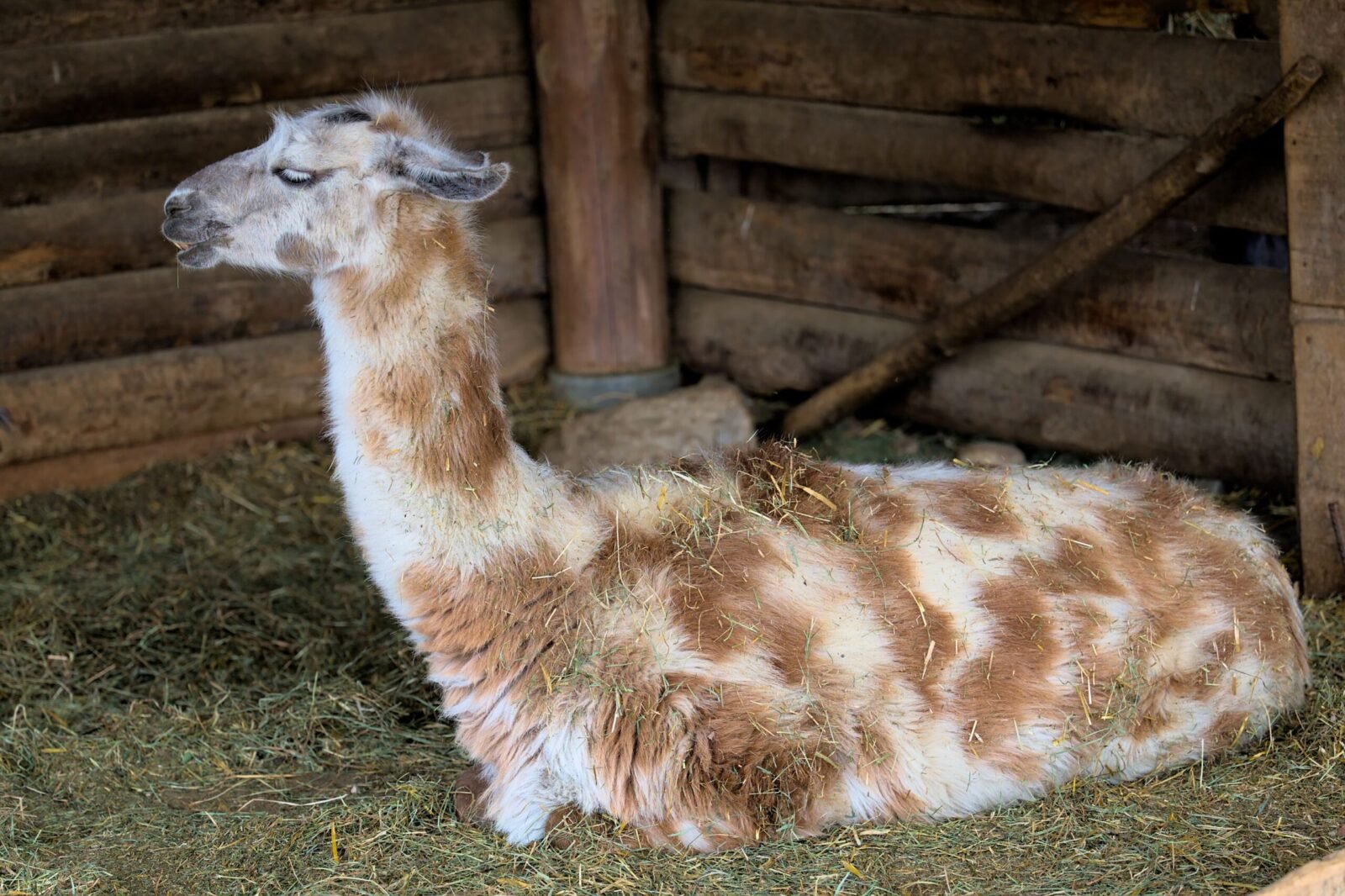
Bedding inside shelters is usually simple, with straw or wood shavings sufficient for the areas where llamas rest, though many llamas actually prefer to lie on bare, packed earth or a concrete pad in warm weather rather than deep bedding.
A designated communal dung pile is one of the more convenient aspects of llama housekeeping. Unlike many livestock species, llamas by instinct use consistent latrine areas within their pasture rather than defecating randomly, which makes manure management significantly easier than with horses or cattle.
Temperament
This is where llamas genuinely surprise a lot of new owners. Despite their imposing size, llamas are typically gentle, curious, and intelligent animals with distinct individual personalities. Well-socialized llamas are often described as calm, observant, and even a bit aloof compared to the more overtly affectionate nature of dogs, but many develop real bonds with their owners and become notably more relaxed and interactive over time.
Llamas communicate through a range of body language and vocalizations, including a distinctive humming sound that mothers and young use to stay in contact, and that adult llamas may also use to express mild anxiety, curiosity, or contentment depending on context. Ears held back and a raised tail are classic warning signs of irritation, often preceding the behavior llamas are most famous (or infamous) for: spitting.
Spitting is primarily a social behavior used between llamas to establish pecking order or express annoyance, not typically directed at humans unless the animal is mishandled, frightened, or under significant stress. Well-socialized llamas rarely spit at their handlers, and much of the “llamas spit at everyone” reputation comes from poorly socialized or mistreated animals rather than being a universal species trait.
Male llamas that are not gelded can become notably more aggressive and territorial as they mature, particularly toward humans if not firmly boundaried during adolescence, which is one of the reasons many pet and companion llamas are gelded males. This single decision dramatically improves manageability for the average household without eliminating the animal’s engaging personality.
Llamas are also notably intelligent and trainable. Many owners successfully halter-train, lead-train, and even teach llamas to navigate simple obstacle courses, pull small carts, or carry light packs on hikes. Positive reinforcement training works well with llamas, and their intelligence means they learn routines and expectations relatively quickly once trust is established.
One particularly charming trait is the llama’s natural curiosity. Many llamas will approach new visitors, sniff unfamiliar objects, and investigate changes to their environment, all without the skittishness often associated with more flighty prey animals like horses.
Realistic Ownership Assessment
Owning a llama is genuinely rewarding for the right household, but it requires an honest look at the practical realities involved.
Space and zoning are the first major hurdle. Most llama owners need rural or semi-rural property, and local zoning laws must specifically permit livestock or “exotic” companion animals, since llamas are typically classified as livestock rather than conventional pets in most municipalities. Prospective owners should check local ordinances before making any commitment.
Financial commitment extends well beyond the initial purchase price of the animal, which can range from a few hundred dollars for a companion-quality gelded male to several thousand for a show-quality or breeding animal. Ongoing costs include hay, mineral supplements, veterinary care, annual shearing, hoof trimming, and fencing maintenance, typically totaling several hundred dollars per animal per year for a well-cared-for llama.
The herd requirement means prospective owners are really committing to at least two llamas, not one, which doubles most of the above costs and space requirements. This is a frequent surprise for people who imagined a single llama as a novelty pet.
Longevity means a 15-to-25-year commitment, comparable to owning a horse, and owners need to plan realistically for the animal’s entire lifespan, including scenarios involving changes in the owner’s living situation, health, or finances over that period.
Time investment is moderate but real. Daily feeding and water checks, regular health monitoring, periodic nail trimming, annual shearing, and general pasture and fence maintenance add up to a meaningful weekly time commitment, even though llamas do not require the constant, hands-on care that some other companion animals need.
For families with adequate rural space, an interest in fiber crafts or pack animals, or simply a desire for a calm, intelligent, and visually striking companion animal, llamas can be an outstanding choice. They ask for less daily interaction than a dog, tolerate a wider range of climates than many livestock species, and offer a genuinely unique bond once trust is established. But they are not a casual or low-commitment pet, and anyone considering llama ownership should visit an established llama farm, talk candidly with experienced owners, and ideally spend time around llamas in person before bringing a pair home.
Done thoughtfully, with appropriate space, companionship, and veterinary support, llama ownership offers a rare combination of low daily maintenance and genuinely rich, long-term companionship that few other animals can match.