


If you’ve ever watched a dog freeze mid-stride, one paw lifted, nose locked onto a scent, tail straight as a rod — you’ve seen a Pointer doing exactly what it was bred to do. That instinctive, almost statuesque pose is where the breed gets its name, and it’s one of the most recognizable behaviors in the entire dog world. But there’s a lot more to the Pointer than that famous stance. This is a breed built for stamina, precision, and an almost obsessive drive to work alongside people — traits that make it a phenomenal partner for the right household and a genuinely poor fit for the wrong one.
This guide walks through everything a prospective or current owner should know about the Pointer (often called the English Pointer to distinguish it from related pointing breeds like the German Shorthaired Pointer). We’ll cover where the breed came from, what it needs to eat, how to keep it healthy, what kind of home suits it, how it behaves day to day, what it actually costs to own one, and — most importantly — an honest look at whether this dog belongs in your life.
A Breed Built for the Field: History and Background
The Pointer’s story starts in England, sometime around the late 1600s, though the exact lineage is murky the way most old sporting-dog histories are. What we do know is that English hunters wanted a dog that could work ahead of them, locate game birds by scent, and then hold perfectly still to indicate exactly where the bird was hiding — without flushing it before the hunter was ready. Early Pointers were likely developed from a mix of Foxhounds, Greyhounds, Bloodhounds, and various setting spaniels, blended over generations to produce a dog with speed, a phenomenal nose, and the self-control to freeze on point rather than chase.
That combination of traits was revolutionary for hunters of the era. Before dogs like the Pointer existed, bird hunting relied heavily on nets and other slower methods. Once shotguns became more common and hunters wanted to shoot birds on the wing, a dog that could locate game at a distance and hold position became enormously valuable. The Pointer filled that role so well that it became the template other pointing breeds were later measured against.
The breed made its way to North America in the 1870s, where it quickly became a fixture in field trials and upland bird hunting. American breeders leaned into the dog’s stamina and range, producing lines that could cover enormous amounts of ground in a single day’s hunt. Field trial Pointers today are often lighter and faster than the show-line dogs you might see in a conformation ring, but both share the same essential DNA: a nose-driven, high-energy dog that lives to search.
Kennel clubs recognized the Pointer early on, and it remains a fixture in sporting group classifications at shows like Westminster. Despite that recognition, the Pointer has never become a mainstream family pet in the way that, say, Labrador Retrievers have. Part of that is because the breed’s working drive is so strong that it doesn’t always translate smoothly into suburban life — a theme we’ll come back to throughout this guide.
Physical Characteristics
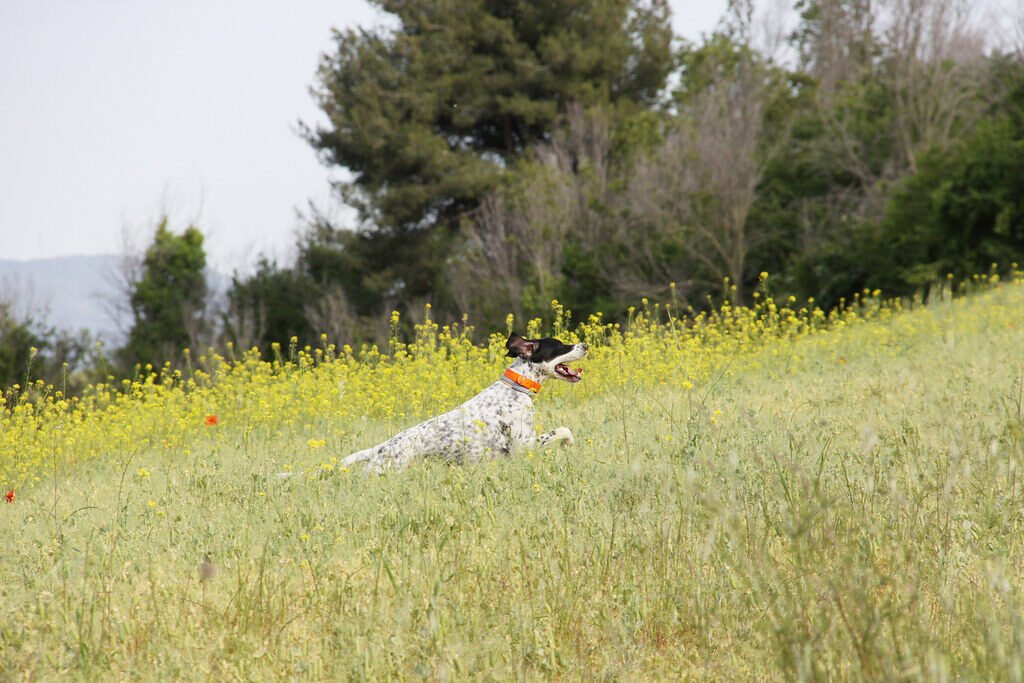
Pointers are medium-to-large dogs with an athletic, lean build that looks almost sculpted for speed. Males typically stand between 25 and 28 inches at the shoulder and weigh 55 to 75 pounds, while females run slightly smaller, usually 23 to 26 inches and 45 to 65 pounds. Everything about their frame suggests forward motion: a deep chest for lung capacity, long legs built for covering ground, and a tail that’s traditionally carried level with the back — not curled, not tucked, just straight out like an extension of the spine.
Their coat is short, dense, and smooth, which makes grooming relatively low-maintenance but also means they have very little natural insulation against cold weather. Coat colors vary and include liver (a deep reddish-brown), black, orange, and lemon, often paired with white in various patterns — sometimes solid patches, sometimes ticking (small flecks of color scattered across the white). No two Pointers look quite the same, which is part of their appeal to breed enthusiasts.
Their expression tends to be alert and intelligent, with a distinctive facial structure — a moderately long muzzle, a slight stop between the muzzle and skull, and ears that hang close to the head rather than standing erect. It’s a face built for function: the muzzle length supports their exceptional scenting ability, and the low-set ears don’t interfere with their ability to track sound and scent simultaneously in the field.
Temperament: Living With a Working Dog’s Mind

This is the section that matters most if you’re actually considering bringing a Pointer into your home, because temperament is where this breed either fits beautifully into your life or becomes a source of constant frustration.
Pointers are, first and foremost, working dogs. Everything about their personality traces back to the job they were bred to do: cover ground, find birds, and do it with enthusiasm and independence. That translates into a dog that is intelligent, energetic, and often startlingly focused when there’s a scent to follow — and somewhat harder to motivate when the task at hand doesn’t interest them. Owners sometimes describe Pointers as “selectively obedient,” which is a polite way of saying that a Pointer with its nose down and a scent trail in front of it may not hear you calling its name.
That said, within the home, most well-socialized Pointers are affectionate, even goofy, family dogs. They tend to bond closely with their people and often want to be near you, sometimes leaning their whole body weight against your leg as a kind of canine hug. They’re generally good with children, especially when raised with them, though their size and exuberance mean supervision matters with very small kids — an excited Pointer barreling through a living room can knock over a toddler without meaning any harm at all.
With other dogs, Pointers are usually sociable, particularly if socialized early. Their hunting background means small, fast-moving animals — cats, rabbits, small dogs — can sometimes trigger prey drive, though individual dogs vary widely here, and many Pointers live peacefully with cats they’ve grown up alongside.
The trait that surprises new owners most is the sheer volume of physical and mental energy this breed carries. A bored, under-exercised Pointer is not a pleasant housemate. They can become destructive, vocal, or anxious, chewing furniture, escaping yards, or pacing restlessly. This isn’t a temperament flaw — it’s a mismatch between the dog’s needs and the environment it’s been placed in. Give a Pointer the outlet it needs, and you get a loyal, affectionate, endlessly entertaining companion. Deny it that outlet, and you get a dog that seems to be constantly looking for trouble, because in its mind, it is: trouble is just an unmet need for a job to do.
Exercise and Mental Stimulation Needs
It’s worth dwelling on this because it’s the single biggest factor in whether a Pointer thrives or struggles in a given home. This is not a 20-minute-walk-around-the-block breed. Pointers were bred to run for miles across open terrain, and that stamina doesn’t disappear just because a dog lives in a house instead of on a hunting estate.
Most Pointers need at least 60 to 90 minutes of vigorous exercise daily, and that’s a baseline, not a maximum. Ideally, this includes some off-leash running in a securely fenced area, since their natural gait at full speed is something a leash walk simply can’t replicate. Activities like jogging alongside a bike, structured fetch sessions, agility training, or actual field work (if you have access to it) tend to satisfy them far more than a leisurely stroll.
Mental stimulation matters just as much as physical exertion. Scent work is a natural fit — nose games, hide-and-seek with treats, or formal tracking classes tap directly into what the breed was built to do, and many owners find that a session of scent work tires a Pointer out faster than an equivalent amount of running. Puzzle toys, obedience training, and dog sports like flyball or dock diving also give this breed the kind of engagement it craves.
A Pointer that gets adequate exercise is often described as surprisingly calm indoors — almost couch-potato-like once the day’s activity is done. That contrast (intense outdoors, mellow indoors) is one of the breed’s more charming qualities, but it only shows up when the exercise requirement has actually been met.
Training and Socialization
Pointers are intelligent dogs, which cuts both ways in training. They pick up commands quickly when motivated, but their independent streak means they don’t always see the point in repeating a command they’ve already demonstrated they understand. Food and play-based positive reinforcement tends to work far better than repetitive drilling or harsh correction — this breed responds to being made a partner in the process, not a subordinate following orders.
Early socialization is important, as it is with most dogs, but it’s particularly valuable for Pointers because of their scent-driven nature. A Pointer that hasn’t learned solid recall around distractions can become genuinely difficult to retrieve once its nose catches an interesting trail — this isn’t stubbornness so much as a temporary total absorption in the scent. Recall training, ideally started young and reinforced consistently throughout the dog’s life, is one of the most valuable investments an owner can make.
Crate training, leash manners, and basic obedience should start as early as possible, and many owners find that enrolling a Pointer puppy in structured classes pays off enormously, both for the training itself and for the socialization opportunities with other dogs and people.
Feeding and Nutrition
Given their high activity level and lean, muscular build, Pointers generally need a nutrient-dense diet that supports sustained energy output. A working or highly active adult Pointer often does well on a high-quality food formulated for active or working breeds, typically containing higher protein and fat percentages than a standard adult formula — protein in the range of 25 to 30 percent and fat around 15 to 20 percent is common for dogs with substantial daily exercise.
Puppies need a large-breed puppy formula that supports steady, controlled bone and joint development rather than rapid growth, which can contribute to skeletal problems later on. As Pointers transition into adulthood, usually around 12 to 18 months, portion sizes and formulas should shift based on the individual dog’s activity level and metabolism, since a couch-companion Pointer and a field-trial Pointer have very different caloric needs despite being the same breed.
Portion control matters more than owners sometimes expect. Because Pointers are lean and athletic-looking, some owners assume they can eat freely without gaining weight, but sedentary Pointers (or ones recovering from injury) can pack on pounds just like any other breed, and extra weight puts real strain on a frame built for speed rather than bulk. Two measured meals a day, adjusted based on body condition and activity, tends to work better than free-feeding.
Fresh water should always be available, especially after exercise sessions, since this breed can work itself into a sweat-equivalent state (through panting) quickly during vigorous activity. Owners doing serious fieldwork or long runs with their dogs should also pay attention to electrolyte needs and avoid exercising heavily right after a large meal, which can contribute to bloat — a serious concern in deep-chested breeds like this one.
Health and Common Concerns

Pointers are generally a healthy, long-lived breed, with a typical lifespan of 12 to 15 years — a reflection of generations of breeding focused on functional soundness rather than exaggerated physical traits. That said, no breed is free of health considerations, and prospective owners should be aware of a few conditions that show up more frequently in Pointers.
Hip dysplasia is a concern in many medium-to-large breeds, and Pointers are no exception. It’s a malformation of the hip joint that can lead to arthritis and mobility issues over time. Reputable breeders screen breeding stock through organizations like the Orthopedic Foundation for Animals, and asking to see hip clearances for a puppy’s parents is a reasonable and important question.
Cardiac issues, including certain congenital heart conditions, have been documented in the breed, which is why cardiac screening is often recommended alongside hip evaluations for breeding dogs.
Skin conditions can affect Pointers given their short, thin coat, which offers minimal protection from sun, cold, and physical scrapes encountered during fieldwork or vigorous outdoor play. Some individuals are prone to allergies that manifest as skin irritation, and thin-coated breeds in general tend to show cuts, abrasions, and sunburn more readily than heavily coated dogs.
Ear infections are a possibility given the breed’s low-hanging ears, which can trap moisture and reduce airflow. Regular ear checks, especially after swimming or exposure to wet conditions, help catch problems early.
Bloat (gastric dilatation-volvulus) is a life-threatening emergency more common in deep-chested breeds. Signs include a distended abdomen, unproductive retching, restlessness, and visible distress. This is a true emergency requiring immediate veterinary care — there is no home remedy, and delay can be fatal within hours.
Progressive retinal atrophy (PRA), an inherited eye condition that leads to gradual vision loss, has also been documented in some Pointer lines, making eye screening another worthwhile question for prospective puppy buyers to ask breeders about.
Given the breed’s activity level, owners should also stay alert to soft-tissue injuries — sprains, torn ligaments, and paw pad injuries — that can result from the kind of high-speed, high-impact activity this breed naturally gravitates toward. Routine vet checkups, a solid relationship with a vet familiar with active sporting breeds, and prompt attention to limping or reluctance to exercise all go a long way toward catching problems before they escalate.
Grooming Needs
Compared to almost every other category of care, grooming is refreshingly simple with this breed. The short, smooth coat sheds moderately year-round, with a bit more shedding during seasonal coat changes in spring and fall. A weekly brush with a rubber curry brush or grooming mitt is usually enough to manage loose hair and keep the coat looking glossy.
Bathing is only necessary occasionally — every couple of months, or after a particularly muddy outdoor adventure — since over-bathing can strip natural oils from a coat that’s already thin and provides limited weather protection. Nail trims should happen regularly, roughly every three to four weeks, since overly long nails can affect gait and comfort, particularly in a breed that relies so heavily on efficient movement.
Ear cleaning deserves regular attention given the infection risk mentioned earlier — a gentle vet-approved ear cleanser used weekly or biweekly, especially during humid months or after swimming, helps keep problems at bay. Dental care, as with any breed, benefits from regular brushing or dental chews to prevent tartar buildup and gum disease over the dog’s lifetime.
Living Situation and Housing Needs
Because of the exercise requirements discussed earlier, Pointers do best in homes with access to secure outdoor space — not necessarily a massive property, but a yard with a fence tall and secure enough to contain a dog that’s fast, athletic, and motivated to chase interesting scents right over or under a weak barrier. Invisible fencing alone is often insufficient for this breed, since a Pointer locked onto a scent trail may push through the boundary regardless of the correction, driven by instinct rather than defiance.
Climate is another consideration. That thin coat that makes grooming easy also means Pointers are more sensitive to cold than heavily coated breeds. In colder climates, a well-fitted dog coat for winter walks and limiting time outdoors in freezing conditions helps keep them comfortable. They handle warm weather reasonably well, given their history as field dogs working in various conditions, but access to shade and water during hot months remains important, as it would be for any active breed.
Apartment living is possible but genuinely challenging with this breed, and it’s not something to take on lightly. An apartment-dwelling Pointer needs an owner absolutely committed to providing multiple substantial exercise sessions a day, ideally including off-leash time at a securely fenced dog park or open space, because the indoor square footage alone will never come close to meeting this breed’s needs. Owners in apartments who successfully raise happy Pointers tend to be serious runners, cyclists, or hikers themselves, essentially building the dog’s exercise needs into their own daily routine rather than treating it as a separate chore.
Cost of Ownership
Bringing a Pointer into your home involves both upfront and ongoing costs worth planning for realistically.
Initial costs typically include the price of the puppy itself, which can range widely depending on lineage — pet-quality puppies from a reputable breeder often run somewhere between $600 and $1,500, while dogs from field-trial or show lines with proven pedigrees can cost considerably more. Adoption from a breed-specific rescue is usually far less expensive, often in the $200 to $400 range, and comes with the added benefit of supporting a dog in need of a home, though it’s worth noting that Pointer-specific rescues can have longer waitlists given the breed’s relative rarity compared to more common adoptable breeds.
Beyond acquisition cost, first-year expenses include initial vaccinations, spaying or neutering, a first round of veterinary exams, basic supplies (crate, leash, collar, bedding, bowls), and often the cost of a beginner obedience class, which is money well spent given this breed’s training needs. All told, the first year commonly runs somewhere in the $1,500 to $3,000 range once everything is accounted for, though this varies significantly by region and individual choices.
Ongoing annual costs include food (higher than average given the breed’s caloric needs for an active dog), routine veterinary care, flea and tick prevention, grooming supplies (modest, given the low-maintenance coat), and toys or enrichment items suited to a mentally active breed. Budgeting roughly $800 to $1,500 per year for routine care is a reasonable estimate, though this can climb considerably if health issues arise or if the owner invests in activities like agility classes, field training, or boarding during travel.
It’s also worth factoring in less obvious costs specific to this breed: secure fencing (if not already in place), potential costs associated with recall training or a professional trainer given the breed’s independent streak, and pet insurance, which many Pointer owners find worthwhile given the breed’s activity level and corresponding injury risk. Monthly premiums for a breed this size and activity level often fall somewhere between $30 and $60, depending on coverage and location.
Finding a Pointer: Breeders and Rescue
Because Pointers remain a somewhat specialized breed compared to more mainstream family dogs, finding one often takes more legwork than visiting a local shelter and hoping for the best. Breed-specific rescue organizations exist in many regions and are a great first stop, since they often have a mix of retired field dogs, owner surrenders, and occasionally puppies, along with staff who understand the breed’s needs well enough to help match dogs with appropriate homes.
If going the breeder route, look for hallmarks of responsible breeding: health clearances for hips, hearts, and eyes; willingness to let you meet the puppy’s parents; a breeder who asks you plenty of questions about your lifestyle and living situation (a good sign they’re thinking about fit, not just a sale); and membership in breed clubs or participation in field trials or conformation shows, which suggests a genuine investment in the breed’s standards rather than purely commercial breeding.
Red flags include breeders unwilling to show health documentation, litters always available with no waitlist, and an unwillingness to discuss the breed’s exercise and training needs honestly. A responsible Pointer breeder should be at least as interested in whether you’re prepared for this breed as you are in getting a puppy from them.
Honest Ownership Assessment: Is a Pointer Right for You?
This is the section that matters most, because a Pointer’s suitability for a household has almost nothing to do with how much someone likes the breed’s looks or temperament in the abstract, and everything to do with whether daily life can realistically accommodate what this dog needs.
A Pointer tends to thrive with owners who are genuinely active — runners, hikers, cyclists, hunters, or people involved in dog sports — and who have either secure outdoor space or consistent access to safe off-leash areas. It does well in households with older children who can engage in play without being overwhelmed by an enthusiastic, sometimes clumsy, large dog. It suits owners who find a dog’s independent thinking charming rather than frustrating, and who are willing to invest real time into recall training given the breed’s scent-driven instincts.
Conversely, a Pointer is a poor fit for sedentary households, owners hoping for a low-key companion animal, homes without secure fencing or reliable access to safe exercise areas, and anyone unwilling or unable to commit to at least an hour of vigorous daily activity for well over a decade. It’s also not the ideal choice for first-time dog owners who haven’t yet developed confidence in training a strong-willed, independent breed, though with the right resources and commitment, a motivated first-time owner can absolutely succeed with this breed.
The Pointer isn’t a difficult dog in the sense of being aggressive or hard to like — quite the opposite, most owners describe them as loving, even a little clownish once their energy needs are met. The difficulty lies entirely in the gap between what this breed needs and what a typical household is set up to provide. Owners who close that gap tend to describe their Pointers in almost reverent terms: loyal, affectionate, endlessly entertaining, and remarkably in tune with their people. Owners who don’t close that gap often end up rehoming a dog that was never given a fair shot at the life it was built for.
If you’re drawn to this breed, the most useful question to ask yourself isn’t “do I love how Pointers look and act” — it’s “does my actual daily schedule have room for 60-90 minutes of real exercise, every day, for the next decade or more.” If the honest answer is yes, a Pointer can be one of the most rewarding dogs you’ll ever share a home with. If the answer is no, there’s no shame in admitting that and looking toward a breed whose needs better match the life you’re actually living.
Final Thoughts
The Pointer is, in many ways, a living reminder of what selective breeding for a specific purpose can produce: a dog engineered almost perfectly for sustained fieldwork, scenting precision, and tireless motion. That specialization is exactly what makes the breed so compelling to the right owner and so mismatched for the wrong one. There’s no dishonesty in a Pointer’s personality — what you see in its history is exactly what you get in your living room: a dog that wants to move, wants to search, and wants to do it all alongside someone it trusts.
For active owners willing to meet that need, the payoff is a companion animal with both remarkable physical grace and deep emotional loyalty — a dog equally capable of a full day in the field and a quiet evening curled against your side once the work is done. Understanding that duality, and being honest with yourself about which side of it your household can actually support, is the real key to a happy life with a Pointer.