 By Admin
Ant keeping sounds like a joke the first time most people hear it. Pets that live in a jar of sand? Pets you can’t pet? Pets with no faces you’d recognize, no personalities in any traditional sense, and no interest whatsoever in you as an individual? And yet, ant keeping — often called “myrmecology” as a hobby, or just “antkeeping” in the community — has quietly grown into one of the more fascinating corners of exotic pet ownership over the last decade.
Here’s what draws people in once they actually try it: ants are one of the only pets where you get to watch an entire society build itself from scratch, in real time, in your living room. You’re not caring for one animal. You’re caring for a colony — potentially thousands of individuals working as a single coordinated organism, digging tunnels, raising young, defending territory, and slowly turning an empty plastic or acrylic enclosure into a living, structured city. It’s part pet, part science experiment, part tiny civilization you get to watch grow.
That said, ant keeping is genuinely different from every other pet on this list, and it comes with its own quirks, mistakes, and considerations that don’t map cleanly onto dog or cat ownership. This guide covers everything: which species make sense to start with, what ants actually eat, how to keep a colony healthy, how to house them properly, what “temperament” even means for an insect colony, and an honest look at whether this hobby is actually for you.
Species Background: Which Ants Should You Start With?
Not all ants are equal when it comes to keeping them in captivity. Some species are famously easy — tolerant of beginner mistakes, slow-growing, calm, and forgiving. Others are aggressive, prone to colony collapse, or require humidity and temperature precision that would frustrate even an experienced keeper. If you’re new to the hobby, species selection is the single most important decision you’ll make.
Harvester Ants (Pogonomyrmex and Messor species)
Harvester ants are a favorite starting point in the U.S. and Europe because they’re slow-moving, non-aggressive toward keepers (though some Pogonomyrmex species do have a painful sting, so handling matters), and their diet is refreshingly simple — mostly seeds. Messor species in particular are popular because they’re seed-eaters that build visually striking granaries, and colonies can grow into the tens of thousands over the years, creating enormous underground tunnel networks that are genuinely mesmerizing to watch develop.
Carpenter Ants (Camponotus species)
Camponotus is one of the most popular genera in the hobby worldwide, and for good reason. They’re large, visually striking, relatively docile, and adapt well to captivity. Different Camponotus species vary in color from jet black to deep red-brown, and queens are relatively easy to find and identify during nuptial flight season, which is often how hobbyists start a colony in the first place. They grow at a moderate pace, which suits beginners who want visible progress without an overwhelming population explosion in year one.
Pavement Ants (Tetramorium species)
If you want something you can source locally without ordering online, pavement ants are often the easiest entry point, since they’re common in urban and suburban areas across much of North America and Europe. They’re hardy, tolerant of a wide range of conditions, and forgiving of beginner mistakes in humidity and feeding schedule. They’re not the most visually dramatic species, but their resilience makes them a genuinely solid first colony.+
Fire Ants (Solenopsis species)
Fire ants are sometimes kept by more experienced hobbyists because of their fast growth and aggressive, highly organized colony behavior, but they come with real caveats. Their sting is painful and can trigger allergic reactions in some people, and in many regions, keeping certain fire ant species is restricted or outright illegal due to their status as an invasive species. Always check local regulations before considering this genus.
Leafcutter Ants (Atta and Acromyrmex species)
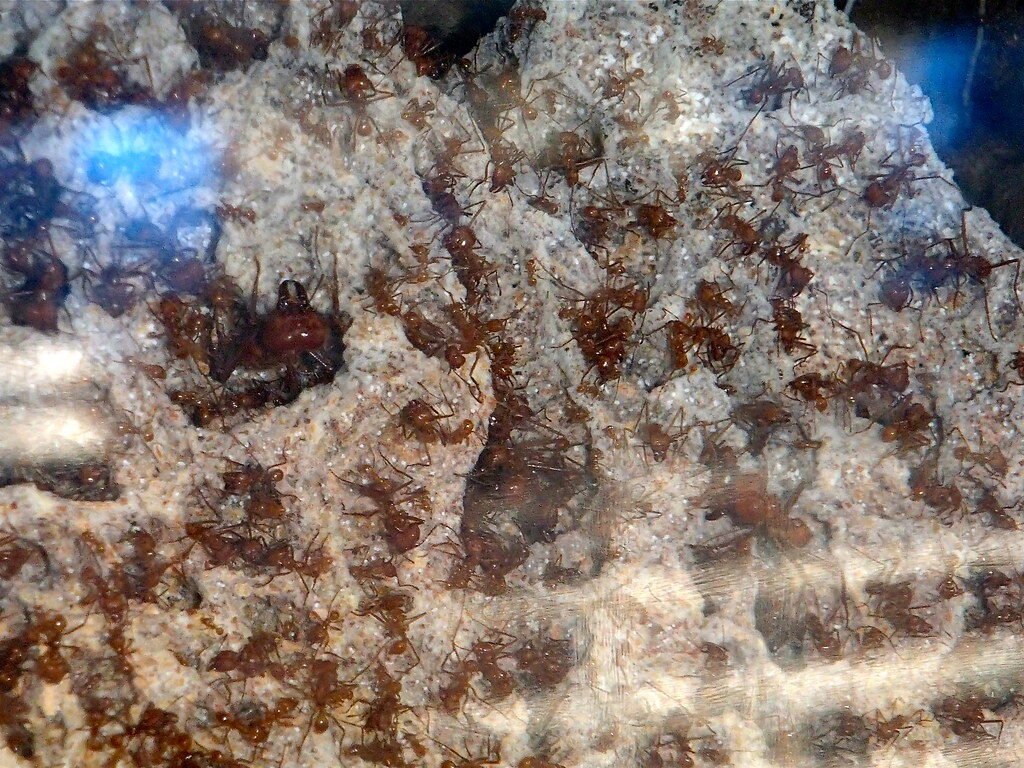
Leafcutter ants are the ant-keeping equivalent of a dream pet for a lot of hobbyists, because their behavior is so visually spectacular — workers cutting leaf fragments and carrying them in long processions back to the colony to cultivate fungus gardens, which is what they actually eat. But they’re also one of the most demanding species to keep. They require a controlled climate, a constant supply of fresh leaves or specialized substitutes, and precise humidity, making them a poor choice for a first colony. Most keepers work up to leafcutters after a few years of experience with easier species.
Weaver Ants and Other Tropical Species
Tropical species like weaver ants (Oecophylla) are visually stunning and behaviorally fascinating — they literally sew leaves together using larval silk to build nests — but they demand tropical humidity and temperature ranges year-round, which usually means a dedicated heated and humidified setup. These are generally considered advanced-hobbyist territory rather than a starting point.
For a true beginner, the general advice in the community is consistent: start with a single native or regionally common species, ideally one queen you’ve either caught during a nuptial flight or purchased from a reputable ant-keeping supplier, rather than jumping straight into an exotic or aggressive species you saw online.
Feeding: What Do Pet Ants Actually Eat?
Ant diets vary considerably by species, but most captive colonies need a combination of protein, carbohydrates, and water to thrive. Getting this balance wrong is one of the most common reasons beginner colonies stall out or fail to grow.
Protein Sources
Protein is essential for feeding larvae, since it’s what fuels their growth into workers. Common protein sources for captive colonies include:
- Small insects like crickets, mealworms, or fruit flies (usually pre-killed or stunned for smaller colonies that can’t subdue live prey)
- Freeze-dried insects, which store well and reduce the risk of introducing mites or parasites
- Small amounts of cooked, unseasoned egg or lean meat, offered occasionally
For very young colonies with only a handful of workers, protein should be offered in small enough pieces that the ants can actually process it — a whole cricket can overwhelm a colony of ten workers.
Carbohydrate Sources (Sugar Water)
Most ant species rely heavily on sugar water as a primary energy source for adult workers. A simple mixture of sugar and water, roughly a 1:4 or 1:3 ratio, offered in a small feeding dish, test tube cap, or specialized ant feeder, covers this need for the vast majority of species. Some keepers use diluted honey instead, though plain sugar water is generally considered safer, since honey can occasionally carry spores harmful to ant colonies.
Seed-Eating Species
Harvester ants (Messor and Pogonomyrmex) are the notable exception to the insect-and-sugar-water diet, since their primary food source in the wild is seeds. Small seeds like millet, grass seed, or specialized “ant seed mixes” sold by hobbyist suppliers work well. These species will husk the seeds and store the edible interior in dedicated granary chambers, which is part of what makes them so interesting to watch.
Water
Every colony needs a consistent water source, separate from sugar water, and this is often provided through a test tube setup — a water-filled tube plugged with cotton, which also frequently doubles as the colony’s actual living chamber in the early stages (more on this in the housing section below). Without reliable access to water, ants can dehydrate quickly, especially in drier home environments.
Feeding Schedule
New colonies with just a queen and a few workers typically need feeding once every few days, since their metabolic needs are low and overfeeding can lead to mold growth in the enclosure. As a colony grows into the hundreds or thousands, feeding frequency increases correspondingly, sometimes to every day or every other day for protein, with sugar water available more consistently. Uneaten food, especially protein, should be removed promptly to prevent mold and mite infestations, both of which can seriously damage or destroy a colony.
Health: Keeping a Colony Thriving
“Health” for an ant colony looks different from health in a single-animal pet, since you’re really monitoring the wellbeing of an entire population rather than one individual. Still, there are clear signs of a thriving colony versus a struggling one, and clear risks to watch for.
Mold and Mites
The two biggest threats to a captive ant colony are mold and mites, and both are usually the result of excess moisture or uneaten food left to decay. Mold can spread through a nest and kill brood (eggs, larvae, and pupae) quickly, while mites can infest a colony and stress or kill workers and larvae over time. Prevention comes down to consistent cleaning, prompt removal of leftover food, and maintaining appropriate — not excessive — humidity for the species being kept.
Colony Stress and Queen Loss
A colony’s entire future depends on the health of its queen, since she’s typically the only egg-laying member. Signs of a stressed or declining colony include a drop in egg-laying, workers appearing sluggish or reduced in number, or brood being abandoned rather than tended. Sudden temperature swings, excessive handling or disturbance, and inadequate food are the most common causes of colony stress in captivity.
Escape and Enclosure Integrity
This might sound like a housing issue rather than a health one, but it belongs here too: ants are relentless explorers, and even a small gap or poorly sealed lid can lead to a colony escaping into your home. Beyond the obvious household frustration, an escaped colony is a colony that’s lost access to food, water, and appropriate humidity, which puts its survival at serious risk. Checking enclosure seals regularly is a genuine health and safety practice, not just pest control.
Fungal and Bacterial Infections
Less commonly, individual ants or brood can develop fungal infections, sometimes visible as unusual discoloration or a cottony growth on affected individuals. Isolating and removing visibly infected ants or brood, along with improving ventilation and reducing excess moisture, is usually the first line of response, since ant colonies don’t have a reptile-vet equivalent to call for treatment.
Signs of a Healthy, Thriving Colony
On the positive side, a healthy colony shows steady, visible growth over time: an increasing worker population, consistent brood production, active tunnel-digging or nest-building, and workers that respond promptly to food being introduced. Growth in ant colonies is slow and seasonal in many species, so patience matters — a colony that looks “stalled” for a few weeks isn’t necessarily unhealthy, especially during natural dormancy periods.
Housing: Setting Up an Enclosure Ants Can Actually Build In
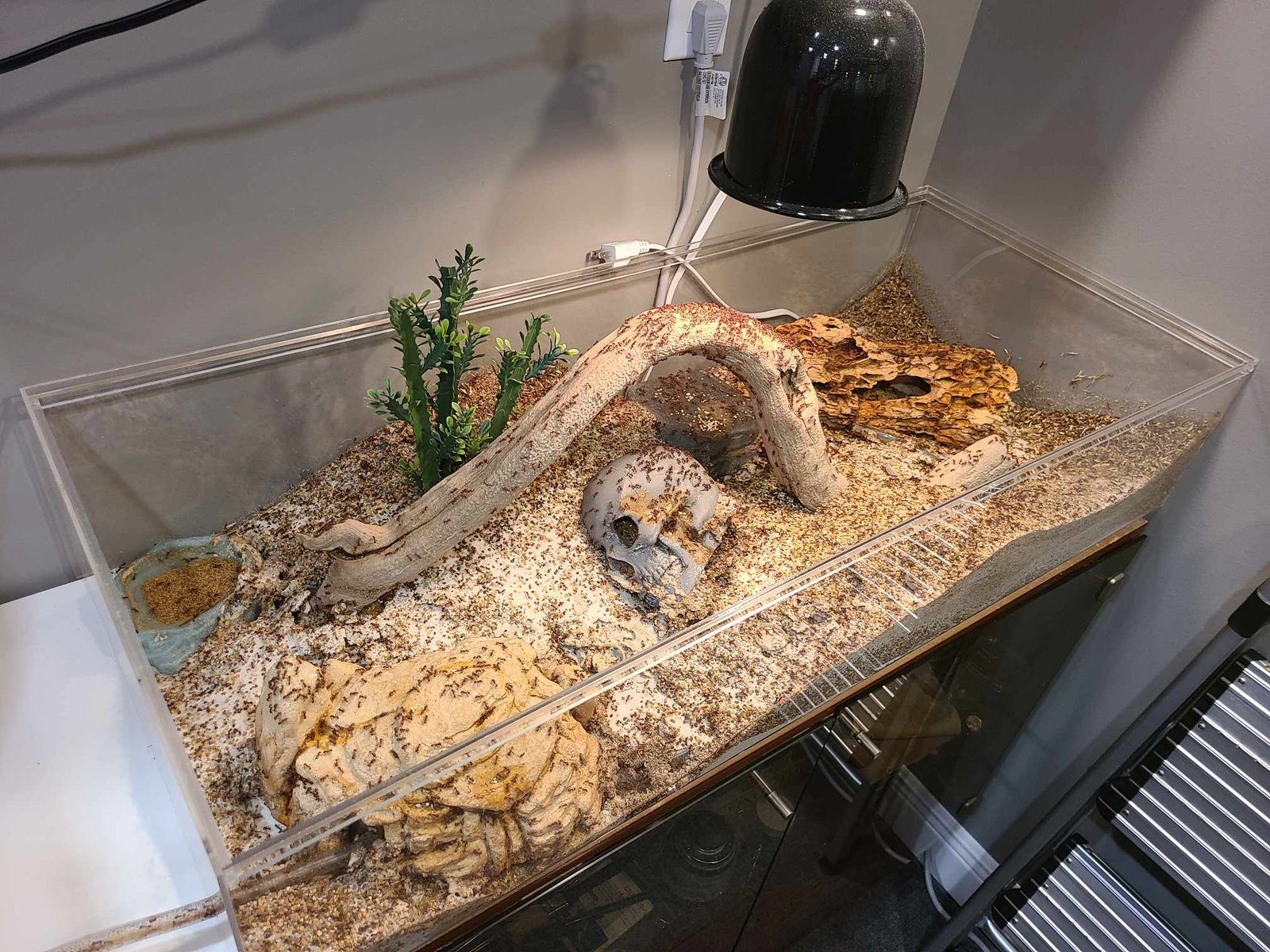
Ant housing, often called a “formicarium” in the hobby, is where most of the hobby’s creativity and complexity lives. Setups range from a single test tube to elaborate multi-chamber acrylic or 3D-printed nests connected to foraging areas.
The Test Tube Setup (For New Colonies)
Nearly every ant colony starts life in what’s called a test tube setup: a glass or plastic tube partially filled with water, plugged with a cotton ball to hold moisture in one end while keeping the queen and early workers in a humid, dark chamber near that cotton plug. This minimal setup mimics the natural founding chamber a queen would dig for herself in the wild, and it’s usually where a colony lives for its first several months to a year, until it outgrows the space.
Moving to a Formicarium
Once a colony has grown enough — typically once the test tube starts feeling cramped — keepers transition the colony into a larger formicarium. These come in a few common styles:
- Test tube racks, which are just an intermediate step of multiple connected tubes, giving a growing colony more room without a full setup change
- Plaster or clay nests, carved or cast with tunnel networks that hold humidity well and mimic natural nest structures closely
- Acrylic or 3D-printed nests, which offer excellent visibility for observing colony behavior, though they typically need more careful humidity management than plaster
- Hybrid nests, combining a humid nesting chamber with a separate, drier foraging area connected by tubing
Humidity and Temperature
Humidity needs vary significantly by species — desert-adapted harvester ants need far less moisture than tropical species like weaver ants — so researching your specific species’ natural habitat matters more here than almost anywhere else in the hobby. Most temperate species do fine at normal room temperature, generally in the 70s°F, while tropical species often need supplemental heating to stay in the 80s. A small aquarium heating mat placed under part of the enclosure (never the whole thing, so the colony can choose their preferred temperature zone) is a common solution.
The Outworld (Foraging Area)
Most formicarium setups include a separate area — often called the “outworld” — connected to the nesting chamber, where ants forage for food and dispose of waste. This keeps the actual nest cleaner, since ants naturally separate their living quarters from their food storage and refuse areas when given the option. A good outworld includes feeding dishes, sometimes a small amount of substrate or decorative elements, and enough open space for foraging behavior to be visible.
Escape-Proofing
Because ants can climb almost anything, escape-proofing is a core part of any setup. Common methods include a barrier of fluon (a specialized non-stick coating) painted around the inside rim of the outworld, tightly fitted lids, and minimizing gaps anywhere tubing connects different chambers. This isn’t optional — a single unsealed gap is often all it takes for a colony to begin escaping.
Temperament: What’s It Actually Like to Keep Ants?
This is where ant keeping diverges most sharply from every other pet on this site. Ants don’t have individual personalities in any meaningful sense, and they’re not going to recognize you, respond to your voice, or show anything resembling affection. What you’re observing instead is collective behavior — the colony as a whole reacting to stimuli, coordinating tasks, and organizing itself with a level of complexity that can honestly be more captivating than a single animal’s personality, once you get into it.
Different species do show distinctly different collective “temperaments,” though. Harvester ants tend to be calm, methodical, and slow-moving as a colony, rarely showing aggression toward observers. Carpenter ants are moderately active and curious, often investigating new objects introduced to their outworld fairly quickly. Fire ants, by contrast, are famously fast, aggressive, and highly reactive to disturbance, which is part of why they’re generally not recommended for beginners.
What most keepers find rewarding isn’t interaction in the traditional pet sense — it’s observation. Watching a colony solve a problem, like reorganizing a nest after a disturbance, or watching foraging trails form and shift based on food availability, taps into something genuinely engaging about collective intelligence. It scratches an entirely different itch than a dog greeting you at the door, but for the right kind of curious, patient person, it’s just as compelling in its own way.
The Honest Ownership Assessment
Ant keeping is a genuinely unusual hobby, and it’s worth being direct about who it’s actually suited for, because the mismatch between expectation and reality trips up a lot of newcomers.
This is a hobby of patience, not immediacy. A new colony, started from a single queen, might take a year or more before it looks like anything resembling the thriving colonies you see in online videos. Growth is slow, especially in the first several months, and if you’re looking for a pet that provides immediate, visible engagement, the early stages of ant keeping can feel underwhelming.
Legal considerations are real and often overlooked. Depending on where you live, certain species — particularly non-native or invasive ones — may be illegal to keep, transport, or sell. This is especially true for fire ants and various tropical species in regions where they could establish invasive populations if they escaped. Always research your local and national regulations before acquiring a species, particularly anything that isn’t native to your region.
Colony failure is common, especially early on. A significant number of new colonies, particularly those started from wild-caught queens, don’t survive their first year, sometimes due to factors entirely outside the keeper’s control, like an unmated or unhealthy queen. This isn’t necessarily a reflection of poor care — it’s simply part of the hobby, and experienced keepers generally expect and budget for some percentage of founding attempts to fail.
There’s no traditional bond here. If what you want from a pet is companionship, affection, or interaction, ants will not provide that in any conventional sense. What they offer instead is something more like a living diorama — a genuinely fascinating window into collective animal behavior, but not a relationship with an individual creature.
Costs are generally low, but setups can get elaborate. A basic test tube setup costs very little, but many hobbyists find themselves drawn into increasingly elaborate acrylic or 3D-printed formicarium designs over time, which can turn into a meaningfully more expensive habit than it initially appears.
For the right person — someone who’s genuinely curious about insect behavior, patient enough to watch a colony grow across months and years rather than days, and drawn to the idea of observing a self-organizing society rather than bonding with an individual animal — ant keeping is one of the most quietly rewarding hobbies in the exotic pet world. It’s not a pet in the traditional sense, and it’s not going to compete with a dog or cat for anyone looking for companionship. But as a window into one of the most successful and complex forms of social organization in the animal kingdom, built and maintained on your own desk or shelf, it’s hard to find anything else quite like it.
The honest bottom line: start small, start with an easy, legal, regionally appropriate species, and go in expecting a slow-building, observation-focused hobby rather than an interactive pet. Do that, and ant keeping can turn into one of the more genuinely absorbing corners of the exotic pet world.