 By Admin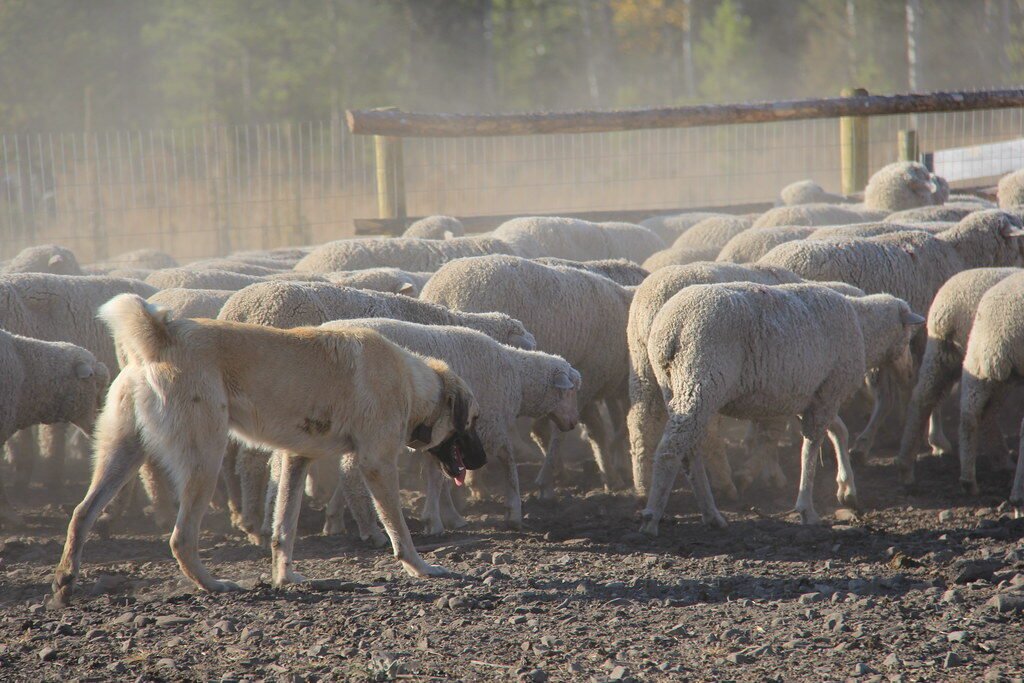
There’s a certain kind of dog that doesn’t bark for attention, doesn’t beg for treats, and doesn’t really care whether you think it’s a “good boy.” The Kangal is one of those dogs. Bred for thousands of years on the harsh, wolf-populated plains of central Turkey, this breed has one job in mind above all else: protect the flock. Everything about the Kangal — its size, its bark, its instincts, even its temperament toward strangers — traces back to that singular purpose.
If you’ve stumbled across photos of a massive, tan-coated dog with a black mask and a broad, bear-like head, there’s a good chance you were looking at a Kangal. It’s a breed that inspires awe, and increasingly, curiosity from people outside Turkey who want to know: could this dog live in my home? Should it?
This guide walks through everything a prospective or current Kangal owner should know — where the breed comes from, what it needs to eat, how to keep it healthy, what kind of housing actually works for a dog this size and this driven, what its temperament is really like day to day, and finally, an honest look at whether this breed belongs in your life at all.
Where the Kangal Comes From
The Kangal takes its name from the Kangal district in Turkey’s Sivas Province, a rugged region of central Anatolia where shepherds have relied on these dogs for centuries to protect sheep from wolves, jackals, and even bears. Unlike many modern breeds shaped primarily by dog shows and aesthetic preference, the Kangal was shaped almost entirely by function. A Kangal that couldn’t fend off a wolf simply wasn’t bred forward. A Kangal that attacked the sheep it was supposed to guard didn’t survive to pass on its genes either. The result is a breed with an unusually stable, purpose-built temperament — protective without being predatory toward its own flock, whether that flock is made up of sheep or, in a modern household, children and other pets.
In Turkey, the Kangal holds a kind of cultural status that’s hard to overstate. It’s often considered a national symbol, and for a long time the breed was tightly controlled — exporting Kangals out of the country was heavily restricted, partly to preserve the working lines and partly out of national pride. That’s loosened over the decades, and Kangals are now found in guardian roles well beyond Turkey’s borders, including a notable program in Namibia where Kangals have been used to protect livestock from cheetahs, reducing the need for farmers to kill the cheetahs themselves. It’s a nice footnote to the breed’s story: a dog bred to protect sheep from predators has also, in a roundabout way, helped protect an endangered predator from farmers.
Genetically, the Kangal is closely related to other Anatolian livestock guardian dogs, and for years there was debate — and still is, in some circles — about whether “Kangal” and “Anatolian Shepherd” refer to the same breed or two distinct ones. Kennel clubs differ on this. The UK Kennel Club and the FCI recognize the Kangal as its own breed, distinguished by a specific look (that black mask, the dun or fawn coat, the size). The American Kennel Club, on the other hand, has historically grouped Kangal-type dogs under the broader “Anatolian Shepherd” umbrella, though breed-specific recognition has been gaining ground. If you’re looking into acquiring one, it’s worth knowing which classification the breeder or registry you’re working with follows, since it affects paperwork, showing eligibility, and sometimes price.
What a Kangal Actually Looks Like
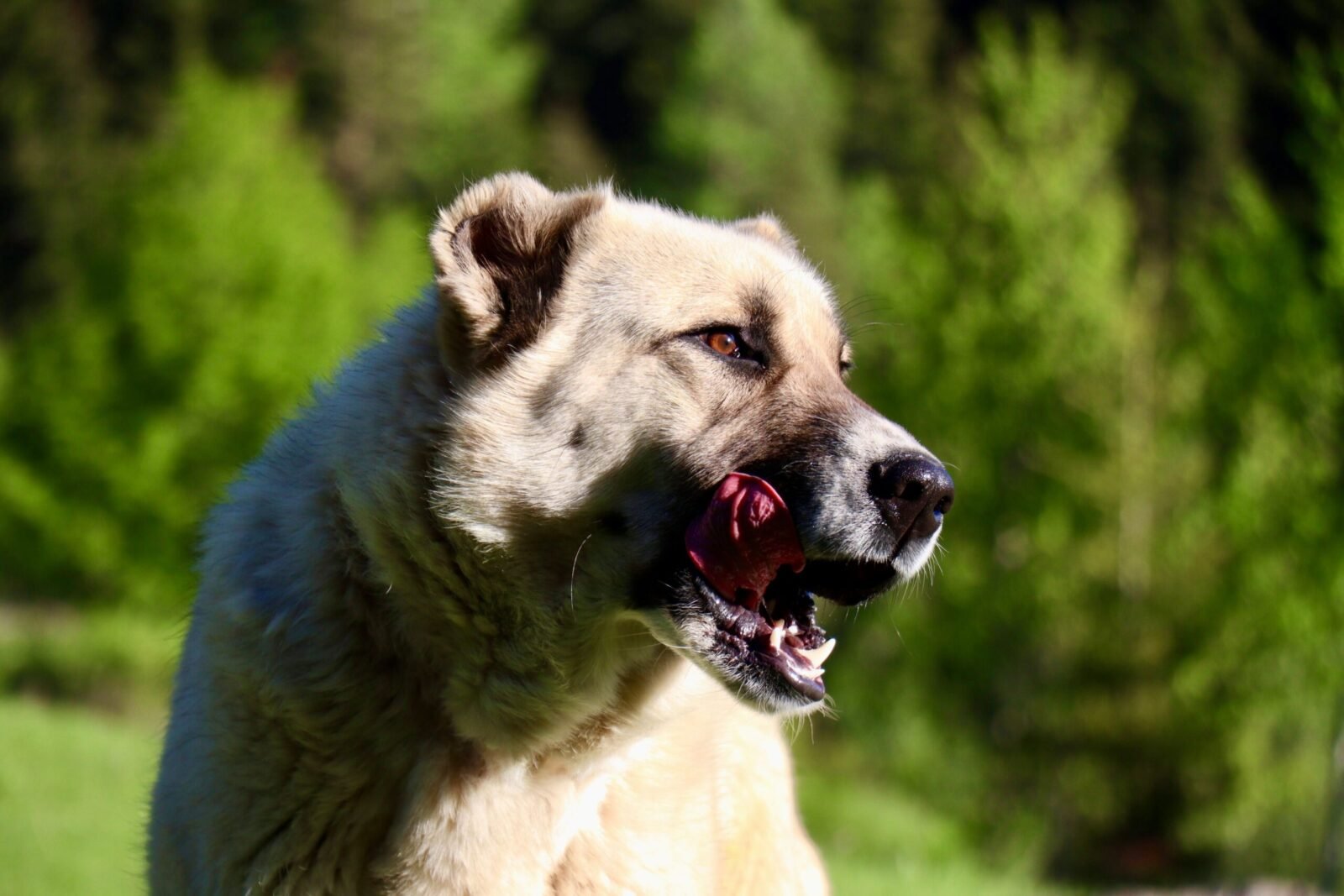
Kangals are big dogs — not exaggeratedly so, but solidly, functionally large. Males typically stand around 30 to 32 inches at the shoulder and weigh anywhere from 110 to 145 pounds, sometimes more. Females are somewhat smaller but still substantial, often in the 90 to 120 pound range. This isn’t a breed that looks impressive on paper and then turns out to be smaller in person; Kangals tend to look even bigger in real life than photos suggest, partly because of their broad chests, thick necks, and dense double coats.
The coat itself is short to medium in length but deceptively insulating, built for the temperature extremes of the Anatolian plateau — brutal winters and scorching summers. The classic Kangal color is a light dun or fawn, sometimes described as sable or grey-fawn, always paired with a distinctive black mask around the muzzle and ears. This combination is actually written into the breed standard in countries that recognize the Kangal separately; a Kangal without that mask is often considered off-standard, even if it’s otherwise a purebred dog from working lines.
The head is broad and somewhat bear-like, with a black nose, dark almond-shaped eyes, and ears that fold forward and hang close to the head — though in Turkey, working Kangals traditionally had their ears cropped short, a practice tied to their job of fighting off wolves (cropped ears give predators less to grab onto). This practice is far less common, and often illegal, outside of Turkey today, and most Kangals in pet or guardian homes elsewhere keep their natural ears.
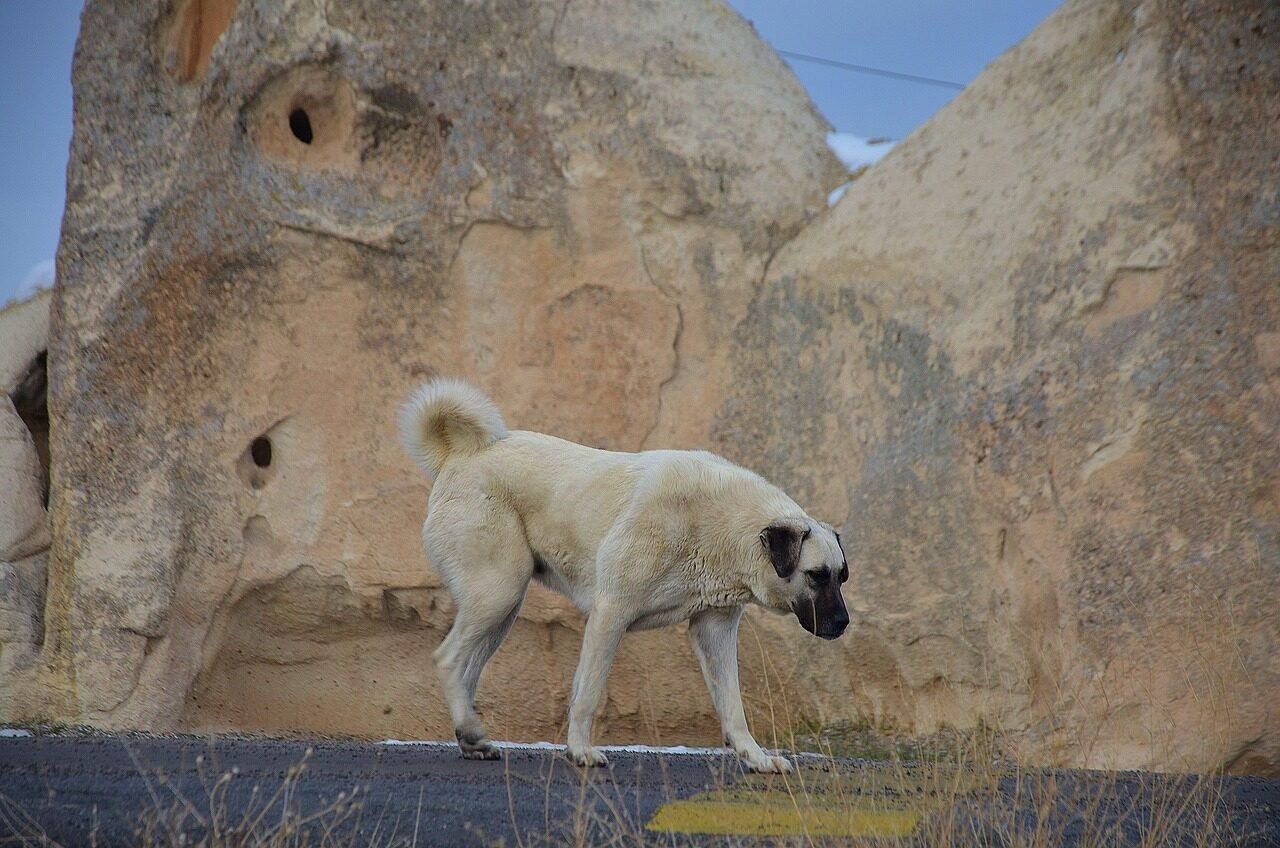
The tail curls up and over the back when the dog is alert or moving, and hangs low with a slight curl at rest — a detail that, along with the gait, gives the Kangal a distinctly different silhouette from other giant breeds like the Great Pyrenees or the Anatolian Shepherd in its broader sense.
Temperament: Calm, Watchful, and Not Here to Please You
This is the part of the Kangal conversation that trips people up the most, so it’s worth being direct about it: Kangals are not Labradors. They are not bred to please people. They are bred to think independently, assess threats on their own, and act without waiting for instructions. This is exactly what you want in a dog guarding sheep on an open range miles from the nearest human, and it’s precisely the trait that catches new owners off guard when the dog is living in a suburban backyard instead.
Around their own family — human or animal — a well-socialized Kangal is typically calm, affectionate in a low-key way, and remarkably gentle, especially with children. There’s a long tradition in Anatolia of these dogs living alongside livestock, and that same protective, tolerant instinct tends to extend to kids in the household. Kangals are not typically hyperactive, jumpy, or attention-seeking. Ask most Kangal owners to describe their dog’s daily demeanor and you’ll hear words like “dignified,” “watchful,” or “aloof” long before you hear “goofy” or “playful,” although individual dogs certainly have their silly moments.
With strangers, though, the picture changes. Kangals are naturally wary and territorial. This isn’t aggression for aggression’s sake — it’s the exact instinct that made them useful against wolves for thousands of years — but it means a Kangal will typically size up an unfamiliar person or animal before deciding whether they’re a threat. Without proper socialization starting in puppyhood, that wariness can tip into genuine aggression, particularly toward other dogs or unfamiliar visitors. Even with excellent socialization, most Kangals never become the type of dog who greets every stranger like a long-lost friend, and that’s by design, not a training failure.
The bark deserves its own mention. Kangals have a deep, resonant bark that can carry for a genuinely surprising distance, and they use it. A Kangal on guard duty — even suburban guard duty over a backyard — will often bark at anything it perceives as unusual: a passing car, a delivery driver, a rustling bush at 2 a.m. This is a working trait, not a behavioral problem, but it’s one of the most common reasons Kangals end up rehomed by owners who didn’t anticipate it, especially in neighborhoods with close-set houses.
Independent thinking also shows up in trainability. Kangals are intelligent — genuinely so — but that intelligence doesn’t translate into eagerness to follow commands the way it might in a border collie or a golden retriever. A Kangal will often appear to “decide” whether a command is worth following in the moment, based on its own read of the situation. This isn’t stubbornness for its own sake; it’s the same evaluative instinct that lets a livestock guardian dog decide, on its own, whether a coyote at the fence line warrants a full charge or just a warning bark. Training a Kangal well means working with that instinct rather than trying to override it, and it usually takes a patient, consistent, and confident handler.
Feeding a Kangal
Feeding a dog this size comes with real logistical and financial considerations, and it’s worth thinking through before bringing a Kangal puppy home rather than after.
Puppyhood. Kangal puppies grow fast and grow large, and that rapid growth is actually one of the more delicate periods in the breed’s care. Like other giant breeds, Kangals are prone to developmental orthopedic issues if they grow too quickly or are overfed during the first year or so. Most veterinarians recommend a large-breed puppy formula specifically formulated with a controlled calcium-to-phosphorus ratio and moderate protein and fat levels, rather than a standard puppy food or, worse, adult food fed in large quantities to “bulk up” the dog. Free-feeding is generally discouraged; scheduled meals — typically three times a day tapering to two by six months — give more control over growth rate. A veterinarian familiar with large or giant breeds is a genuinely useful resource here, since overfeeding a growing Kangal puppy is one of the most common preventable contributors to joint problems later in life.
Adulthood. A full-grown Kangal typically eats a substantial amount — often 4 to 6 cups of a high-quality dog food per day, though this varies quite a bit based on activity level, metabolism, and whether the dog is doing actual working guardian duty (which burns considerably more calories than a backyard pet’s daily routine). High-quality commercial diets formulated for large or giant breeds are a solid baseline; look for named animal protein sources near the top of the ingredient list and appropriate fat content rather than the cheapest bag on the shelf, since these dogs are prone to joint issues that a nutrient-poor diet can worsen over time.
Some Kangal owners, particularly those keeping the dogs in a more traditional working capacity, feed raw or home-prepared diets, sometimes echoing the traditional Turkish approach of feeding working dogs a diet heavy in meat, bone, and dairy byproducts like yogurt. This can work well, but it requires real nutritional knowledge to avoid deficiencies, and it’s worth discussing with a vet or veterinary nutritionist rather than improvising, especially calcium and phosphorus balance in a breed already prone to skeletal issues.
Bloat — technically gastric dilatation-volvulus, or GDV — is a genuine risk in deep-chested giant breeds like the Kangal, and it’s a life-threatening emergency. Feeding two or three smaller meals rather than one large one, avoiding strenuous exercise right before or after eating, and using a slow-feeder bowl if the dog tends to gulp its food are all reasonable precautions. Knowing the early signs of bloat — a distended abdomen, unproductive retching, restlessness, drooling — and getting to a vet immediately if they appear can be the difference between a routine visit and an emergency.
Health Considerations
Kangals are, broadly speaking, a robust and hardy breed — centuries of working selection tends to weed out fragility. That said, their size alone puts them at risk for several conditions common to giant breeds.
Hip and elbow dysplasia are the headline concerns. These are developmental issues where the joint doesn’t form correctly, leading to pain, arthritis, and reduced mobility over time. Reputable breeders will have breeding stock hip- and elbow-scored (through organizations like OFA or PennHIP) before breeding, and asking to see those results is one of the most useful things a prospective buyer can do. Keeping a growing puppy at a lean, appropriate weight and avoiding excessive high-impact exercise (like long runs or repeated jumping) during the first 12 to 18 months also meaningfully reduces risk.
Bloat/GDV, as mentioned above, is a serious concern for the breed given its deep chest.
Entropion, a condition where the eyelid rolls inward and the lashes irritate the cornea, shows up in some lines and may require surgical correction if severe.
Hypothyroidism appears with some regularity in large guardian breeds generally, and can cause weight gain, lethargy, and coat changes; it’s manageable with medication once diagnosed.
Lifespan for a Kangal typically runs from about 12 to 15 years, which is genuinely long for a dog this size — most giant breeds top out closer to 8 to 10 years, and the Kangal’s comparative longevity is often cited as evidence of the breed’s overall hardiness.
Routine care matters more than it might seem for a dog that looks this rugged. Regular vet checkups, appropriate vaccination and parasite prevention, dental care, and nail trims are all standard, and given the breed’s size, sedation-free nail trims can be a genuine challenge if the dog isn’t handled and desensitized to it from puppyhood. Ear checks are worth doing regularly too, since the folded ears can trap moisture and debris.
Housing and Space: The Non-Negotiable Part
This is where a lot of Kangal ownership dreams meet reality. This breed was not designed for apartment living, and pretending otherwise does a disservice to both the dog and the owner.
Kangals need space — real, meaningful outdoor space, not a small fenced yard they can cross in four strides. Historically, these dogs worked across open range, patrolling territory that could span many acres, and while a suburban Kangal obviously isn’t covering that kind of ground, the instinct to patrol and monitor territory doesn’t switch off just because the territory got smaller. A securely fenced yard — and “securely” is doing a lot of work in that sentence, since a bored or determined Kangal can and will test fences, dig, or attempt to scale barriers that would stop a smaller dog — is close to a minimum requirement, not a nice-to-have.
Fence height matters. Many Kangal owners find that a fence under 6 feet is inadequate, and some recommend closer to 6 to 8 feet given the breed’s size and jumping ability when motivated. Buried wire or concrete footing along the fence line is also common, since digging under a fence is a well-documented Kangal pastime when the dog is under-stimulated.
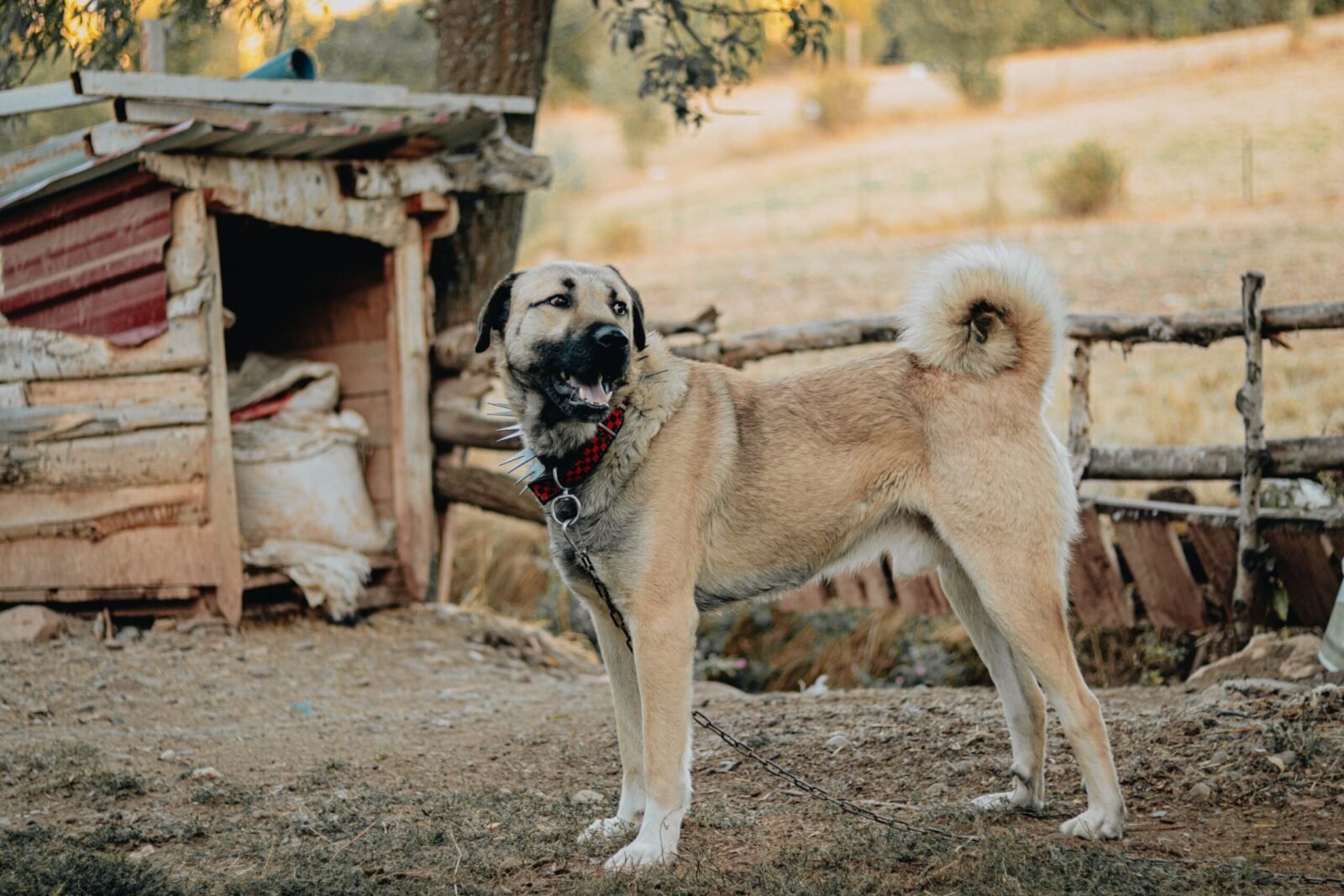
Indoor-only living is generally a poor fit for this breed, but so is chaining a Kangal outside and leaving it there in isolation — that combination tends to produce a frustrated, under-socialized, and sometimes reactive dog. The healthiest setup usually blends both worlds: access to a secure outdoor area where the dog can patrol and do what feels instinctively natural, combined with real time indoors as part of the family, since Kangals bond closely with their people and don’t thrive on isolation any more than most dogs do.
Rural or semi-rural properties tend to be a much better match than dense urban or suburban neighborhoods, both because of the space requirement and because of that resonant, far-carrying bark, which tends to generate noise complaints in close-quarters neighborhoods fairly quickly. Anyone considering a Kangal in a suburban setting should think honestly about nearby neighbors, local noise ordinances, and whether the property can actually accommodate secure containment for a 130-pound dog with a strong prey and guardian drive.
Multi-dog households and homes with cats or other small animals require thoughtful, gradual introductions. A Kangal raised from puppyhood alongside other animals it’s meant to protect — including livestock, in working situations — will often extend genuine guardian instincts toward them rather than predatory ones. But that outcome depends heavily on early socialization, not assumption, and introducing an adult Kangal to a new household of small animals without that early groundwork carries real risk given the breed’s size and prey drive toward unfamiliar animals.
Exercise and Mental Stimulation
Despite their calm demeanor, Kangals aren’t couch dogs. They need daily physical exercise — long walks, time to patrol a secured yard, off-leash time in a safely enclosed area — and they need mental engagement just as much, since an under-stimulated Kangal tends to invent its own jobs, which usually means digging, escaping, or excessive barking.
That said, this isn’t a breed that typically wants or needs the high-octane, ball-obsessed exercise routine of something like a working-line German Shepherd or a Malinois. Kangals tend to conserve energy, moving in efficient bursts rather than constant activity, which mirrors how a working guardian dog actually spends its day: mostly watching, occasionally sprinting hard at a perceived threat, then settling back down. A couple of solid walks a day, some structured training time, and a secure space to patrol generally covers the physical side well; the mental side benefits from having an actual “job,” even a symbolic one, whether that’s guarding livestock, patrolling property, or structured training and socialization outings.
Training and Socialization
Early, extensive socialization is arguably the single most important thing a Kangal owner can do, and it needs to start young — ideally from 8 weeks old, well before the natural guardian instincts fully kick in around adolescence. Positive, varied exposure to different people, animals, environments, and situations during the first several months shapes how the adult dog will assess and respond to novelty for the rest of its life.
Training should lean on positive reinforcement, consistency, and patience rather than dominance-based methods, which tend to backfire with a breed this independent and, frankly, this physically capable of pushing back. Kangals respond best to handlers who are calm, confident, and consistent rather than forceful. Basic obedience — reliable recall, a solid “leave it,” loose-leash walking — is genuinely important given the dog’s size and strength; a 130-pound dog that hasn’t learned leash manners is not a minor inconvenience the way it might be with a 20-pound dog.
Professional training support, ideally from someone experienced with livestock guardian breeds specifically, is a reasonable investment for most first-time Kangal owners. Generic obedience classes designed around more biddable breeds sometimes miss the specific handling approach this breed responds to.
Is a Kangal Right for You? An Honest Assessment
Here’s the part worth reading slowly before falling in love with a photo of a majestic tan dog standing watch over a hillside.
A Kangal is an excellent fit for someone with a rural or semi-rural property, genuine livestock or significant property to protect, experience with large or independent-minded breeds, and the patience for a dog that thinks for itself rather than constantly checking in for instructions. If you actually keep animals that need guarding — sheep, goats, poultry — and you have the space and fencing to match, a well-bred, well-socialized Kangal can be one of the most effective and loyal guardians available, doing a job it was built for over thousands of years.
A Kangal is a poor fit for apartment or small-lot suburban living, first-time dog owners without experience handling large, strong-willed breeds, households unable to commit to serious early socialization, anyone hoping for an easygoing, eager-to-please companion, and neighborhoods where a loud, far-carrying bark at odd hours will create real conflict. It’s also a poor fit for anyone drawn primarily to the breed’s imposing looks without a clear sense of what daily life with that temperament actually involves.
There’s also the financial and logistical reality of the breed’s size: larger food costs, larger medication doses, more expensive boarding (if you can find a facility comfortable housing a dog this size), and vet bills that scale with body weight. None of this is prohibitive, but it’s worth budgeting for honestly rather than discovering it after the fact.
The Kangal isn’t a bad dog for the wrong home — it’s simply a dog whose needs are specific and non-negotiable. When those needs are met, owners consistently describe a calm, deeply loyal, remarkably protective companion, the kind of dog that will lie quietly at your feet for hours and then, if it ever actually needs to, act without a moment’s hesitation. When those needs aren’t met, the same instincts that make the breed so effective as a guardian can turn into real behavioral problems — excessive barking, territorial aggression, escape attempts, and a dog that’s fundamentally unhappy in a life that doesn’t fit its wiring.
If you’re weighing a Kangal against your actual circumstances rather than the idealized version in your head, that’s the right instinct. This is a breed that rewards honesty about what you can offer it, and punishes wishful thinking. For the right home, though, few breeds offer the same combination of quiet dignity, unwavering loyalty, and genuine, time-tested competence at the one job they were bred for.