 By Admin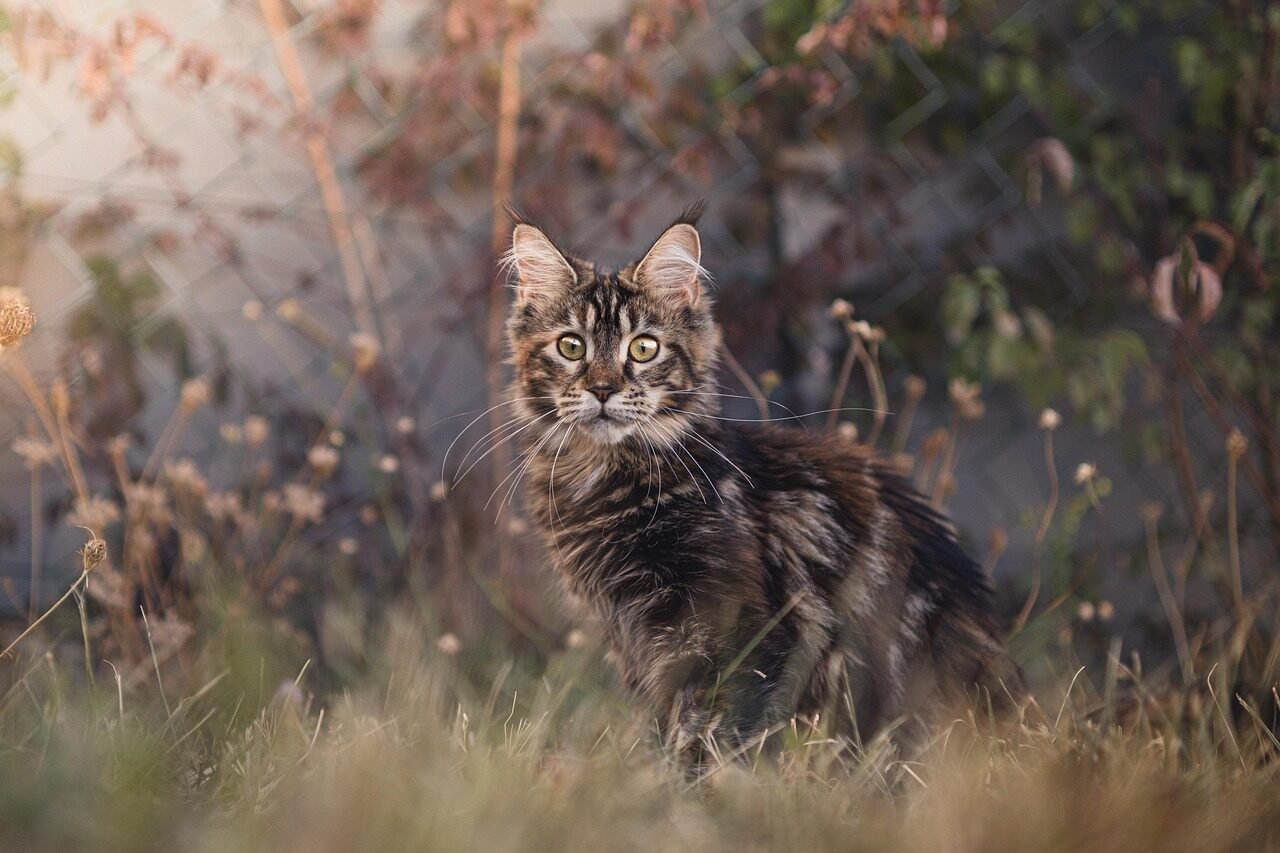
There’s a reason the Maine Coon shows up on nearly every “best family cat” list you’ll ever find. It’s a genuinely enormous cat with a genuinely enormous personality, and yet somehow it manages to be one of the most relaxed, easygoing companions in the entire feline world. If you’ve ever seen a photo of a cat that looks like it could pass for a small bobcat, tufted ears and all, sprawled across someone’s couch like it owns the place — there’s a decent chance you were looking at a Maine Coon.
This breed has an interesting way of defying expectations. Cats, as a species, have a reputation for being aloof, independent, and mildly unimpressed with humanity in general. Maine Coons didn’t get that memo. They’re often described as “dog-like” in temperament, they tend to follow their people from room to room, and many of them will happily learn to fetch a crumpled ball of paper if you throw it often enough. Combine that with their sheer physical size and their thick, weather-resistant coat, and you’ve got a breed that’s equal parts impressive and endearing.
If you’re thinking about bringing a Maine Coon into your home, or you’re just curious about what makes this breed tick, this guide will walk you through everything that actually matters: where they came from, what they look like, how they behave, what they need to eat, what health issues to watch for, how to keep that coat under control, and an honest look at whether this breed fits your lifestyle.
Where the Maine Coon Comes From
The Maine Coon is one of the oldest natural cat breeds in North America, and unlike a lot of modern breeds that were deliberately engineered through selective crossbreeding programs, the Maine Coon largely developed on its own. It’s a landrace breed, meaning it evolved through natural selection based on the environment it lived in, rather than through a breeder’s specific vision.
The most widely accepted theory is that the breed descends from domestic cats brought to New England by early European settlers and sailors, which then interbred over generations with local cats, gradually adapting to the brutal winters of the northeastern United States. Maine’s climate is no joke — bitter cold, heavy snow, long winters — and the cats that survived and reproduced in that environment were naturally the ones with the thickest coats, the largest, most robust bodies, and the hardiest constitutions. Over time, this natural selection process produced the breed we recognize today.
There’s a much more colorful, much less biologically plausible legend that claims the Maine Coon descends from cats crossed with raccoons, which supposedly explains the bushy, ringed tail and the name “Coon.” This is genetically impossible — cats and raccoons can’t interbreed — but the myth persisted for so long precisely because the resemblance really is striking when you look at that tail. Another romantic legend claims the breed descends from cats brought over by Marie Antoinette during an attempted (and failed) escape to America, though there’s no solid historical evidence to support this either. The truth is simpler and, honestly, more impressive: this is a breed that essentially built itself, shaped entirely by survival in a harsh New England climate.
By the late 1800s, Maine Coons were already well established as farm cats and mousers throughout Maine and the surrounding region, prized for their size, their hunting ability, and their tolerance for cold. The breed actually won Best Cat at one of the very first American cat shows, held in New York in 1895, decades before formal breed standards and cat fancy organizations as we know them today even existed. Interest in the breed dipped in the early 20th century as more exotic imported breeds like Persians became fashionable, and there was a period where the Maine Coon nearly faded into obscurity. Dedicated breed enthusiasts revived it in the mid-20th century, and it was officially recognized by the Cat Fanciers’ Association in 1976. Today, it’s consistently one of the most popular registered cat breeds in the United States.
What a Maine Coon Looks Like
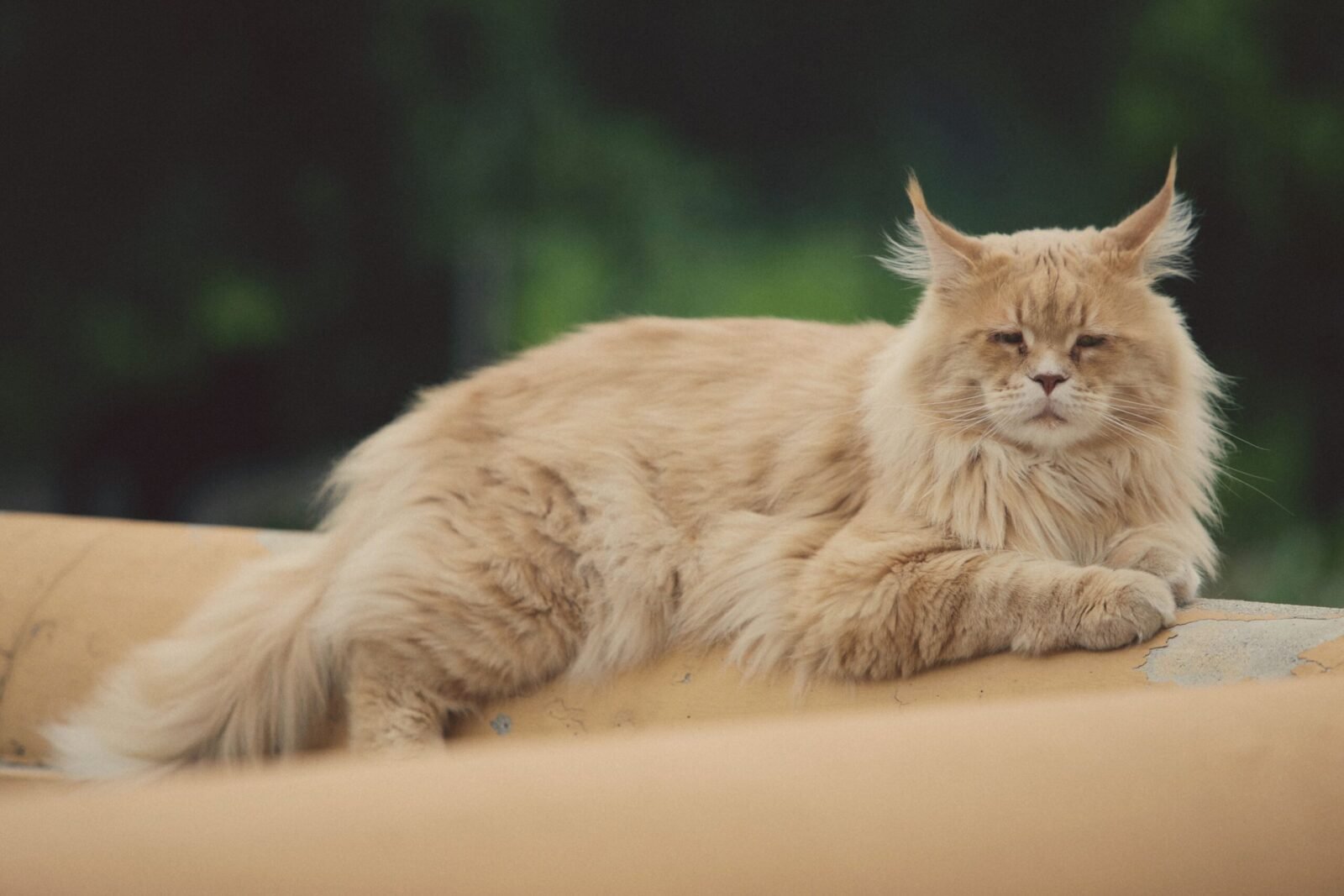
Size is the first thing anyone notices about a Maine Coon, and it’s genuinely one of the largest domesticated cat breeds in the world. Adult males commonly weigh between 13 and 18 pounds, with some substantial individuals pushing past 20 pounds, while females tend to run smaller, typically in the 8 to 12 pound range. It’s not just weight, either — these cats are long. Maine Coons are frequently cited as the longest domestic cat breed, with some individuals measuring well over three feet from nose to tail tip when fully stretched out. They also mature slowly, often not reaching full physical size until they’re three to five years old, which means that “kitten phase” sticks around a lot longer than it does in most other breeds.
Despite their bulk, Maine Coons aren’t a stocky, compact breed like some other large cats. Their body type is often described as “rectangular” — long, muscular, and substantial, with a broad chest and sturdy legs, built more for strength and presence than for delicate elegance.
The coat is another defining feature, and it’s directly tied to that harsh New England ancestry. It’s a long, shaggy, water-resistant double coat, though it’s not uniformly long all over the body the way a Persian’s coat is. Maine Coons tend to have shorter hair on the shoulders and longer hair around the ruff, stomach, and britches (the fluffy fur on the back legs), which gives them a slightly unkempt, wild look that’s very much part of their charm. The tail is long, bushy, and often carried high, historically useful for a cat that needed to wrap it around its face and paws for warmth while sleeping outdoors in the snow.
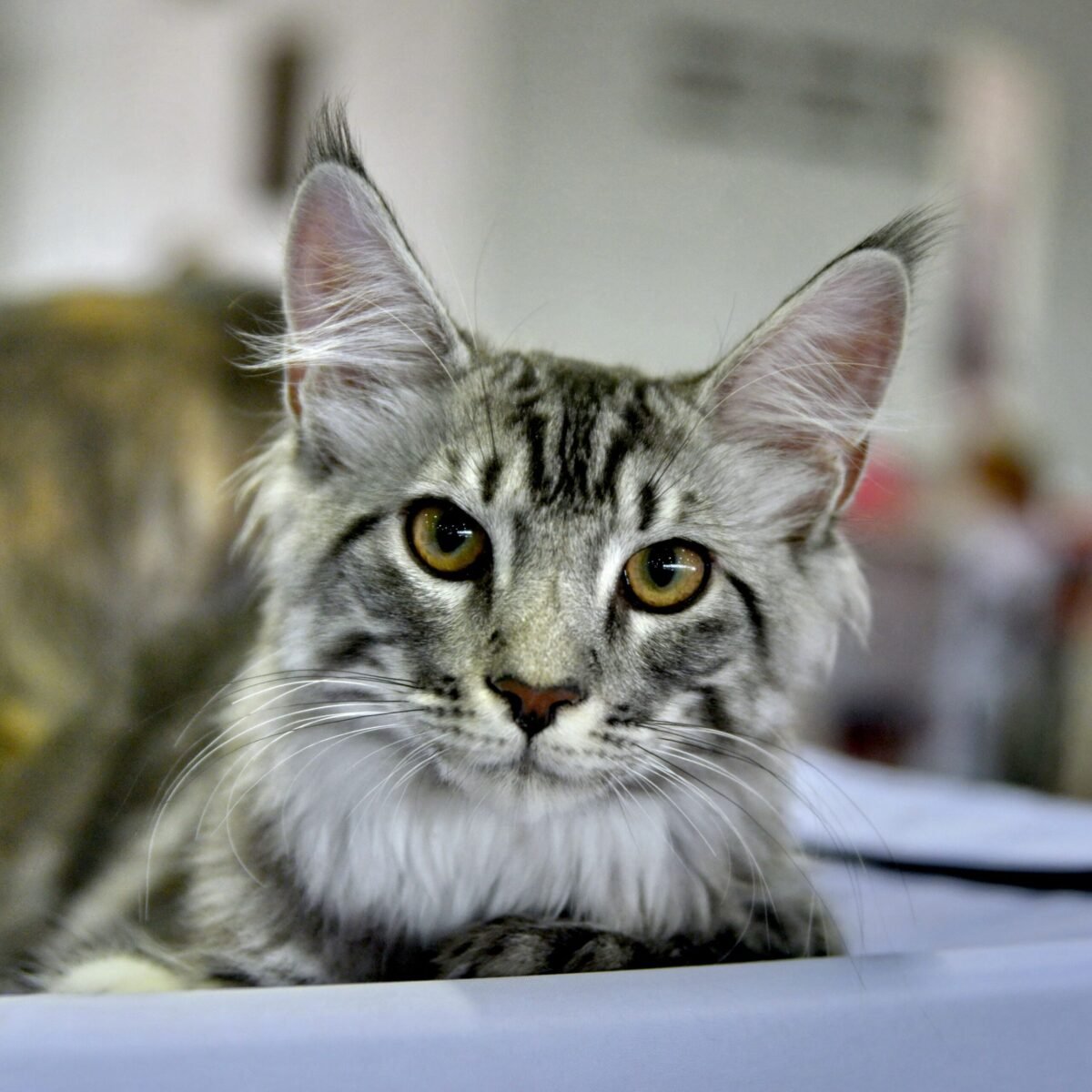
Maine Coons come in an enormous range of colors and patterns — brown tabby is the most iconic and commonly associated with the breed, evoking that “wild” look, but you’ll also find solid colors, tortoiseshell, calico, and more. Their eyes are large and expressive, typically green, gold, or copper, though white Maine Coons can have blue eyes or the striking odd-eyed combination.
Then there are the ears — tall, wide at the base, and topped with lynx-like tufts of fur that stick straight up, another practical adaptation for a cold climate, helping to protect the ears from frostbite and cold wind. Many Maine Coons also have tufts of fur growing between their toes, again originally functional, acting almost like natural snowshoes for walking on top of snow rather than sinking into it.
Temperament: The Gentle Giant Reputation Is Earned
If there’s one word used constantly to describe Maine Coon temperament, it’s “gentle.” This is a breed that combines an imposing physical presence with an almost comically mellow, easygoing personality, and that contrast is a huge part of why so many people fall in love with them.
Maine Coons are famously sociable. They tend to bond closely with their entire household rather than fixating on a single favorite person, and they generally enjoy being wherever the people are, even if that just means sprawling nearby rather than demanding to be held or petted constantly. Many owners describe their Maine Coon as a near-constant shadow, following them from the kitchen to the living room to the home office, content just to be in the same space.
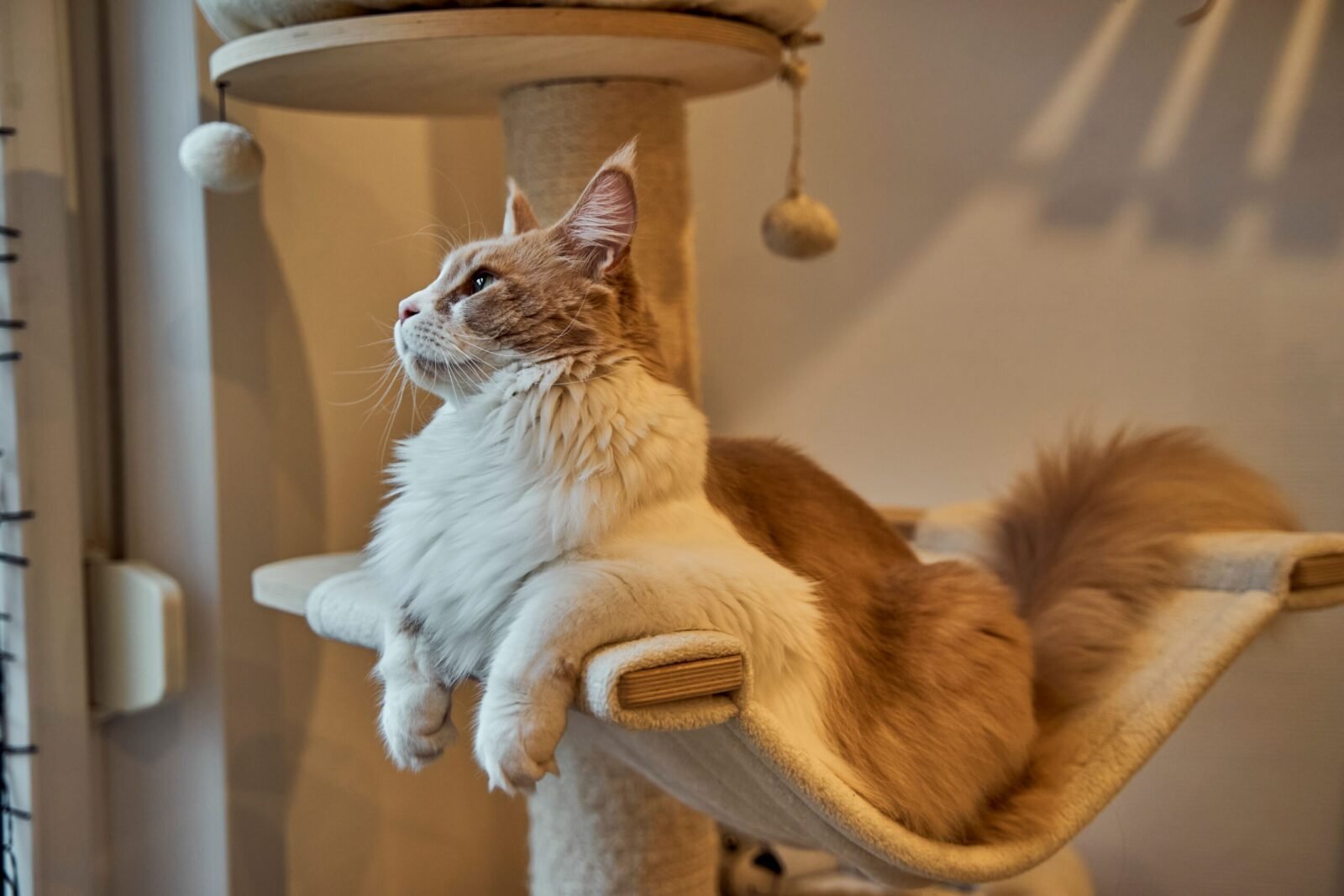
Despite their size and occasionally intimidating appearance, these cats are rarely aggressive or standoffish. They tend to be patient and tolerant, which makes them a genuinely good match for families with children, as long as the children are taught appropriate ways to interact with any cat. Many Maine Coons also do well with other pets, including dogs, particularly when introductions are handled gradually and thoughtfully.
One of the more distinctive quirks of the breed is their vocalization. Maine Coons are known for having surprisingly small, soft, chirping voices that seem almost comically mismatched with their large bodies — you’d expect a deep yowl from a 17-pound cat, but instead you often get a small trilling chirp or a quiet little “mrrp.” Many are quite chatty in their own way, “talking” to their owners throughout the day, though rarely in the loud, insistent way some other vocal breeds (Siamese, for instance) are known for.
They’re also notably intelligent and playful, often well into adulthood, unlike some breeds that mellow into pure lap-cat mode once kittenhood ends. Many Maine Coons genuinely enjoy interactive play, puzzle toys, and problem-solving activities. A fair number of them can be taught simple tricks, and it’s genuinely common for owners to report their Maine Coon fetching small toys, which is a behavior you’d more typically associate with a dog than a cat.
Water is another area where this breed tends to break the typical feline mold. Plenty of cats treat water like a personal enemy, but many Maine Coons show real curiosity around it — pawing at running faucets, “fishing” in water bowls, or even hopping into an empty bathtub to investigate. Not every individual will share this trait, but it shows up often enough that it’s become something of a breed hallmark, possibly linked to their semi-aquatic hunting ancestry near the water-heavy landscapes of coastal Maine.
Living Situation and Housing Needs
The good news for most prospective owners is that Maine Coons are genuinely adaptable when it comes to living situations. Unlike a livestock guardian dog that needs acreage to feel fulfilled, a Maine Coon can do perfectly well in an apartment, provided it has enough vertical and horizontal space to move around, climb, and explore. Given their size and their playful, curious nature, though, they do appreciate having room to stretch out, and most will make excellent use of cat trees, shelving, and other vertical territory if you provide it.
Because of their size and strength, investing in a genuinely sturdy cat tree is worth doing early — flimsy, budget cat furniture built for an average-sized cat may not hold up well to a Maine Coon’s weight, especially once it reaches full adult size around the three to five year mark.
These cats generally do best as indoor pets, both for their own safety (traffic, predators, disease, and the general risks of outdoor life) and for the safety of local wildlife, given their strong natural hunting instincts. That said, many Maine Coon owners find success with supervised outdoor time, whether that’s a secured “catio,” a harness-and-leash setup (this breed’s easygoing temperament often makes leash training more successful than it would be with a more high-strung breed), or a securely fenced yard.
Because of their social nature, Maine Coons generally don’t do well being left alone for extended periods on a regular basis. They’re not typically prone to severe separation anxiety the way some breeds or individual cats can be, but they do best in households where someone is around at least part of the day, or where they have another pet companion to keep them from getting lonely.
Feeding a Maine Coon
Given their substantial size, Maine Coons have correspondingly higher caloric needs than an average domestic shorthair, though exactly how much varies a lot based on age, activity level, and whether the individual cat is spayed or neutered. A large, active young adult male might need a noticeably higher daily calorie intake than a smaller, less active female of the same breed, so it’s worth working with your vet to set an appropriate feeding plan for your specific cat rather than relying on generic packaging guidelines.
High-quality food with a strong animal protein base is generally recommended, since cats are obligate carnivores regardless of breed, and Maine Coons are no exception. Because they’re a large breed with a slow growth curve, kittens benefit from a food formulated for large-breed kitten growth if it’s available, supporting steady, controlled bone and joint development rather than overly rapid growth that could stress developing joints.
Obesity is a genuine concern for this breed, partly because their large frame can sometimes mask early weight gain — a Maine Coon carrying a few extra pounds doesn’t always look overweight the way a smaller cat would, simply because they’re already a big animal. Regular weigh-ins, body condition checks with your vet, and portion control (rather than free-feeding dry food all day) go a long way toward keeping a Maine Coon at a healthy weight throughout its life. Given that this breed is already predisposed to certain joint and heart conditions, keeping weight in a healthy range is one of the most meaningful things an owner can do preventively.
Fresh water should always be available, and given the breed’s noted fascination with water, a pet water fountain is often a hit with Maine Coons specifically, encouraging them to drink more than they might from a plain, still bowl.
Grooming and Coat Care
Despite having long fur, Maine Coons are often described as relatively low-maintenance to groom compared to other long-haired breeds like Persians, mainly because their coat is less prone to matting. The texture is silkier and less dense than a Persian’s cottony coat, and the fact that it’s shorter on the shoulders and longer elsewhere means it doesn’t tangle quite as readily.
That said, “relatively low-maintenance” doesn’t mean “no maintenance.” A weekly brushing session, more frequent during seasonal shedding periods in spring and fall, will help prevent mats from forming, particularly around the armpits, belly, and britches where friction and movement create the most tangling. A good stainless steel comb and a slicker brush are generally enough to keep the coat in good shape for most owners.
Regular nail trims, ear checks, and dental care round out the basic grooming routine, same as with any cat. Given their size and the strength of those claws, staying on top of nail trims is worth doing early and consistently, both for the furniture’s sake and the cat’s own paw health.
Health Considerations
Maine Coons are a generally hardy breed, a legacy of their natural, survival-driven development in a harsh climate rather than intensive selective breeding for exaggerated physical traits. That said, there are several health conditions that show up with enough frequency in the breed to be worth knowing about before you bring one home.
Hypertrophic cardiomyopathy, or HCM, is the most significant one. It’s a genetic heart condition that causes thickening of the heart muscle and is more common in Maine Coons than in the general cat population. Reputable breeders typically screen their breeding cats for the genetic mutation associated with HCM and for the disease itself through cardiac ultrasounds, so asking about this screening history is a reasonable and important question if you’re purchasing a kitten from a breeder. Regular veterinary checkups, including periodic cardiac screening as your cat ages, are a smart precaution regardless.
Hip dysplasia, more commonly associated with dogs, does show up in Maine Coons at a higher rate than in many other cat breeds, given their large size and bone structure. It doesn’t always cause noticeable symptoms, but in more severe cases it can lead to mobility issues and discomfort as the cat ages.
Spinal muscular atrophy is a genetic condition specific to the breed, caused by a recessive gene, that affects motor neurons and can lead to muscle wasting and mobility problems, though it’s not painful and affected cats can often live comfortable, adapted lives. Genetic testing is available for this condition, and responsible breeders typically test for it.
Polycystic kidney disease is another condition worth knowing about, though it’s more strongly associated with Persian-lineage breeds; it’s still worth asking a breeder about their screening practices given some historical crossbreeding between long-haired breeds decades ago.
With good genetics, a healthy weight, and consistent veterinary care, Maine Coons commonly live somewhere between 12 and 15 years, with some individuals living considerably longer. As with any breed prone to specific hereditary conditions, working with a breeder who does genetic and cardiac screening — or choosing a rescue and being upfront with your vet about breed-associated risks — is one of the most impactful things you can do for your cat’s long-term health.
Exercise and Mental Stimulation
Don’t let their calm, easygoing reputation fool you into thinking Maine Coons don’t need activity. This is a breed that retains a strong playful streak well into adulthood, and regular interactive play goes a long way toward keeping both their body and mind in good shape.
Wand toys, puzzle feeders, and anything that mimics hunting behavior tend to be a hit with this breed, tapping into those old instincts from their working-cat, mouse-hunting ancestry. Given their intelligence, many Maine Coons also do well with more structured enrichment — clicker training, simple tricks, or even leash walks for cats whose temperament and confidence make that a good fit.
Daily play sessions, even short ones, help manage weight, prevent boredom-related destructive behavior, and strengthen the bond between cat and owner. Given how social this breed tends to be, that shared playtime is often something the cat genuinely looks forward to, rather than a chore to check off a list.
An Honest Assessment: Should You Get One?
Here’s the good news: the Maine Coon is one of the more broadly recommendable cat breeds out there, and it’s easy to see why it’s so consistently popular. This is a breed that tends to be patient with children, tolerant of other pets, adaptable to apartment or house living, relatively easy to groom compared to other long-haired breeds, and blessed with a temperament that’s affectionate without being needy or high-strung.
That said, it’s worth going in with realistic expectations. These are large cats that need sturdy furniture, a reasonable food budget given their size, and an owner who’s willing to stay on top of a health screening history, particularly around heart health. They also mature slowly and stay playful and food-motivated well into adulthood, so weight management is something you’ll want to actively think about rather than assume will take care of itself.
If you want a cat with genuine presence — physically impressive, but emotionally warm and easygoing — and you’re prepared for the practical realities of owning a large, long-haired breed, the Maine Coon is very likely to earn its reputation as one of the best all-around family cats you can bring into your home. Few breeds manage to be this big and this gentle at the same time, and that combination is exactly why so many people end up hopelessly devoted to their Maine Coon within about a week of bringing one home.