 By Admin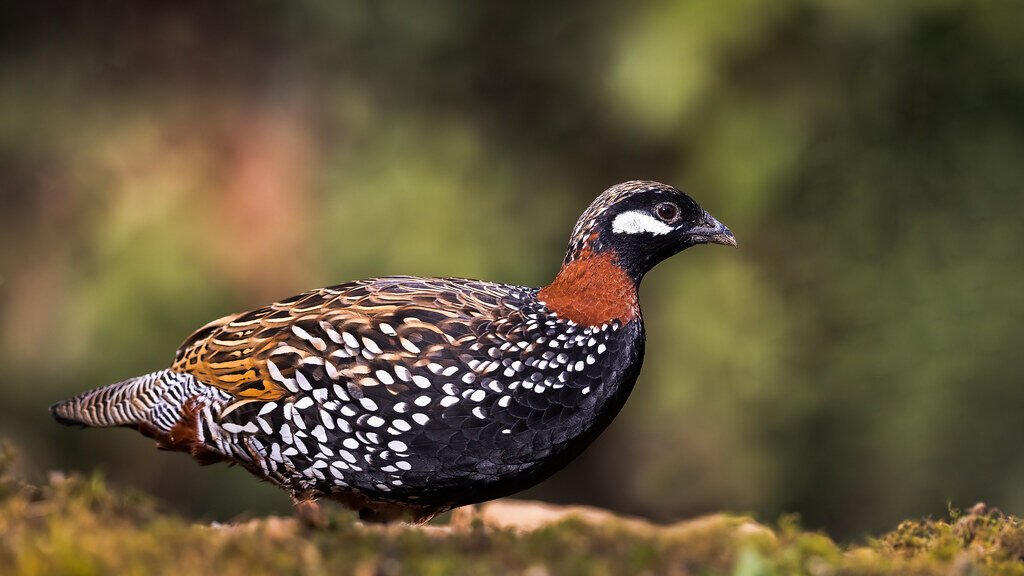
Walk through a rural field in South Asia or the Middle East at dawn, and you might hear it before you see it: a sharp, rhythmic, almost mechanical call cutting through the morning mist. That’s the black francolin announcing itself, a striking game bird whose bold plumage and confident strut have made it one of the most recognizable ground birds across its native range. In recent years, black francolins have also found a growing niche among aviculturists and game bird enthusiasts who keep them not for hunting or release programs, but as aviary birds prized for their striking appearance and captivating vocal displays.
Keeping a black francolin is a very different experience from keeping a parrot, a finch, or even most other backyard poultry. These are ground-dwelling, somewhat shy birds with specific space, diet, and social needs rooted deeply in their wild behavior. This guide covers everything a prospective or current keeper needs to know, from their natural history to feeding, housing, health, and an honest look at whether this bird fits your lifestyle.
Understanding the Black Francolin’s Background
The black francolin (Francolinus francolinus) is a member of the pheasant family, Phasianidae, closely related to partridges and other game birds. It’s a medium-sized ground bird, typically weighing between 400 and 500 grams, with males considerably more striking in appearance than females, a trait known as sexual dimorphism that’s common throughout the pheasant family.
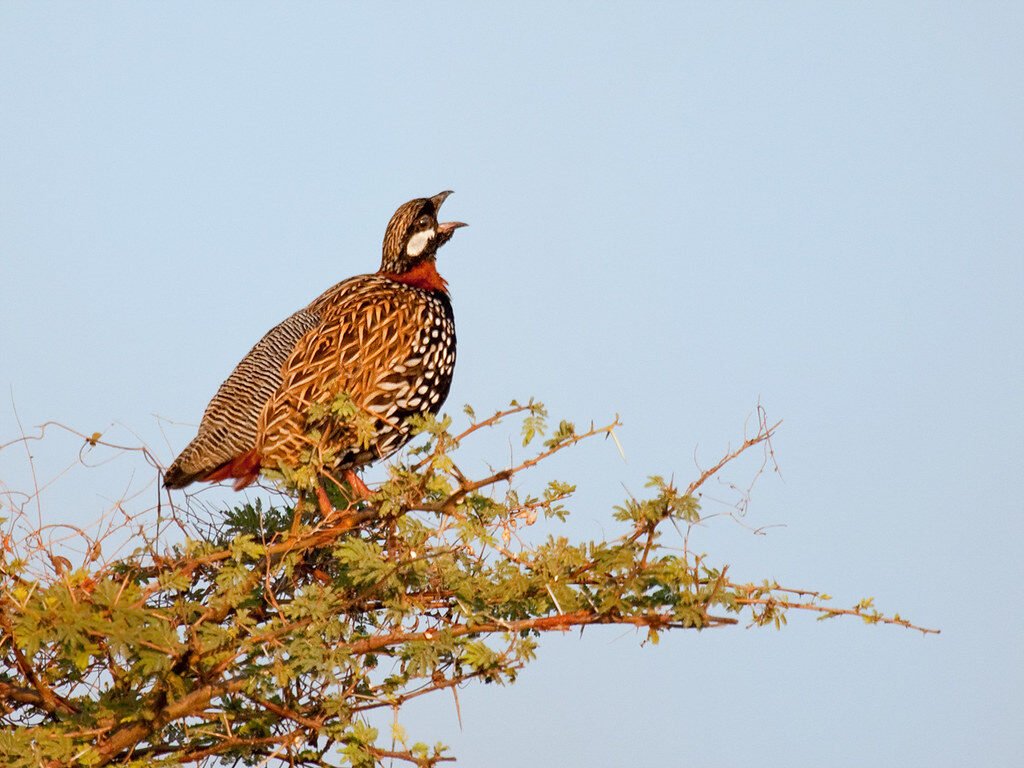
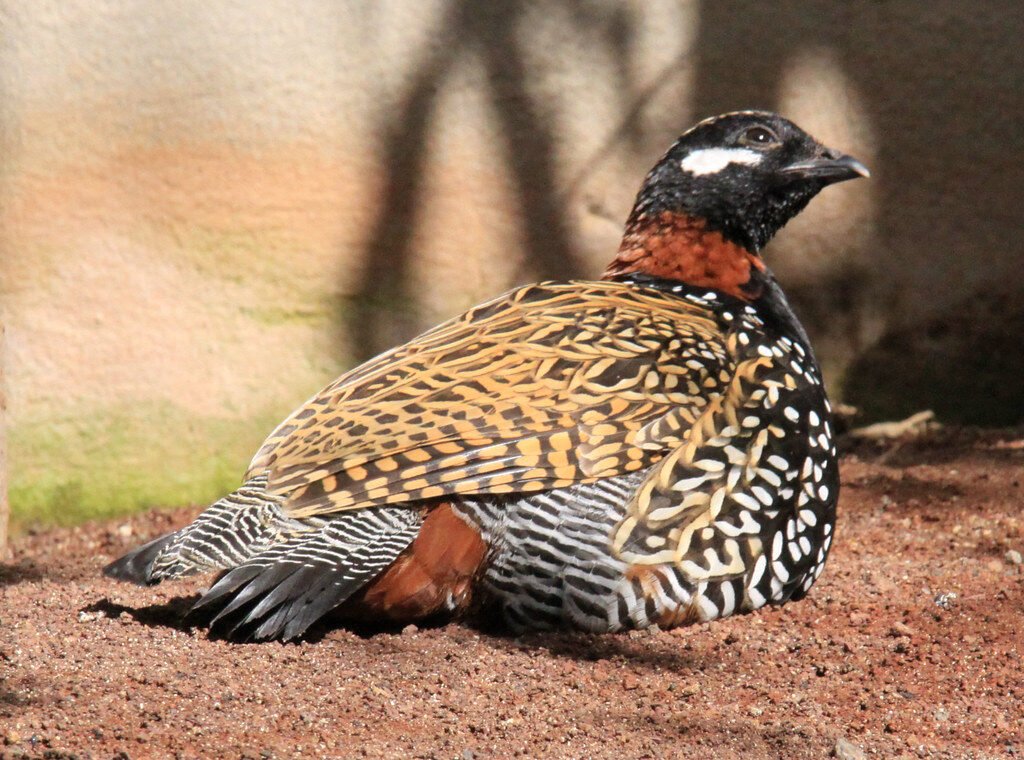
Males display a dramatic combination of jet-black plumage across the face, throat, and underparts, broken up by a rich chestnut collar around the back of the neck and white spots scattered across the flanks like scattered pearls. A small patch of white sits on the cheek, standing out sharply against the black. Females, by contrast, are far more subdued, cloaked in mottled brown and buff tones that provide excellent camouflage among dry grasses and scrub, an evolutionary trait suited to their role incubating eggs on the ground.
Black francolins are native to a wide swath of territory stretching from the eastern Mediterranean and parts of the Middle East through Iran, Pakistan, India, Nepal, and into parts of Southeast Asia. Within this range, they inhabit tall grasslands, agricultural fields, scrubland bordering cultivated areas, and reed beds near water sources. They are ground foragers by nature, spending the vast majority of their time walking, scratching, and probing through vegetation and soil in search of food, only taking to short, explosive bursts of flight when startled or threatened.
Historically, black francolins have held cultural and culinary significance in parts of their range, having been hunted for centuries and even referenced in Mughal-era literature as a prized game bird. Habitat loss and hunting pressure have caused population declines in parts of their range, though the species as a whole is not currently considered globally threatened. This history matters for prospective keepers because it shapes both the bird’s innate wariness of humans and, in many regions, the legal framework around keeping them, which is worth researching carefully before acquiring one.
Is a Black Francolin the Right Bird for You?
Before going further, it’s worth being upfront: black francolins are not a bird for the average pet owner looking for a cuddly companion. They belong more to the world of aviculture and game bird keeping than conventional pet ownership. They don’t perch on shoulders, they rarely enjoy handling, and their appeal lies in observation, their vocal displays, and the satisfaction of successfully replicating a slice of their natural habitat in captivity.
That said, for the right keeper, typically someone with outdoor space, an interest in game birds or aviculture, and realistic expectations, black francolins can be deeply rewarding birds to keep. Their calls are genuinely striking, their plumage is stunning up close, and watching their natural foraging and territorial behaviors play out in a well-designed aviary is a world apart from watching a caged parrot.
Legal Considerations Before You Acquire One
This is a step that’s easy to overlook but important to get right. In many regions, francolins fall under game bird or wildlife regulations that require specific permits for possession, breeding, or transport, and regulations vary significantly by country and even by state or province. Some regions restrict ownership entirely, while others permit it with proper licensing, particularly for birds bred in captivity rather than wild-caught. Before acquiring a black francolin, checking with local wildlife or agricultural authorities is a necessary first step, not an optional one.
Housing: Building the Right Aviary
Unlike parrots or softbills, black francolins are not cage birds in the traditional sense. Their wild behavior, near-constant ground activity, a preference for cover, and an instinct to run rather than fly when startled, means their housing needs look more like a planted aviary than a birdcage.
Space Requirements
A pair of black francolins needs, at an absolute minimum, an aviary space of around 8 by 4 feet, though significantly more space is preferable, particularly if the birds will be kept long-term or bred. Ground space matters more than height here, since these birds spend nearly all their time on the ground and rarely fly except in short bursts. A planted, walk-in style aviary with a solid or well-secured mesh roof (to protect against aerial predators like hawks) and secure sides buried at least a foot into the ground (to prevent digging predators such as foxes or dogs from getting in) is the standard setup serious keepers use.
Substrate and Ground Cover
Because black francolins forage almost constantly by scratching and probing the ground, the substrate inside their enclosure matters enormously. A mix of soil, sand, and leaf litter mimics their natural habitat well and gives them material to dust bathe in and forage through. Scattering seed or live insects into this substrate encourages the kind of natural foraging behavior that keeps captive francolins physically and mentally engaged, reducing stress-related issues that can arise when birds are kept on bare or overly sterile flooring.
Cover and Vegetation
In the wild, black francolins rely heavily on tall grass and scrub cover to feel secure, both from predators and from the general stress of exposure. An aviary that’s entirely open, with no visual cover, tends to produce noticeably more anxious, flighty birds. Incorporating dense planting, ornamental grasses, low shrubs, or even strategically placed brush piles gives the birds places to retreat, which in turn tends to make them calmer and more likely to display natural behaviors rather than pacing anxiously along the aviary edges.
A shallow water feature or dish for bathing is also worth including, though francolins are more inclined toward dust bathing than water bathing, so a dedicated dust bath area with fine, dry soil or sand is arguably more important than a water bath.
Climate and Shelter
Black francolins tolerate a range of climates reasonably well, given their broad native range spans everything from Mediterranean coastlines to the foothills of the Himalayas, but they still need protection from extremes. A sheltered area within the aviary, whether a simple roofed corner or a small enclosed shelter, gives them a place to escape rain, direct sun, or cold winds. In regions with harsh winters, supplemental heating in a sheltered section of the aviary is often necessary to keep the birds comfortable and healthy through the coldest months.
Housing Multiple Birds
Black francolins are territorial, particularly males during the breeding season, and this needs to be factored into housing decisions. A single male will often not tolerate another male in the same enclosure, especially once mature, and fights can result in serious injury or death if birds can’t escape each other’s line of sight. Keeping francolins in pairs, one male and one female, is the standard approach for most keepers, with larger, more heavily planted aviaries sometimes able to support small groups if there’s enough space and cover for subordinate birds to avoid confrontation. Introducing new birds should always be done gradually and with a way to separate them if aggression becomes a problem.
Feeding Black Francolins
Diet is one of the areas where black francolins differ meaningfully from more commonly kept pet birds, largely because their wild diet is broad and varied, drawing on both plant matter and animal protein depending on availability and season.
The Foundation: Game Bird Feed
Most experienced keepers base a black francolin’s diet around a commercially formulated game bird feed or pheasant/partridge pellet, which is specifically balanced for the protein and nutrient needs of ground-dwelling game birds. These formulated feeds are typically available through agricultural or specialty feed suppliers rather than standard pet stores, and protein content often needs to be adjusted seasonally, higher protein during breeding season, and a maintenance-level formula the rest of the year.
Supplementing with Natural Foods
Beyond the base pellet or feed, black francolins benefit enormously from a varied diet that reflects their natural foraging habits:
- Seeds and grains, including millet, wheat, and cracked corn
- Leafy greens and fresh grass shoots
- Small amounts of chopped vegetables such as carrot tops, chopped kale, or shredded squash
- Live insects such as mealworms, crickets, or waxworms, which mimic the invertebrates they’d hunt in the wild and are particularly valuable during breeding season when protein needs increase
- Berries and small fruit pieces offered occasionally as a treat
Scattering food across the aviary floor rather than presenting it all in a single dish encourages the natural foraging behavior that keeps francolins active and engaged, and also reduces food monopolization if more than one bird shares the space.
Grit and Calcium
Like most ground-foraging birds, black francolins need access to insoluble grit to help grind food in their gizzard, since they lack the ability to chew. A shallow dish of fine grit should be available at all times. Calcium is equally important, particularly for breeding females who need substantial reserves for egg production. Crushed oyster shell or a dedicated calcium supplement, offered free-choice alongside the grit, supports healthy egg-laying and helps prevent calcium deficiency issues.
Water
Fresh, clean water should be available at all times, in a dish shallow enough that birds can drink without risk of drowning but sturdy enough not to tip during their scratching and foraging activity. Water dishes should be checked and cleaned daily, since ground-dwelling birds tend to kick substrate and debris into open water sources fairly quickly.
Health and Common Concerns
Black francolins are generally hardy birds when kept in appropriate conditions, but like all game birds, they’re susceptible to a handful of health issues that keepers should watch for.
Signs of a Healthy Bird
A healthy black francolin is alert, moves with a confident, purposeful gait, forages actively throughout the day, and has smooth, glossy plumage without bald patches or excessive feather damage. Eyes should be clear and bright, and droppings should be well-formed without excessive wateriness or unusual coloring.
Common Health Issues
Coccidiosis, a parasitic intestinal infection, is one of the more common issues in game birds kept in ground-level enclosures, particularly in damp or crowded conditions. Symptoms include lethargy, diarrhea, and weight loss, and prevention centers heavily on good aviary hygiene, dry substrate, and avoiding overcrowding.
External parasites, including mites and lice, can also become problems in ground-dwelling birds, especially those without regular access to dust bathing areas, since dust bathing is a natural mechanism birds use to control these parasites themselves. Ensuring a dry dust bath area is available at all times goes a long way toward prevention.
Respiratory infections can arise from damp, poorly ventilated shelters, particularly in colder months when birds spend more time in enclosed shelter areas. Good ventilation, even within a heated winter shelter, is essential.
Bumblefoot, a bacterial infection of the foot pad, can develop in birds kept on hard or abrasive substrate for extended periods, or in birds with untreated minor foot injuries. Soft, varied substrate and regular observation of the feet during routine checks help catch this early.
Injury from stress or fighting is worth flagging separately, since black francolins startle easily and can injure themselves flying into aviary walls or mesh if suddenly frightened, particularly in enclosures without adequate visual cover. Territorial aggression between males is another source of injury, discussed further in the housing section above.
Preventive Care
Routine observation is the most valuable health tool available to a francolin keeper, since these are still, at heart, wild-natured birds that instinctively mask illness until it’s fairly advanced, a survival trait carried over from their life as a prey species in open grassland habitat. Daily visual checks during feeding time, watching for changes in appetite, activity level, or gait, catch most problems early. An annual check-up with a veterinarian experienced in game birds or poultry, though not always easy to find, is worthwhile where available, along with periodic fecal testing to catch parasite loads before they become serious.
Quarantine for any newly acquired bird, ideally for a minimum of 30 days in a separate enclosure before introduction to existing birds, is essential to avoid introducing disease or parasites into an established aviary.
Temperament and Behavior
Black francolins are, by nature, wary and somewhat skittish birds, a trait that doesn’t disappear entirely even after generations of captive breeding. They are not birds that seek out human interaction the way a parrot or a hand-raised softbill might, and attempts to handle them frequently or treat them like a conventional pet tend to produce stressed, anxious birds rather than tame ones.
That said, over time and with consistent, calm care, captive-bred black francolins can become reasonably settled around their keepers, particularly if approached slowly and predictably. Sudden movements, loud noises, or unfamiliar visitors tend to trigger their strong flight instinct, so aviaries are best situated in relatively quiet areas of a property, away from constant foot traffic or other pets that might repeatedly startle them.
Vocalizations
The black francolin’s call is one of its most distinctive features and a major reason many keepers are drawn to the species in the first place. Males produce a loud, rhythmic, almost metallic-sounding call, often described as sounding like “chik-chik-cherik,” typically most vocal at dawn and dusk, particularly during the breeding season when they call to establish territory and attract mates. This call carries a considerable distance and should be factored into decisions about where to house them, since neighbors in closer residential settings may not appreciate an early morning wake-up call from an enthusiastic male francolin.
Breeding Behavior
For keepers interested in breeding, black francolins typically become reproductively active in a defined breeding season, generally in spring in most climates, though this can shift somewhat depending on latitude and local conditions. Males become notably more territorial and vocal during this period, and pairs benefit from extra seclusion and cover in the aviary to support natural nesting behavior. Females typically construct a simple ground nest, well hidden among grass or vegetation, and lay a clutch that can range from six to a dozen or more eggs depending on the individual bird and conditions. Incubation lasts roughly three weeks, and chicks are precocial, meaning they’re mobile and able to feed themselves shortly after hatching, though they still benefit from parental guidance and protection during their first weeks of life.
Breeding black francolins successfully in captivity requires appropriate space, privacy, correct nutrition during the breeding period, and often a fair amount of patience, since stressed or insufficiently secure birds may not breed reliably even under otherwise good conditions.
The Honest Ownership Assessment
Given how different black francolins are from conventional pet birds, it’s worth laying out clearly what keeping one actually involves, and who they realistically suit.
The good: For keepers with genuine interest in aviculture or game birds, black francolins offer a rewarding, hands-off kind of companionship built around observation rather than interaction. Their plumage is genuinely stunning, particularly on mature males, and their calls have an authenticity that appeals to people drawn to birds with a strong connection to their wild behavior. They’re relatively hardy once established in appropriate housing, and successfully breeding them can be a genuinely satisfying achievement for a dedicated keeper.
The challenging parts: This is not a bird suited to indoor keeping, apartment living, or anyone hoping for a hands-on, cuddly pet. Black francolins need real outdoor space, a properly designed aviary with adequate cover and secure predator-proofing, and a keeper willing to research and often navigate legal permitting requirements before acquiring one. Their loud, early-morning calls can be a genuine issue in residential areas with close neighbors. Diet requires sourcing specialized game bird feed and supplementing with live insects and fresh foods, which takes more effort than picking up a bag of standard bird seed. Males can be territorial and occasionally aggressive, both toward other francolins and, in some cases, toward keepers during breeding season, requiring careful management. And because these birds retain strong wild instincts even in captivity, keepers hoping for a tame, interactive companion are likely to be disappointed, since that’s simply not what this species offers, no matter how much time and patience is invested.
Ultimately, black francolins make excellent birds for experienced aviculturists, game bird enthusiasts, or property owners with the space, patience, and genuine interest in replicating a slice of natural habitat rather than a conventional pet relationship. For anyone drawn primarily by the bird’s striking appearance without a clear picture of what its care actually demands, this is a species where the gap between expectation and reality can be significant, and it’s worth going in with eyes fully open.
Final Thoughts
The black francolin occupies a distinctive place in the world of bird keeping, part game bird, part aviary specimen, entirely its own creature with instincts shaped by centuries of life in open grassland and scrub. It doesn’t offer the interactive companionship of a parrot or the low-maintenance simplicity of a finch, but for the right keeper, it offers something different and, in its own way, just as compelling: the chance to watch a genuinely wild-natured bird thrive, forage, call, and breed in an environment built to honor its instincts rather than override them.
For those willing to invest in the right space, the right diet, and the patience these birds demand, keeping black francolins can be one of the more quietly rewarding corners of aviculture, a daily reminder that not every rewarding animal relationship needs to involve a bird on your shoulder.