 By Admin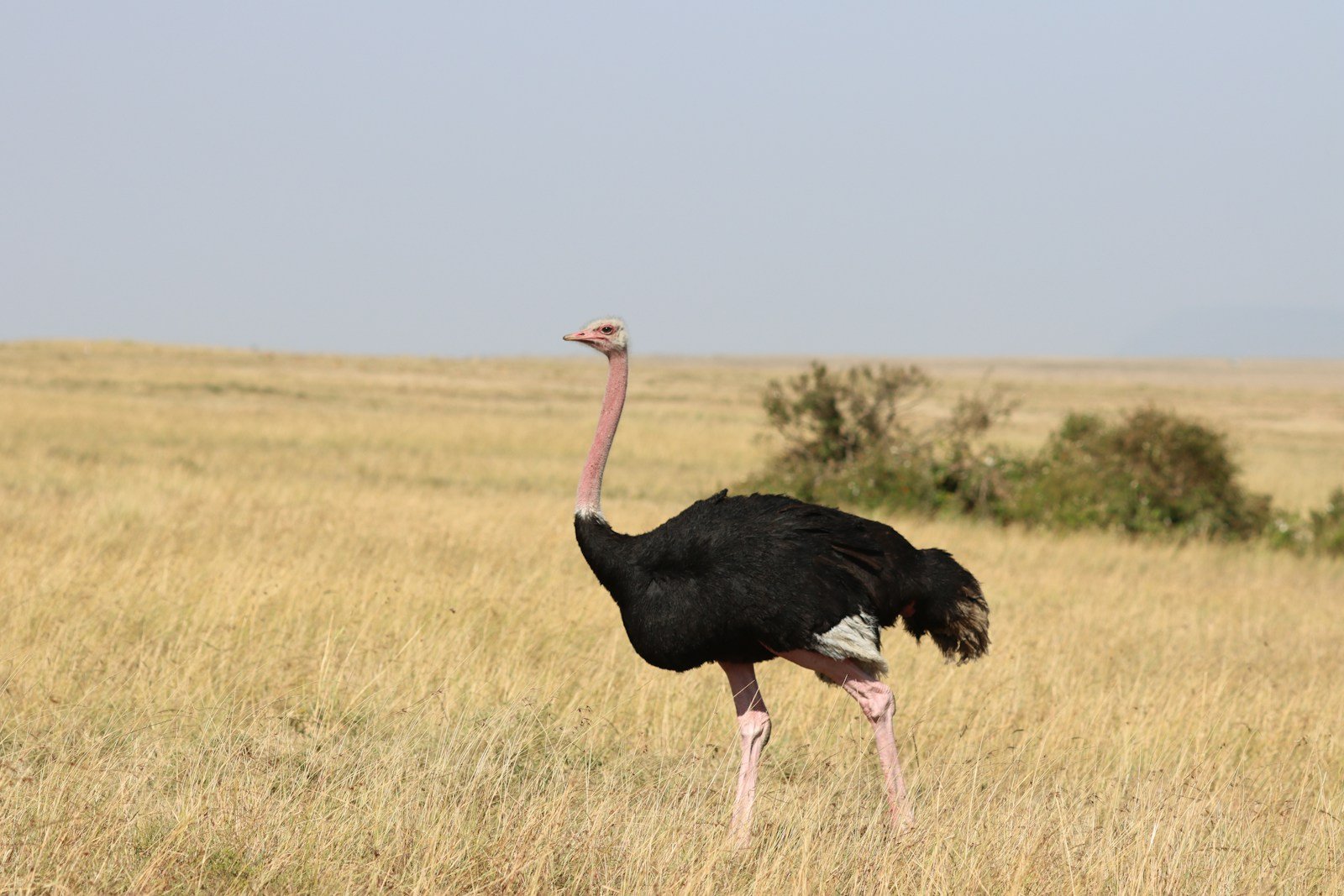
Meta Description: Thinking about getting a pet ostrich? Here’s everything you need to know about legality, cost, housing, diet, temperament, and daily care before you bring one home.
If you’ve ever stood next to an ostrich at a zoo or a petting farm and thought, “I want one of those in my backyard,” you’re not alone. Ostriches are strange, striking, oddly charismatic animals, and a quick search for “pet ostrich” turns up thousands of people asking the same question every month. But owning one isn’t like adopting a dog or even a horse. It’s a serious commitment that involves acreage, specialized fencing, a very particular diet, and — in some places — a stack of paperwork before you even bring a chick home.
This guide walks through everything a prospective owner needs to know: whether it’s legal, what it costs, how much space and structure you actually need, what ostriches eat, how they behave, and the realities nobody mentions in the cute chick photos online. By the end, you’ll know whether a pet ostrich is a genuinely good fit for your life — or whether you’d be happier admiring them from the other side of a fence.
What Exactly Is an Ostrich?
The ostrich (Struthio camelus) is a flightless bird native to the savannas and open woodlands of Africa. It’s the largest living bird species on Earth, with adult males standing up to 9 feet tall and weighing as much as 320 pounds. Despite that size, ostriches are built for speed rather than flight — they can sprint at over 40 miles per hour, faster than most predators that would try to chase them down.
A few quick facts that matter for anyone considering ownership:
- Lifespan: 30 to 40 years in captivity, sometimes longer
- Size at maturity: Males are typically black with white wing tips; females are duller grayish-brown
- Legs: Powerful enough to deliver a kick that can seriously injure or kill a predator — or a person
- Diet in the wild: Omnivorous, though mostly plant-based — grasses, seeds, roots, and the occasional insect or small reptile
- Social structure: Ostriches are flock animals and generally don’t thrive living completely alone
That combination — long lifespan, enormous size, and a genuinely wild temperament even after generations of farming — is the core reason ostrich ownership isn’t something to decide on a whim.

Is It Legal to Own a Pet Ostrich?
This is the first question anyone should answer before falling in love with the idea. The short version: it depends entirely on where you live, and the rules vary more than most people expect.
United States
There’s no federal law banning ostrich ownership, but regulation happens at the state and sometimes county level. Ostriches are usually classified as livestock or exotic poultry rather than “wildlife,” which actually makes them easier to own legally than, say, a big cat. Even so:
- Many states require a USDA premises registration if you’re raising ratites (the bird family that includes ostriches, emus, and rheas) for any commercial purpose, including selling eggs or meat.
- Some states and municipalities have zoning restrictions on minimum acreage for large livestock, which can apply to ostriches even if the animal itself isn’t restricted.
- A handful of states require an exotic animal permit specifically because of the ostrich’s size and potential danger, even though it’s technically “farm” livestock.
Outside the U.S.
- In the UK, you can keep ostriches, but you’ll likely need to register with DEFRA under regulations covering ratite farming, and welfare standards apply.
- In Canada, provincial agriculture ministries regulate ostrich farming, and some provinces require licensing for exotic or specialty livestock.
- Australia has some of the tightest restrictions, since ostriches (like emus) can be classified under biosecurity and exotic species controls depending on the state.
Because the rules shift so often and vary so much by jurisdiction, the only reliable move is to call your local agricultural extension office or animal control department before you get attached to the idea. Ask specifically about ratites, since “exotic bird” laws are sometimes written with parrots in mind and don’t map cleanly onto an animal the size of a small horse.
Why People Want a Pet Ostrich in the First Place
It’s worth naming the appeal honestly, because it explains both the draw and the disappointment some owners run into.
They’re genuinely fascinating animals. Ostriches are curious, alert, and surprisingly interactive once they trust their handler. Many owners describe a bonded ostrich as having a personality closer to a dog than a chicken — it will follow you around, investigate anything shiny or new, and recognize the people who feed it.
They’re a novelty with practical upside. Some owners raise ostriches for eggs (a single ostrich egg is equivalent to roughly two dozen chicken eggs), for feathers, or eventually for meat and leather production on working farms. Even hobbyists sometimes offset costs by selling fertile eggs to other breeders.
They’re low-maintenance in one specific sense. Ostriches don’t need daily walks, don’t shed fur, and don’t require the kind of constant handling that a dog does. Once the enclosure and feeding routine are set up, the day-to-day care is more like managing livestock than a household pet.
But — and this is the part that matters most — an ostrich is not a backyard chicken with long legs. It’s a wild-tempered, powerful animal that happens to tolerate captivity reasonably well. Understanding that distinction early saves a lot of frustration later.
Space and Housing Requirements
This is where a lot of would-be owners self-select out, and for good reason. Ostriches are not suited to suburban backyards.
Minimum Acreage
Most experienced breeders recommend at least half an acre per adult ostrich, though an acre or more is far better, especially if you plan to keep more than one (which is strongly advised — more on that below). Ostriches need room to run. A cramped enclosure doesn’t just make them unhappy; it increases the risk of leg injuries, which are notoriously difficult and expensive to treat in large ratites.
Fencing
Standard farm fencing won’t cut it. Ostriches need:
- Fencing at least 5 to 6 feet tall, since a startled or curious bird can jump higher than you’d expect
- Smooth or well-padded fencing — barbed wire is a serious hazard, since ostriches can run into fences at speed when panicked and suffer catastrophic leg or neck injuries
- Reinforced corners and rounded enclosure shapes where possible, since ostriches running at full speed have been known to injure themselves on sharp right angles
Shelter
Ostriches are hardier than people assume — they tolerate a wide range of temperatures — but they still need a covered, three-sided shelter to escape wind, heavy rain, and extreme heat or cold, depending on your climate. In areas with harsh winters, supplemental heating for the shelter is often necessary, particularly for chicks.
Ground Surface
Ostrich feet and legs are surprisingly delicate for such a powerful animal. Rocky, uneven, or overly hard ground increases the risk of joint problems and leg fractures. Well-maintained pasture or soft, well-drained soil is ideal.
What Do Pet Ostriches Eat?
Ostrich nutrition is one of the more manageable parts of ownership, largely because the commercial ratite feed industry has matured significantly over the past few decades.
Commercial Ratite Feed
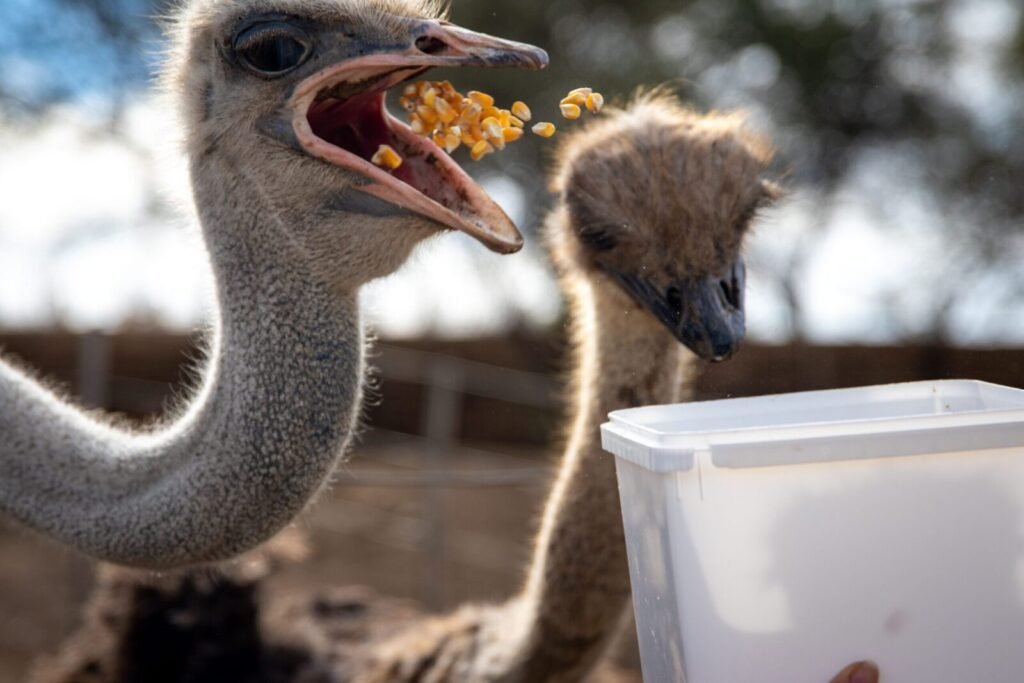
Most owners rely on a formulated ratite pellet, specifically balanced for ostriches at different life stages — starter feed for chicks, grower feed for juveniles, and maintenance or breeder feed for adults. These are usually available through farm supply stores or specialty livestock feed companies.
Supplemental Foods
In addition to pellets, a healthy ostrich diet typically includes:
- Fresh grasses and pasture access
- Leafy greens (kale, spinach, lettuce in moderation)
- Root vegetables like carrots and sweet potatoes
- Occasional fruit as a treat
- Grit (small stones) to help grind food in the gizzard, since ostriches don’t have teeth
What to Avoid
- Avocado (toxic to many birds)
- Excessive bread or processed grains
- Sudden diet changes, which can cause digestive upset
- Chocolate, caffeine, and anything toxic to birds generally
Daily Intake
An adult ostrich eats roughly 3 to 6 pounds of feed per day, depending on size, activity level, and whether it’s breeding season. That adds up — feed costs are one of the most consistent ongoing expenses of ownership, and they don’t shrink as the bird ages the way some other livestock costs do.
Temperament: The Part Nobody Warns You About Enough
Here’s the honest section. Ostriches can be affectionate, curious, and even playful with familiar handlers — but they are also large, powerful, and capable of serious harm, sometimes with very little warning.
The Kick
An ostrich’s kick is the single most important safety fact to understand before ownership. Their legs are strong enough to kill predators in the wild, including lions in some documented cases. A kick from a full-grown ostrich can break bones or cause fatal injuries to a human. This isn’t a hypothetical risk brought up for drama — it’s the leading cause of serious injury among ostrich handlers and one of the top reasons some jurisdictions regulate ownership at all.
Breeding Season Aggression
Male ostriches in particular become significantly more aggressive and territorial during breeding season, which can last several months depending on climate. Even birds that are calm and friendly the rest of the year may become dangerous during this period, including toward owners they normally trust.
Flock Behavior Matters
Ostriches are social animals, and a solitary ostrich is more likely to develop behavioral problems — including redirected aggression toward humans, since it has no flock to direct that natural social and territorial behavior toward instead. Most experienced breeders strongly recommend keeping ostriches in pairs or small groups rather than as a single pet, both for the animal’s wellbeing and for the safety of everyone around it.
Handling and Training
Ostriches raised from chicks by consistent, calm handlers tend to be more manageable as adults, a process breeders often call “imprinting” or habituation. Even so, most experts recommend that owners never turn their back carelessly on an adult ostrich, never enter an enclosure with a breeding-season male without an experienced second person present, and always have an exit route in any enclosure.
Health Care and Common Issues
Ostriches are relatively hardy animals, but they come with a specific set of veterinary considerations that most general veterinarians aren’t equipped to handle.
Finding a Vet
This is a genuinely underrated challenge. Not every large-animal or exotic vet has experience with ratites specifically. Before bringing home an ostrich, it’s worth locating a vet in your region who has treated ostriches, emus, or rheas before — ideally by asking local ratite breeder associations for referrals.
Common Health Concerns
- Leg and joint problems, especially in fast-growing chicks fed an improperly balanced diet
- Impaction, when a bird swallows foreign objects (ostriches are notoriously curious and will peck at shiny or unusual items, sometimes swallowing things they shouldn’t)
- Respiratory infections, particularly in damp or poorly ventilated shelters
- Parasites, both internal and external, requiring routine deworming schedules similar to other livestock
Chick Care
Ostrich chicks are considerably more fragile than adults. They require careful temperature control, a very specific starter diet, and close monitoring for the first several months of life. Chick mortality rates can be significant without experienced care, which is part of why many first-time owners choose to buy juveniles or young adults rather than starting with day-old chicks.
The Real Cost of Owning a Pet Ostrich
This is where a lot of casual interest fades fast. Ostrich ownership is not cheap, and the costs are ongoing rather than one-time.
Upfront Costs
- Purchase price: A young ostrich typically runs anywhere from a few hundred to a couple thousand dollars, depending on age, breeding lines, and region
- Fencing and enclosure construction: Often the single largest upfront expense, easily running into the thousands of dollars depending on acreage and materials
- Shelter construction: Another significant one-time cost, especially in colder climates requiring heating
Ongoing Costs
- Feed: A meaningful monthly expense given how much an adult ostrich eats
- Veterinary care: Routine checkups plus the cost of finding and traveling to a vet with ratite experience
- Land maintenance: Pasture upkeep, fence repair, and shelter maintenance add up over the animal’s multi-decade lifespan
The Long Horizon
Because ostriches can live 30 to 40 years, the financial commitment isn’t a short-term decision. Anyone considering ownership should budget for decades, not years, and think honestly about what happens to the bird if personal circumstances change.
Ostrich vs. Emu vs. Rhea: Which Ratite Is Right for You?
Since a lot of people researching pet ostriches end up comparing them to other large flightless birds, it’s worth a quick breakdown:
| Feature | Ostrich | Emu | Rhea |
|---|---|---|---|
| Native region | Africa | Australia | South America |
| Adult height | Up to 9 ft | Up to 6 ft | Up to 5 ft |
| Temperament | Powerful, can be more volatile | Generally calmer | Generally more docile |
| Space needs | Highest | High | Moderate to high |
| Legal restrictions | Varies widely | Varies widely | Often less restricted |
Emus and rheas are frequently recommended as a “starter” ratite for people who love the idea of a large flightless bird but want something slightly smaller and, in many cases, a bit easier to handle safely. That said, all three require serious space, specialized care, and an understanding of their wild instincts.
Tips for First-Time Ostrich Owners
If you’ve read this far and you’re still interested — genuinely, that’s a good sign, because it means you’re taking the decision seriously. A few practical tips from experienced breeders:
- Start by visiting working ostrich farms. Spend real time around adult birds before committing. Most breeders are happy to show newcomers the day-to-day reality of ownership.
- Never start with just one bird. Pairs or small groups are safer and healthier for the animal.
- Budget for infrastructure before you budget for the bird itself. Fencing and shelter should be complete and inspected before an ostrich ever arrives.
- Join a ratite breeders’ association. These networks are invaluable for finding vets, sourcing feed, and troubleshooting problems specific to ostriches.
- Plan for breeding season behavior changes in advance, especially if children or frequent visitors will be around the property.
- Have an experienced handler involved early on, even if you’re planning to manage the birds yourself long-term. Learning proper body language and safe handling techniques from someone experienced dramatically reduces risk.
Frequently Asked Questions
Can an ostrich be kept as a house pet? No. Ostriches are far too large, powerful, and behaviorally unsuited to indoor life. They need substantial outdoor acreage and specialized housing.
Are pet ostriches dangerous? Yes, they can be. Their kick is powerful enough to cause serious injury or death, and males in particular can become aggressive during breeding season. Ostriches require experienced, cautious handling at every life stage.
How much does a pet ostrich cost per year? Ongoing costs — feed, vet care, and land upkeep — commonly run into the thousands of dollars annually, not including the initial cost of fencing and shelter construction.
Do ostriches make good pets for beginners? Generally, no. Most breeders recommend prior experience with large livestock or exotic animals before taking on ostrich ownership, given the space, cost, and safety considerations involved.
How long do pet ostriches live? Ostriches typically live 30 to 40 years in captivity, which is a major factor to weigh before committing to ownership.
Can I keep just one ostrich? It’s not recommended. Ostriches are social flock animals, and solitary birds are more prone to behavioral issues, including aggression toward their handlers.
Final Thoughts: Is a Pet Ostrich Right for You?
An ostrich is one of the most striking animals a private individual can legally own, and for the right person — someone with acreage, patience, financial resources, and a genuine willingness to learn the specifics of ratite care — it can be an incredibly rewarding, decades-long relationship with an unusual and intelligent bird.
But it’s not a casual decision, and it’s not a starter pet. Between the legal research, the fencing costs, the specialized diet, the safety considerations, and the multi-decade commitment, ostrich ownership sits much closer to running a small specialty livestock operation than to adopting a dog or a parrot.
If that reality excites you rather than deters you, the next right step isn’t buying a chick — it’s calling your local agricultural extension office, finding a nearby ratite breeder, and spending an afternoon around adult birds before you make any decisions. That firsthand experience will tell you more than any article ever could.